I have been filling the pulpit where needed, and last Sunday I preached in Marianna. I met with one of the elders before service and meant to ask him if he also had a list of the preachers who would be preaching. But instead of saying “predicadores” (preachers), I said “pecadores” (sinners). I had just asked for a list of the sinners! I knew instantly I had made a mistake, when the elder replied that we don’t need a list because “somos todos pecadores” (We are all sinners.). —Rick, Bolivia

The Banda, numbering 1,317,700 are the largest ethnic group in the Central African Republic. They live in hamlets of scattered homes under the leadership of headmen. Men hunt and fish, and women gather wild foods and cultivate crops of maize, cassava, peanuts, sweet potatoes, yams, and tobacco.

The Banda are woodcarvers, crafting both general use and ritual objects. They are best known for their large slit drums. Slit drums, lacking a drum head, are played by striking near the slit and produce a resonance within the drum chamber.

There are eleven Banda subgroups in the Central African Republic, each of which speaks a distinct dialect. Many groups have at least part of the Bible, but the Banda-Banda Ndi speakers, numbering 167,000, are still in need of a translation.

Catholicism was introduced during the French colonization of the late 1800s, and Protestant missionaries arrived in the early 1920s. Islam has grown to 8% through both immigration and conversion. “Christianity” is the dominant religion. However, many Banda also practice their traditional beliefs of animism and sacrifice to ancestral spirits who are believed to have the power to destroy or to save. How can they know the truth without a Bible?

Spring/Summer 2025

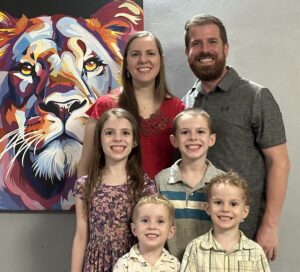
Michael Shaver Family

I was born into a Christian family. One day, when I was ten years old, my relatives gathered all the kids in their living room. We sat down and waited. Then my cousin got up, stood behind a chair, and began preaching a sermon… AS A YOUNG TEENAGER!!!! I was blown away! It had never crossed my mind that a young person could be a preacher. From that moment forward, that is what I wanted to be.

Months later, our new church had its annual missions conference where thirty-five missionaries presented their works. The fellowship hall was filled with missionary displays representing the need in all corners of the earth. I was attending the Christian school and in every class a missionary told of their field and their burden to reach it for the Lord. Again, I was blown away. From that moment forward, I wanted to be a missionary.

That desire remained all through junior high and high school. I began college, majored in missions, and was burdened for many places. I graduated with a strong burden for India but had no peace about going anywhere.

I got married and the Lord very clearly moved me to a church in Kentucky. No paid position. Not even a promise of a position. Just a clear, “Go and serve.” So, we went. After five years, the Lord opened the door for me to take a paid position at the church, and I continued the roles I had already been filling. During this time, God gave me a lot of perspective and matured me.

During another missions conference, two years later,the Lord again stirred me. I told another staff member, “Pastor better stop preaching on missions or I’m going to the mission field!” Four months later, I knew very clearly that God wanted us in missions. When I approached my pastor, he said, “That’s wonderful! Where?” I looked at him and said, “I don’t know.” He replied, “That’s ok. If you don’t have a Where then pick a Who.” He began to list some quality missionaries, but I said, “Honestly God has already put someone on my heart.” (It was a cousin I was sitting next to on the floor when I first saw a young person preach.) Missions was on his heart as well but he had not yet confirmed it with the Lord. My pastor sent me to talk to him, and He told me he had been asking the Lord for a partner. Through prayer, God soon confirmed that we were to take the Gospel to Iceland as a team.

Spring/Summer 2025


Hardship would have been an appropriate middle name for Laura Hardin. Born in Calhoun, Nebraska, on September 28, 1858, Laura’s life of hardship began at four years of age. Her father, Even Hardin, enlisted in the Civil War in 1865, leaving his wife and five small children with no food or money. They endured a terribly cold winter with almost nothing to eat. God sent help, but the times were rough.
Around eight years of age, Laura checked out a missionary book from the Methodist Church. Her mother explained to her the need to tell the world about Jesus. Laura told her mother she would like to do that someday. God heard her heart and provided greatly so she could. One night, at a revival, she was saved! Her missionary desire grew strong.

God molded Laura in the fires of hardship that well prepared her for what she and her future husband would face on the mission field. Through an Indian uprising, a prairie fire, a freezing night alone on the prairie, a tornado, diphtheria, and typhoid, God prepared her. When crops failed and there was no money for her education, she questioned if she had been wrong about God’s call to her for missions. A well-meaning friend had mentioned that maybe it would not be so hard if God was really calling her to go. How many preparing for the mission field have let the devil so easily steer them from going? We must all realize that when hardships come, it is no indicator of whether God’s call is real or not. How tragic it would have been if she had listened to wrong advice!

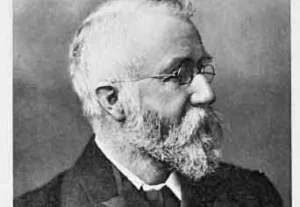
On September 28, 1883, Laura set sail for Burma. In 1886, her fiancé, Arthur E. Carson, arrived. He was appointed to open a work among the Chins, who had never had a missionary. Laura and Arthur were married immediately. They soon left for the Chin people, going beyond civilization where no white woman had ever been. They faithfully served through daily hardships and sacrifices until God called Rev. Carson home on April 1, 1908. He had served faithfully for twenty-two years. Laura served for another twelve years before failing health forced her to return to America.

What if Laura had given up on her call because it was too hard? About ninety percent of an entire people group numbering nearly three million might not have ever heard the Gospel. This couple believed ALL hardships and sacrifices were endurable to give the Word of Life to people in their own language and to uplift the souls in darkness to God’s marvelous Light. Hardship and sacrifice come with every worthwhile venture. To what greater venture can we give our lives than to the fulfilling of Christ’s commission?

Source: Laura Hardin Carson, Pioneer Trails, Trials and Triumphs
Photo Source: HathiTrust Digital Library.


The Banda, numbering 1,317,700 are the largest ethnic group in the Central African Republic. They live in hamlets of scattered homes under the leadership of headmen. Men hunt and fish, and women gather wild foods and cultivate crops of maize, cassava, peanuts, sweet potatoes, yams, and tobacco.

The Banda are woodcarvers, crafting both general use and ritual objects. They are best known for their large slit drums. Slit drums, lacking a drum head, are played by striking near the slit and produce a resonance within the drum chamber.

There are eleven Banda subgroups in the Central African Republic, each of which speaks a distinct dialect. Many groups have at least part of the Bible, but the Banda-Banda Ndi speakers, numbering 167,000, are still in need of a translation.

Catholicism was introduced during the French colonization of the late 1800s, and Protestant missionaries arrived in the early 1920s. Islam has grown to 8% through both immigration and conversion. “Christianity” is the dominant religion. However, many Banda also practice their traditional beliefs of animism and sacrifice to ancestral spirits who are believed to have the power to destroy or to save. How can they know the truth without a Bible?

Spring/Summer 2025

Wil maps out places still in need.

God’s plans and ours do not always coincide, but you must admire missionaries who plan to stay for life! Wil and Trina Muldoon are of this group. They went to the mission field much later in life than most; Wil at sixty-three, and Trina several years younger. Theirs is not a comfortable place but a remote coastal village called Baimuru in Papua New Guinea (PNG). Wil describes their quarterly supply run to the capital: “We travel only by dinghy in our area. When heading into Port Moresby for supplies, we spend an hour going down river to the Gulf of Papua, and then 4 hours on the sea to arrive in Kerema, the closest place we can connect with a road to continue our trip to the city (another six to eight hours). The village grass airstrip has not been open for several years.”

Their village has no electricity. The Muldoons have a generator, but it is very expensive to operate and requires transporting barrels of gasoline ($5.94 per gallon) and a lot of prayer and ingenuity to keep the thing running! How did they arrive at such a place at that time in their lives?

Wil left Vietnam addicted to drugs, disillusioned with religion, and without purpose in his hippie lifestyle. He went west for a simpler life, learned the farrier trade, traveled in a mule-drawn wagon, and also worked as a cowboy. Then, a missionary to the Navajo Indians gave him the Gospel! Everything changed. He attended Bible college, married Trina, and became a missionary to the West and native Americans. Later, he founded a church in Wyoming which he pastored for sixteen years. He was comfortable.He spoke the language and understood the culture. The church was prospering. He could have stayed there.

But he learned from PNG veteran missionary Matt Allen that people in two dozen villages in his area were begging for missionaries to come start a church. But Wil was too old. Or was he? Matt said, “No! Men with age and experience are what we need. Get over here!” So, the Muldoons began at BBTI in 2010. They raised support and left for PNG in September 2012. God led them to a remote, abandoned mission station with fifteen acres of land. They have since developed a unique training program.

Poorly educated, ministry-minded people come as family units and live at Baimuru Baptist Bible Institute (BBBI). They plant and live off of their own gardens and hope to sell extra food for spending money. They work on the property to pay their tuition. Both husband and wife study. BBBI is not a one-size-fits-all program. It is designed to meet the needs of the worker. For instance, they offer a one-year course that includes preparation for Sunday School teachers, youth workers, and invitation counselors. Others will complete two or three years of intensive Bible study and practical training. This is a very heavy teaching assignment for two people, one of whom is seventy-five years old! Besides classroom study, Wil accompanies students to conduct evangelistic and teaching meetings in surrounding villages. God has blessed. Pastors and workers are in places where they are greatly needed. The current pastor of the Baimuru Baptist Church is a 2016 BBBI graduate.

After eight years in PNG, the Muldoons took a seven-month furlough in the States. Wil’s last words to me then were, “I plan to go back and die there.” However, if God gives them life, after this class concludes, they desire to take one more furlough so they can hug their children and grandchildren, meet their new grandchildren, and report to their faithful supporters. But Wil and Trina do believe that Baimuru is where they will be buried. Let’s pray that it will be many years from now! A book should be written about them—probably never will be. But God is keeping the record!

Raymond, the director of a mission agency and a graduate of Baptist Bible Translators Institute (BBTI), was explaining to a pastor why his church members, Jack and Linda, who planned to be missionaries, needed BBTI. The pastor was not seeing the point. Raymond had spent many years in Africa, and he knew the arduous task facing this young couple, and he also knew how much BBTI had helped him and his wife. Raymond asked the pastor how this couple was going to survive and succeed. The pastor’s reply was, “He’ll figure it out when he gets there.” Unfortunately, most new missionaries are going ill-prepared and trying to figure it out. Experts in the fields of linguistics and anthropology have gone before us and figured out many mysteries of language and culture. Wouldn’t it be wise of us to draw on their expertise? We explain our Advanced Missionary Training (AMT) to every prospective missionary who will listen; all agree that better preparation would be a good idea. Unfortunately, they almost invariably add, “But I need to get on the field quickly. The program takes too long.” Because Jack and Linda’s pastor had never communicated in a new language and culture, his natural thinking was to get on the field ASAP and just do it!

Suppose you took your car to an auto repair shop and found that the mechanic had a few tools but no experience or instruction on their use? He had not attended mechanical school or worked as an apprentice. But he assured you that God wanted him to be a mechanic, and he would lift the hood and figure it out. You would limp down the street to a different shop. Would you want a haircut at a barber shop or beauty salon if you learned that the operator had only watched a video on hair cutting, knew nothing about sanitation procedures and laws, had never been taught or tested, but said, “Sit down and I’ll figure this out as I go”? Suppose you went to a financial advisor to invest your hard-earned money only to discover that this advisor had never been to business school, had never studied finances, and knew nothing of the workings of Wall Street. He may be a Christian and believe God is leading him into the investment business, but if he says, “Leave your money with me; with God’s help, I’ll figure it out,” you might decide to use that money instead to build a house. You find a man whose motto is, “My name is Chuck, I have a truck, and I’m called to construct!” But he has never studied carpentry, plumbing, electrical, heating or A/C. He knows nothing about city codes or building permits. You might decide to rent a little longer or look for a trained contractor. Does Uncle Sam give a recruit a uniform, a rifle and some ammunition and say, “Go fight the bad guys; you’ll figure it out when you get there.” No, our government has better sense than that! “… for the children of this world are in their generation wiser than the children of light” (Luke 16:8b).
Yet we dare send a precious young couple, one in a thousand, to a strange new country to learn an extremely complicated language and culture with no specialized training in linguistics, cultural anthropology, or cross-culture communication! It is unreasonable to expect them to almost miraculously deliver a totally new message to heathen people blinded by Satan for centuries. Should we give Jack and Linda plenty of money, a pat on the back, a hardy “God bless you,” and send them out with the most valuable message known to God or man and expect them to just figure it out when they get there? The men that collect the trash on Tuesday receive training before they put on that florescent yellow vest!

Jack and Linda graduated college and took a few missionary courses, but they acquired no linguistic tools, skills, or instruction in actual language learning. Their church is convinced that they cannot fail because they are spiritual, dedicated, intelligent, and truly called by God. But the fifty percent of Baptist missionaries that returned prematurely before successfully communicating the Gospel were all of these things, too! Yes, some must return prematurely because of permanent problems, but over seventy percent of early departures are for preventable reasons. Those reasons are often related to (but seldom attributed to) language and culture challenges. Apparently, they failed to figure it out.

The pastor probably argued that his missionary couple needed to concentrate on raising support to arrive on the field quickly because people there are dying without Christ. Nine months at BBTI seemed too long and just not worth the time it required. During Raymond’s time on the mission field, he watched many fellow laborers leave when they could have stayed. He saw them struggle and leave, never understanding the culture because they simply did not know how to study it. And he knew that pre-field training would have made a difference. He wanted Jack and Linda to figure it out in the classroom and then thrive on the field.

Raymond explained that Jack and Linda need not discontinue deputation but could continue presenting their burden in the hundreds of mission-minded Fundamental Baptist churches in Texas and Oklahoma. He told them that BBTI has a good reputation with the churches and that being students there would open doors for them. He told them of the tuition-free training and the very low housing fee for a fully furnished house on BBTI property. Raymond was able to explain many benefits of pre-field training, and fortunately, the pastor was convinced! He sent Jack and Linda to BBTI.

After graduation, they arrived on the field and immediately began applying their training. They learned a complex language where no language school even existed. Within a couple of years both Jack and Linda could speak that difficult language well. (Jack’s cousin Mike also attended BBTI and is now speaking a new language on his field.) Maybe Jack and Linda would have figured it out without specialized training—but maybe not. They chose not to take that risk.

Spring/Summer 2025

One day I went to the grocery store to buy cat food. I was excited to use my Ilokano language skills, and knowing makan means “food” and pus means “cat”, I asked the employees, “Ada ti pusa nga nakan? (Is there cat food?)” They responded, “Oh, no, sir. We are out of stock.” I looked around, surprised that such a large grocery store had no cat food. My wife, a native of the area, had a good laugh when I told her what had happened. Instead of asking for kanan ti pusa, “food for the cat,” I had asked for “food of the cat,” or cat meat! — Jonathan, Philippines

Mel Rutter 1916-1999

It was 1944 and WWII was still raging. Twenty-eight-year-old Mel Rutter and his battalion were sent to New Guinea to hunt for Japanese soldiers. After they arrived and were awaiting permanent orders, they had a lot of free time on their hands. These American soldiers had much uncertainty and fear in their minds and hearts. Being far from home, family, and facing certain death at any moment fostered a mindset of “eat, drink, and be merry, for tomorrow you die.” Sin was rampant: liquor, gambling, cursing, and obscene stories were the norm.

Mel, a young Christian, was saddened by such sin against His Lord and Saviour. To get away from it, he began walking, and before he realized what he was doing, he was deep into the jungle! In 1944, it was not safe to wander into the jungles of New Guinea where cannibal tribes still lived. Suddenly, his fears took shape in the form of a native cannibal standing right before him saying, “Hubba, hubba,” in broken English. Horror washed over Mel as he saw the filed-down, pointed teeth in the smiling face of this cannibal. Then Mel noticed the Book tucked under the cannibal’s arm. Never had his soul been so stirred and thrilled! This ex-cannibal was carrying a Bible! He looked at Mel, grinned with those pointy teeth, and asked, “Is white boy Christian?” Only God could orchestrate such a Divine appointment as this. Mel’s heart was greatly impressed by this humble ex-cannibal— a REAL missionary out telling anyone who would listen about becoming a Christian!

Back in America and years later, after attending two seminaries and pastoring three churches, Mel and his wife surrendered to missions. They sold all their belongings and went to Mexico. Two years later, they returned to Dallas where they taught missions for a year. Next, they went to Chile, South America. A year after that, they went to Costa Rica and attended language school to extensively study the Spanish language. Mel and his wife Dorothy then went to Peru, South America, and worked with Peruvians and the Quechua Indians for a number of years before returning to the States for health reasons.

In 1961, Mel and Dr. James W. Crumpton founded Maranatha Baptist Mission. At one time, it had one hundred twenty-five missionaries serving in eighteen countries and at home. For thirty-nine years, Mel was an international representative of Maranatha Baptist Missions. He died on December 30, 1999.

Have you had any Divine appointments? Is God moving you toward missions? Are WE fulfilling God’s Great Commission? Oh, that the love of Christ would fill us and overflow to the uttermost creature!

Winter 2024-25

Jordan, Ishmaela, Elroi, Neima, Alicia

Jordan Kurecki and Alicia Ramirez arrived at BBTI in 2017 and could not have come from more different backgrounds. Alicia was homeschooled and raised in a Fundamental Baptist church. She learned to play the violin, interpret for the Deaf, and be an EMT. Jordan came from a totally non-religious broken home in the Chicago area. He attended public school and learned early to play with alcohol, drugs, and a wicked lifestyle. A friend invited Jordan to a Baptist church when he was nineteen. After a time, he trusted Christ. Alicia made a profession of faith in Christ at age four and later, at age fourteen, received assurance of salvation. It took the same grace to save a good girl as it did to save a bad boy! Jordan graduated from Fair Haven Baptist College and Alicia from Faith Bible Institute.

At some point, they noticed each other in our classroom, and the rest is history. At times, we wondered if they were too distracted by each other to hear what was being taught, but apparently not for they have put what we taught them into practice in Uganda. Jordan wrote, “BBTI has made a huge impact in the way I look at missions and has equipped me with a skill set to reach people that many would consider too difficult or impossible to reach!” Here at BBTI, Jordan learned about the Nubi people whom he is targeting. They are a Bibleless Muslim group of Uganda numbering thirty-four thousand.

Jordan and Alicia were married in July 2019 and later that year visited Uganda. They were sent by Park Gate Baptist Church in Ellwood City, Pennsylvania, and began deputation during COVID, the worst possible time. They persevered, making thousands of phone calls and emails. At first, only one in five churches they visited took them on for support, but as they neared their goal, the churches saw their determination, and that ratio improved. They traveled in an old car, and little by little dumped about $6,000 into repairs until the transmission finally quit. It was then that a brother in Christ loaned them a nice car to drive. He “just happened” to buy it on a whim but did not need it. During deputation, Jordan began to study advanced courses in Hebrew and Greek in preparation for Bible translation.

While at BBTI, Jordan met a Nubi man on Facebook who is somewhat of a leader among his people. When they arrived on the field in February 2023, this man introduced Jordan to many people, and he had favor with them—for a while. Later, after he began church services, a large group of angry Muslim men raided a service and beat two of the Christian leaders, one quite severely. Jordan was treated roughly but not injured. The honeymoon was over! Threats and abuse of the church leaders continue. Nevertheless, Jordan and Alicia continue learning the Kinubi language, becoming proficient after less than two years. (There is no language school or professional teacher; they have learned by applying what they were taught at BBTI.)

In May 2023, Jordan discovered a small group of Nubi speaking believers who attempted to translate the Bible into Nubi but had given up because they did not know how to proceed. Jordan has organized and trained a translation team of five Nubis. Recently, they had to dismiss a team member for bad behavior. The man has become a real enemy, trying to extort money from Jordan, threating physical harm and exposure of the team to the Muslims who bitterly oppose a Bible in their language. He would like to get the Kureckis expelled from Uganda. Nevertheless, they plod ahead, making very good progress. There is no time to waste. Despite serious bouts of malaria, threats, and the hardships of missionary life, Jordan and Alicia push the pedal to the medal and move forward!

Winter 2024-25

Kyle and Elisabeth Burchwell

I was privileged to grow up in a Christian home. After my salvation at the age of four, the Lord called my father to preach. He left his career and moved our family to North Carolina to attend Ambassador Baptist College. His example of faith and obedience continually challenges me.

Growing up at a Bible college afforded me many privileges. At an early age, I encountered the idea of serving the Lord with my life in ministry. When I was twelve, I gave my life to God at a summer camp. I did not know anything about ministry, but it made sense that if Jesus was willing to die for me, I should be willing to live for Him. My mother did all she could to encourage this decision, and men and women of God from yesteryear were often the assigned topics of reading assignments and school reports. Missionaries became my heroes. Two years later, I told the Lord that I would do anything and go anywhere for Him, including following him to the foreign field as a missionary.

Being around a Bible college, however, was not always positive. My father was a deacon at a church whose pastor was a college staff member. The pastor disqualified himself and split the church. The spiritual damage caused by this scandal led me to turn my back on God and the ministry. I renounced my surrender and charted my own course.

After high school, my parents pressured me into taking a one-year Bible course at Ambassador. I was bitter, miserable, and under constant conviction, knowing that I was running from the Lord, but He continued working in my heart. That semester, God put me through a series of events that brought me back to the place where I realized that a life outside of God’s will was not a life I wanted to live. I rededicated my life to the Lord, changed my major to Missions, and began to seek and follow God’s leading.

When the time came for my missions internship, I chose to pursue several opportunities that piqued my interest and prayed for the Lord to give me guidance. He closed the doors on all of them. Then, through a series of Divinely orchestrated circumstances, he steered me to a unique opportunity in West Africa to minister in Ghana, Liberia, and the Ivory Coast. On this trip, the Lord burdened my heart for Liberia. Afterwards, he confirmed this calling to my wife and me through answered prayers and further opportunities. We are excitedly anticipating our first term in Liberia next year.

Winter 2024-25

In the 1880s, the governor of Southern Sudan was driven from his country into Uganda. He and his soldiers were given protection from the British in return for their service. This group of Muslim soldiers and their descendants eventually became known as the Nubi people. In the 1890s, the British awarded the Nubi soldiers land in Kenya.

There are an estimated 20,000-40,000 Nubi people living in Uganda today and about 16,000 living in Kenya. The primary language is Nubi, a language heavily influenced by Arabic. There is still not a standardized writing system, though the work is in progress.

Although most Ugandan tribes work as farmers, the Nubi are employed as soldiers, drivers, merchants, or craftsmen. The Nubi staple diet is posho (thick corn flour porridge) in the north, and matoke (boiled and mashed green plantains) in the south. They eat a little goat or chicken when able to afford it. For dress, they have largely adopted a western style of dress, except for Jummah Day (Friday) when they wear the kanju, a Muslim robe.

Despite living in Uganda, a nation that primarily practices some form of Christianity, 99% of the Nubi people are Sunni Islam. Their beliefs date back to the early 1800s, when the Ottoman empire conscripted their ancestors to serve as soldiers and forced conversion to Islam. Islam is a foundational part of Nubi identity. Men are required to attend “Jummah”, the Muslim weekly service and prayer. Some will attend ancestor shrines after attending the Mosque, and some will visit a witch doctor, but they continue to claim Islam as their primary belief. Most East African tribes experience relatively peaceful coexistence of Muslims and Christians. However, when a Nubi accepts Christ, he is often exiled from the Nubi community. (See Pedal to the Medal in this issue for news about a Nubi Bible.)

Winter 2024-25

Satire: a literary work in which vices, follies, stupidities, abuses, etc. are held up to ridicule and contempt. (Collins Dictionary)

I feel it wise to warn the reader that I have employed the literary tool of satire in this article. Please do not read if you do not understand or appreciate it.

Artificial Intelligence (AI) is here to stay. We should not fear it, but rather use it to further the Gospel. Perhaps someone could invent an AI powered robot that could be carried by a drone to any place on earth. If a drone can deliver a missile with bombs, it could deliver a missionary with Bibles. We might call this an Artificial Intelligence Missionary Substitute (AIMS). It could have either male or female features and be constructed of light-weight plastic with a soft surface to imitate human flesh. Just think of his possibilities! Instead of a human missionary slipping and sliding for hours up and down the muddy mountain trails of PNG, AIMS could arrive quickly without muddy feet. He would need no visas, and there would be no countries closed to him. He could be programmed to speak any number of languages with a voice showing compassion, sympathy, or humor. He could even shed a tear at the right time.

Of course, Mr. AIMS will not fool the natives. They may be uneducated, but they are not ignorant. However, while a real missionary would be much preferred, the people may be intrigued and listen to Mr. AIMS recite the Gospel message. Isn’t an artificial missionary better than no missionary? The important thing is for people to hear the Gospel. Remember what the Apostle Paul said in Philippians 1:18, “What then? notwithstanding, every way, whether in pretence, or in truth, Christ is preached; and I therein do rejoice, yea, and will rejoice.” As long as there are conversions to Christ, what difference does it make who does the preaching? The great missionary statesman Oswald J. Smith said, “You must go or send a substitute.” Well, Brother AIMS will be our substitute.

Mr. AIMS would have many advantages over a traditional missionary. No one could scare, insult, or discourage him. True, he would be uncaring, artificial, and heartless, but his AI words might display something like compassion. With facial recognition capability, he could recall the name of everyone he talks to. He would never be tempted to abandon his mission, and he could last many years. His defective components could be replaced. The original manufacturing cost would be high, but to get a real missionary on the field and keep him there, even for a short time, costs hundreds of thousands of dollars. AIMS’ cost will come down when mass produced, and the quality will also increase. Money is not really a problem with God’s people for the most part. We are rich and increased with goods and have need of nothing. Whereas it is almost impossible to persuade people to even consider being missionaries, AIMS would have no struggle with surrender—he would simply go. Parents will rest more easily, knowing that the chances of their children going to some strange, dirty place where people eat bugs are much lower. Parents and grandparents should be happy to pay for more robot substitutes. And the few spiritual souls who desire to serve the Lord can do so in our stateside churches. We could keep our best and brightest ministers right here.

Mr. and Mrs. AIMS would never need a furlough or leave the field to care for aging parents. Sickness would never cause them to depart prematurely from the mission field. There would be no interpersonal conflicts with other missionaries or national pastors that end the missionary careers of many. Lust, pornography, or any type of immorality would never tempt them. They could appear to live together as husband and wife, but no time would be wasted on romance or conversation. The two would get along perfectly with zero chance of divorce. AIMS would never take a day off; he would be all business. He would not be lazy. He could move about and talk to multitudes without any rest. It would cost almost nothing for housing. A tool shed would suit him fine. With no children to raise and slow him down, Mr. AIMS could dedicate his time to the recitation of the Gospel message. In the unlikely event that AIMS would become damaged beyond repair, his drone could simply deposit him in a dumpster.

Jesus commanded us to lift up our eyes and look on the harvest field of lost souls (John 4:35). AIMS’ computer would have all the statistics about the Bibleless languages and the unreached people groups. He might even be able to program himself to go to the most spiritually needy places. Jesus also commanded us to pray for laborers (Matthew 9:38), but that was before AI. Now we could pay for what we were told to pray for.

As churches adopt this new idea, they might engage in a healthy competition to see who can buy the most substitute missionaries. They could hold conferences to raise money. The cost would be minimal because there would be no need to provide meals or motel rooms for AI substitutes as it does for human missionaries. AIMS does not eat, and he would not know what to do with a love offering. Real missionaries constantly request prayer. There would be no need for church members to spend time praying for AIMS. Who prays for a robot?

Okay. Enough of this foolishness. This facetious satire is not intended to amuse us but to rebuke us. Thank God for those who give generously to support the work of missions, but we cannot buy missionaries. There never has been and never will be a missionary substitute. God’s Plan A is for redeemed people to go and communicate His Gospel to the lost. He has no Plan B. Yes, technology is helpful, and we should use it, but it will never replace the missionary. God is still saying, “Whom shall I send, and who will go for us?” Where are those who will say, “Here am I; send me.”?

The Teke are one of over five hundred groups of Bantu people. They live in the central plateau of Africa where they grow maize, millet, and tobacco. The tribe’s name comes from their occupation of trading; teke means “to buy.” They also hunt and fish.

Teke traditional dress is fashioned from the dried leaves of rafia, a native palm tree. Kaolin, a white clay commonly called china clay, is used for face and body painting.

The primary religion is reportedly Christianity, but the Teke also practice their African traditional religion involving communication with spirits and ancestor worship. Carved fetish figurines serve as daily protection and as an aid to success. When you see a carved wooden mask from Congo, it is most likely Teke. These masks are used in traditional dancing ceremonies at weddings, funerals, and initiations. These masks also denote the wearer’s social and political identity. The tribal chief is the religious leader. As such, he is a highly respected decision maker. He keeps the peace within the tribe and performs traditional ceremonies to ensure its safety.

There are numerous groups of Teke, and each speaks a distinct language. Very few of these languages have a Bible, though some have Bible portions and translation work has begun in others. The Nzikou, and Tsaayi Teke, with a combined population of 451,000, have no Scripture.*
*Joshuaproject.net

Fall 2024

Carrie Mae Whaley

Carrie Whaley was blessed to be born and raised in a Christian home. She made a profession of faith and was baptized at age four. As an eleven-year-old homeschooler, she was assigned to write about her salvation. Like many who are saved at a young age, she had serious doubts about the validity of her salvation experience. She could not remember what she prayed; she only remembered her baptism. Carrie shared her doubts with her mother who then explained salvation to her. Carrie prayed, asking Jesus to come into her heart and save her. This took care of her doubts for a time, but they returned and stayed with her through her teen years. Had she simply said words to have a salvation experience to write about for her homework requirement? Did she pray because it was what was expected of her? The doubts drove her to her Bible where she learned the meaning of and received the assurance of eternal salvation. Strangely, vivid details of bedtime devotions in her brother’s room came back to her from her experience and prayer at age four. Her mother confirmed what Carrie remembered.

Carrie earned a Bachelor of Science degree in nursing at Western Carolina University and worked as a nurse for seven years. She loved her work but became burdened for the foreign Deaf when she met Dr. David Bennett, director of Silent Word Ministries International. All Carrie knew about the deaf language was the alphabet she had learned from a coloring book at age seven, but at his invitation, she joined a group taking a trip to Liberia and Ivory Coast, Africa.

Upon Dr. Bennett’s suggestion and the blessing of her home church, Carrie attended BBTI. Her pastor described her as a faithful, hard-working church member with special musical talent. At BBTI, she proved to be an excellent student. After graduation, she worked diligently to raise financial support to serve the Lord in Liberia, Africa, and left for the field in February 2024.

She wrote recently, “The honeymoon phase is over, and it is not all sunshine and roses, but I am still having the time of my life!” She is adjusting well to her new country and its language. Pray for Carrie. Her valuable teammate, Monique, was forced to return to the states for cancer treatment, and her future is questionable. Carrie is busy conducting Bible studies and teaching sign language to a group at her church as well as planning a missionary internship/training program. She is making slow but sure progress reaching the Deaf. She is working with BBTI graduates Bruce and Amanda Stewart to prepare a deaf Christmas drama that should reach the large deaf community in Monrovia. The problem is that
Bruce and Amanda live five hours away!
Carrie says that the people are usually friendly, but it is difficult to distinguish between those who are really interested in God’s Word and those just looking for a handout. The well-intentioned generosity of foreign aid organizations has produced many who ask the missionaries, “What do you have for me?” Carrie reports that spiritual warfare there is almost tangible. Even some church members practice witchcraft on Saturday night and then worship God on Sunday. Because of their works-based salvation mentality, they want to placate God so He will give them what they want. They try to “cover all the bases” with both God and Satan. This is not to say, however, that there are no true, godly people; it is just difficult at first to be sure who they are.

Liberians, hearing and deaf, need missionaries! BBTI students, Kyle and Elisabeth Burchwell, are surrendered to go and plan to depart next summer. Could God be calling you to labor there? If you are interested in Carrie’s internship program or just wish to send encouragement, you can contact her at: carrie.whaley@swmi.org

Fall 2024

by John Combest

John & Emily Combest serve in Congo. John is a 2014 BBTI graduate.

A small white chapel sits nestled in Ngaliema Bay of Kinshasa, Congo. Few know of its existence. Yet, this unassuming brick edifice stands as a monument to those first missionaries who, despite all obstacles, brought Christ to this land. Dr. Aaron Sims, a Baptist missionary doctor, pioneered several of the mission stations along the Congo River, building this church alongside his own humble home in 1981. Two years later, his colleague, Fritz Gleichman, passed away suddenly and was interred a few meters from the sanctuary.

I have often looked out across the Ubangi River and wondered if there were still any missionaries serving on the other side. These two Congos, separated by a river of the same name and a tributary upon which I live, have buried many a diplomat, businessman, and missionary. Yet, over the past two centuries, the church of God has recognized its undying duty to push the frontiers of Christianity. We sent scores of missionaries into the interior to people unknown and places unnamed. Many a widow and widower buried their grief and loss and moved yet deeper into the endless expanse of Congo. Questions plague me – How far did they go? Is there still a frontier which the Gospel has not reached? Are there yet a people to whom Christ has not been preached?

For a number of years, I have begged the Lord to send us fellow missionaries who would share in the labors on this side of the river, freeing me to cross over into the northwestern regions of DRC. I have watched in grief as mission boards, agencies, and churches have steered young and old alike away from these beleaguered zones to the more developed and tender fields of west and east Africa. “Security and stability” they say! Do we think for a moment that those early missionaries did not face death and hardships at every turn? Do not the scores of gravesites across this region speak to this very point? Has the situation somehow worsened since Livingstone first penetrated these dark corridors of central Africa? How is it then that the young men of our generation are content to be children’s pastors and “ministry helpers” and our young women to be nursery workers? Where is the strength and youth of our generation? Where is the fortitude which so clearly marked the lives of those before? Those were the days when frontiers were smashed and ministries carved out of the forests through years of dogged determination and effort, despite the “insecurity and instability.” Today, in Kinshasa, a city of seventeen million, you find the remnants of this last generation of workers, all well beyond the age of retirement with illnesses which will see them to their graves; and yet, with no one coming, here they live, bearing the increasing load and care of all the churches. Who will come alongside the church to continue the work of Biblical and pastoral training, music, literacy, and Scripture distribution? Who will help develop and translate materials for the strengthening of the church? Who will organize and lead the faithful into a future of increasing opportunities? And above all, who will carry on that spirit of missions—eyes ever on the horizon, seeking out those places where the gospel has not yet reached and those people to whom Christ has not yet been preached?

Listening to these old missionaries speak cannot but leave you with a heavy heart. There is a general confusion and dismay at the fragility and timidity of our age. To these, who themselves have opened new trails and founded new works, there is great sadness at the loss of focus and drive which so defined the churches of their time. Where are the missionaries for the coming generation? Have we convinced ourselves that the work of missions has been completed? These elderly ministers would beg to differ. They would argue that the work has just begun! Not only are there groups yet without the gospel, but there exists a church and a Christian community to teach and disciple. But this is no fool’s game. The challenges both within and without the church are significant. Even as these missionaries sit in wonder, their tough personalities and continual stories show the difficulties which they have endured.

Yesterday evening, I came across a man from Spain who was motorbiking across the continent. For three hours, he spoke of his journey: kidnapped in Nigeria, held at gunpoint in Tunisia, chased by rebels on motorcycles in Mali, thrown in a jail in Benin. All this was “ok,” but Congo… Congo had broken him. He cried openly twice as he shared the difficulties he has faced here and of his near-death experience with malaria. So overjoyed was he at seeing us that he spent the night at the foot of my bed in a village in central Congo. This is a warning to those who would come in search of adventure – Congo has a way of tempering those notions.

That said, I plead for our youth, the strength of our nation, those who desire a work which demands their lives and absolute attention. I plead for our parents whose words and actions are so influential and upon whom God has placed the work of raising these future missionaries. I plead for our pastors who help guide our churches and have the opportunity to turn the hearts of our people back to the greatest of all commissions. The more I travel about this land [Congo], the greater the burden of ministry becomes. Our ministries and travels demand an ever-increasing investment from us both financially and physically, and yet, who else is there? And where else are we to turn for help if not to the very body to which this mission on Earth has been left? I can never forget that simple grave behind the small white chapel in Kinshasa, that symbol of a time and sacrifice past. Just like the greatest Sacrifice of all, may these sacrifices never be forgotten by the church. May their testimonies drive us ever forward until this work is complete and Christ returns for us.

Contact: johnforcongo@gmail.com

The new BIMI missionary in Japan, Ron White, was preaching about sin, or tsumi: “Tsumi are bad. Tsumi cause death. We need to get rid of our  tsumi!” But there was a big problem. He said tsuma instead of tsumi and was actually saying, “Wives are bad. Wives cause death. We need to get rid of our wives!”

                   John and Lena Allen

I was saved in my high school years. Immediately after graduation I joined the military, and a few months later I married my high school sweetheart (who is still my sweetheart and ministry partner forty-seven years later).

While stationed in Germany in 1980-81, we had part in planting a church for US service members. There we met our first missionaries, John & Alma Bettig, who served with Trans World Radio, recording and producing Russian language broadcasts to beam into the Soviet Union. After they spent an afternoon telling us of their twenty years of work in this ministry, we were moved in our hearts with both the responsibility and opportunity to share the Gospel of Christ with the world beyond us.

In 1981, after completing my four-year military tour, we moved to our present home church in Louisville, Kentucky, and became more involved in ministry and missions. Starting in 1991, I was able to take short-term trips to Eastern Europe and Russia to teach in Bible institutes and to preach. In 1999, we began taking yearly trips to Mexico with our church.

When I became pastor of our church in 2001, we were able to focus on missions through increased giving, more mission trips, and sending out our own. In 2003, we sent our son Matt and his family to Papua New Guinea (PNG). He was the first missionary sent from our church who grew up in the church. It meant much to our people.

My wife and I visited PNG in late 2005, and while we were there the Lord directly moved in our hearts that PNG was where we should be. We didn’t see it coming—after all, who follows their son into the ministry? The needs were for someone to learn the unwritten Kamea language with a view to translating the Bible, and for someone with medical experience and gifting to serve the people with a medical clinic. Those were a perfect fit for my wife and me (now empty nesters). I had always enjoyed working with other languages and had a burden for Bible translation; and my wife was a registered nurse with varied experience.

A few months later we resigned our positions and moved to Bowie, Texas, to begin training at BBTI. We are now in our seventeenth year in PNG and use lessons we learned at BBTI almost constantly.

Summer 2024


             Daniel & Libby O’Connor
                  Verity and Eleanor

Daniel O’Connor was born in 1995 in Louisiana, and Libby Mashburn was born in Alabama in 1996. They both came to study at BBTI in 2019 but did not previously know each other. They graduated the following year and were married in April 2021.

Proving himself to be an excellent phonetician, and with a view to teaching Phonetics in 2021, Daniel began helping the out-going Phonetics teacher, Michael Carpenter. Libby easily grasped the linguistic concepts of phonology and morphology. In 2021, she began teaching Phonemics. This year she taught our Morphology class. Both Daniel and Libby are an important part of our linguistics department. The O’Connors wasted no time beginning their teaching career, and neither did they waste time beginning a family. Eleanor Josephine was born in March 2022, and Verity Ruth in September 2023.
Daniel was raised in a godly Chrisitan home and was home schooled. He was influenced by a strong interest in ministry and especially missions. Daniel has had extensive Bible training in his home and church. He was taught to work hard and grew up learning the building trades. Daniel made a profession of faith in Christ at age eight, but at age fifteen, he realized he had only said a prayer, and not trusted in the finished work of Christ for his salvation. After hearing a message on hell, he received Christ.

Libby’s background is much different. She attended a Christian school for only one year. The rest of her education was in the public schools. She graduated from the University of Alabama at Huntsville with a Foreign Language and International Trade major. She learned to be a seamstress and later began making and selling modest women’s clothing. Libby was led to Christ by her stepfather at a young age.

Whereas Daniel’s home was stable and peaceful, Libby’s was tumultuous. Her parents divorced when she was young. Her mother’s life changed when she was saved, and she determined to raise Libby in a godly environment. Other family members believed that she had become a fanatical cult member, and thus began the custody battles. For a time, Libby lived in a home where she learned biblical principles. Other periods were spent in a home that taught and encouraged worldliness. Libby was rebellious but God was longsuffering and victoriously brought her through. She decided to seek and follow Christ. In this world where broken homes and dysfunctional families are almost normal, Libby knows what young people are going through.

Daniel has the desire and skills to help with the much-needed upkeep of BBTI’s facilities but works part time to provide for his family. He wants to increase the family’s level of financial support so that he can teach, help with maintenance, and represent BBTI full time. These are all essential ministry needs. Please contact them at danjoconnor95@gmail.com if you would like them to present their ministry to your church.

The O’Connors desire to serve the Lord on the foreign field. For now, however, they want to invest their time and talents in the preparation of missionary students at BBTI.

146,000 Roglai people (whose language is also called Roglai) live in the Vietnamese coastal provinces of Khanh and Ninh Thuan. Evangelical Christianity among this people group is estimated at 12%. Due to persecution, an accurate estimate of evangelistic churches is difficult to assess.

Since there is no Roglai Bible, pastors and leaders study the Vietnamese Bible and speak its truths to the congregation in Roglai. They long for a faithful Roglai Bible. A church will not be strong without it. A group of capable young men are forming a translation team to address this need. Some team members will translate; others will do a back translation for accuracy’s sake. Some older men are wisely included as counselors.

The missionary involved has participated in these men’s ministry training and preparation for the translation work. He is confident that they are godly, capable men of good character. The missionary’s involvement will be as an adviser only, as he believes God would have the work be led and completed by nationals. They are beginning with a Gospel tract before proceeding with the Gospel of John.

God is raising up His army of Light Bearers from many places. In this case, it is an indigenous undertaking. Countries such as Mexico, Korea, and the Philippine Islands are also sending out faithful witnesses. Will you pray for the Roglai translation team?

Wil maps out places still in need.

God’s plans and ours do not always coincide, but you must admire missionaries who plan to stay for life! Wil and Trina Muldoon are of this group. They went to the mission field much later in life than most; Wil at sixty-three, and Trina several years younger. Theirs is not a comfortable place but a remote coastal village called Baimuru in Papua New Guinea (PNG). Wil describes their quarterly supply run to the capital: “We travel only by dinghy in our area. When heading into Port Moresby for supplies, we spend an hour going down river to the Gulf of Papua, and then 4 hours on the sea to arrive in Kerema, the closest place we can connect with a road to continue our trip to the city (another six to eight hours). The village grass airstrip has not been open for several years.”

Their village has no electricity. The Muldoons have a generator, but it is very expensive to operate and requires transporting barrels of gasoline ($5.94 per gallon) and a lot of prayer and ingenuity to keep the thing running! How did they arrive at such a place at that time in their lives?

Wil left Vietnam addicted to drugs, disillusioned with religion, and without purpose in his hippie lifestyle. He went west for a simpler life, learned the farrier trade, traveled in a mule-drawn wagon, and also worked as a cowboy. Then, a missionary to the Navajo Indians gave him the Gospel! Everything changed. He attended Bible college, married Trina, and became a missionary to the West and native Americans. Later, he founded a church in Wyoming which he pastored for sixteen years. He was comfortable.He spoke the language and understood the culture. The church was prospering. He could have stayed there.

But he learned from PNG veteran missionary Matt Allen that people in two dozen villages in his area were begging for missionaries to come start a church. But Wil was too old. Or was he? Matt said, “No! Men with age and experience are what we need. Get over here!” So, the Muldoons began at BBTI in 2010. They raised support and left for PNG in September 2012. God led them to a remote, abandoned mission station with fifteen acres of land. They have since developed a unique training program.

Poorly educated, ministry-minded people come as family units and live at Baimuru Baptist Bible Institute (BBBI). They plant and live off of their own gardens and hope to sell extra food for spending money. They work on the property to pay their tuition. Both husband and wife study. BBBI is not a one-size-fits-all program. It is designed to meet the needs of the worker. For instance, they offer a one-year course that includes preparation for Sunday School teachers, youth workers, and invitation counselors. Others will complete two or three years of intensive Bible study and practical training. This is a very heavy teaching assignment for two people, one of whom is seventy-five years old! Besides classroom study, Wil accompanies students to conduct evangelistic and teaching meetings in surrounding villages. God has blessed. Pastors and workers are in places where they are greatly needed. The current pastor of the Baimuru Baptist Church is a 2016 BBBI graduate.

After eight years in PNG, the Muldoons took a seven-month furlough in the States. Wil’s last words to me then were, “I plan to go back and die there.” However, if God gives them life, after this class concludes, they desire to take one more furlough so they can hug their children and grandchildren, meet their new grandchildren, and report to their faithful supporters. But Wil and Trina do believe that Baimuru is where they will be buried. Let’s pray that it will be many years from now! A book should be written about them—probably never will be. But God is keeping the record!

“I Plan to Die There”

Wil maps out places still in need.

God’s plans and ours do not always coincide, but you must admire missionaries who plan to stay for life! Wil and Trina Muldoon are of this group. They went to the mission field much later in life than most; Wil at sixty-three, and Trina several years younger. Theirs is not a comfortable place but a remote coastal village called Baimuru in Papua New Guinea (PNG). Wil describes their quarterly supply run to the capital: “We travel only by dinghy in our area. When heading into Port Moresby for supplies, we spend an hour going down river to the Gulf of Papua, and then 4 hours on the sea to arrive in Kerema, the closest place we can connect with a road to continue our trip to the city (another six to eight hours). The village grass airstrip has not been open for several years.”

Their village has no electricity. The Muldoons have a generator, but it is very expensive to operate and requires transporting barrels of gasoline ($5.94 per gallon) and a lot of prayer and ingenuity to keep the thing running! How did they arrive at such a place at that time in their lives?

Wil left Vietnam addicted to drugs, disillusioned with religion, and without purpose in his hippie lifestyle. He went west for a simpler life, learned the farrier trade, traveled in a mule-drawn wagon, and also worked as a cowboy. Then, a missionary to the Navajo Indians gave him the Gospel! Everything changed. He attended Bible college, married Trina, and became a missionary to the West and native Americans. Later, he founded a church in Wyoming which he pastored for sixteen years. He was comfortable.He spoke the language and understood the culture. The church was prospering. He could have stayed there.

But he learned from PNG veteran missionary Matt Allen that people in two dozen villages in his area were begging for missionaries to come start a church. But Wil was too old. Or was he? Matt said, “No! Men with age and experience are what we need. Get over here!” So, the Muldoons began at BBTI in 2010. They raised support and left for PNG in September 2012. God led them to a remote, abandoned mission station with fifteen acres of land. They have since developed a unique training program.

Poorly educated, ministry-minded people come as family units and live at Baimuru Baptist Bible Institute (BBBI). They plant and live off of their own gardens and hope to sell extra food for spending money. They work on the property to pay their tuition. Both husband and wife study. BBBI is not a one-size-fits-all program. It is designed to meet the needs of the worker. For instance, they offer a one-year course that includes preparation for Sunday School teachers, youth workers, and invitation counselors. Others will complete two or three years of intensive Bible study and practical training. This is a very heavy teaching assignment for two people, one of whom is seventy-five years old! Besides classroom study, Wil accompanies students to conduct evangelistic and teaching meetings in surrounding villages. God has blessed. Pastors and workers are in places where they are greatly needed. The current pastor of the Baimuru Baptist Church is a 2016 BBBI graduate.

After eight years in PNG, the Muldoons took a seven-month furlough in the States. Wil’s last words to me then were, “I plan to go back and die there.” However, if God gives them life, after this class concludes, they desire to take one more furlough so they can hug their children and grandchildren, meet their new grandchildren, and report to their faithful supporters. But Wil and Trina do believe that Baimuru is where they will be buried. Let’s pray that it will be many years from now! A book should be written about them—probably never will be. But God is keeping the record!

Pedal to the Metal

Jordan, Ishmaela, Elroi, Neima, Alicia

Jordan Kurecki and Alicia Ramirez arrived at BBTI in 2017 and could not have come from more different backgrounds. Alicia was homeschooled and raised in a Fundamental Baptist church. She learned to play the violin, interpret for the Deaf, and be an EMT. Jordan came from a totally non-religious broken home in the Chicago area. He attended public school and learned early to play with alcohol, drugs, and a wicked lifestyle. A friend invited Jordan to a Baptist church when he was nineteen. After a time, he trusted Christ. Alicia made a profession of faith in Christ at age four and later, at age fourteen, received assurance of salvation. It took the same grace to save a good girl as it did to save a bad boy! Jordan graduated from Fair Haven Baptist College and Alicia from Faith Bible Institute.

At some point, they noticed each other in our classroom, and the rest is history. At times, we wondered if they were too distracted by each other to hear what was being taught, but apparently not for they have put what we taught them into practice in Uganda. Jordan wrote, “BBTI has made a huge impact in the way I look at missions and has equipped me with a skill set to reach people that many would consider too difficult or impossible to reach!” Here at BBTI, Jordan learned about the Nubi people whom he is targeting. They are a Bibleless Muslim group of Uganda numbering thirty-four thousand.

Jordan and Alicia were married in July 2019 and later that year visited Uganda. They were sent by Park Gate Baptist Church in Ellwood City, Pennsylvania, and began deputation during COVID, the worst possible time. They persevered, making thousands of phone calls and emails. At first, only one in five churches they visited took them on for support, but as they neared their goal, the churches saw their determination, and that ratio improved. They traveled in an old car, and little by little dumped about $6,000 into repairs until the transmission finally quit. It was then that a brother in Christ loaned them a nice car to drive. He “just happened” to buy it on a whim but did not need it. During deputation, Jordan began to study advanced courses in Hebrew and Greek in preparation for Bible translation.

While at BBTI, Jordan met a Nubi man on Facebook who is somewhat of a leader among his people. When they arrived on the field in February 2023, this man introduced Jordan to many people, and he had favor with them—for a while. Later, after he began church services, a large group of angry Muslim men raided a service and beat two of the Christian leaders, one quite severely. Jordan was treated roughly but not injured. The honeymoon was over! Threats and abuse of the church leaders continue. Nevertheless, Jordan and Alicia continue learning the Kinubi language, becoming proficient after less than two years. (There is no language school or professional teacher; they have learned by applying what they were taught at BBTI.)

In May 2023, Jordan discovered a small group of Nubi speaking believers who attempted to translate the Bible into Nubi but had given up because they did not know how to proceed. Jordan has organized and trained a translation team of five Nubis. Recently, they had to dismiss a team member for bad behavior. The man has become a real enemy, trying to extort money from Jordan, threating physical harm and exposure of the team to the Muslims who bitterly oppose a Bible in their language. He would like to get the Kureckis expelled from Uganda. Nevertheless, they plod ahead, making very good progress. There is no time to waste. Despite serious bouts of malaria, threats, and the hardships of missionary life, Jordan and Alicia push the pedal to the medal and move forward!

Winter 2024-25

Hands to the Work

Carrie Mae Whaley

Carrie Whaley was blessed to be born and raised in a Christian home. She made a profession of faith and was baptized at age four. As an eleven-year-old homeschooler, she was assigned to write about her salvation. Like many who are saved at a young age, she had serious doubts about the validity of her salvation experience. She could not remember what she prayed; she only remembered her baptism. Carrie shared her doubts with her mother who then explained salvation to her. Carrie prayed, asking Jesus to come into her heart and save her. This took care of her doubts for a time, but they returned and stayed with her through her teen years. Had she simply said words to have a salvation experience to write about for her homework requirement? Did she pray because it was what was expected of her? The doubts drove her to her Bible where she learned the meaning of and received the assurance of eternal salvation. Strangely, vivid details of bedtime devotions in her brother’s room came back to her from her experience and prayer at age four. Her mother confirmed what Carrie remembered.

Carrie earned a Bachelor of Science degree in nursing at Western Carolina University and worked as a nurse for seven years. She loved her work but became burdened for the foreign Deaf when she met Dr. David Bennett, director of Silent Word Ministries International. All Carrie knew about the deaf language was the alphabet she had learned from a coloring book at age seven, but at his invitation, she joined a group taking a trip to Liberia and Ivory Coast, Africa.

Upon Dr. Bennett’s suggestion and the blessing of her home church, Carrie attended BBTI. Her pastor described her as a faithful, hard-working church member with special musical talent. At BBTI, she proved to be an excellent student. After graduation, she worked diligently to raise financial support to serve the Lord in Liberia, Africa, and left for the field in February 2024.

She wrote recently, “The honeymoon phase is over, and it is not all sunshine and roses, but I am still having the time of my life!” She is adjusting well to her new country and its language. Pray for Carrie. Her valuable teammate, Monique, was forced to return to the states for cancer treatment, and her future is questionable. Carrie is busy conducting Bible studies and teaching sign language to a group at her church as well as planning a missionary internship/training program. She is making slow but sure progress reaching the Deaf. She is working with BBTI graduates Bruce and Amanda Stewart to prepare a deaf Christmas drama that should reach the large deaf community in Monrovia. The problem is that
Bruce and Amanda live five hours away!
Carrie says that the people are usually friendly, but it is difficult to distinguish between those who are really interested in God’s Word and those just looking for a handout. The well-intentioned generosity of foreign aid organizations has produced many who ask the missionaries, “What do you have for me?” Carrie reports that spiritual warfare there is almost tangible. Even some church members practice witchcraft on Saturday night and then worship God on Sunday. Because of their works-based salvation mentality, they want to placate God so He will give them what they want. They try to “cover all the bases” with both God and Satan. This is not to say, however, that there are no true, godly people; it is just difficult at first to be sure who they are.

Liberians, hearing and deaf, need missionaries! BBTI students, Kyle and Elisabeth Burchwell, are surrendered to go and plan to depart next summer. Could God be calling you to labor there? If you are interested in Carrie’s internship program or just wish to send encouragement, you can contact her at: carrie.whaley@swmi.org

Fall 2024

It Began at BBTI!


             Daniel & Libby O’Connor
                  Verity and Eleanor

Daniel O’Connor was born in 1995 in Louisiana, and Libby Mashburn was born in Alabama in 1996. They both came to study at BBTI in 2019 but did not previously know each other. They graduated the following year and were married in April 2021.

Proving himself to be an excellent phonetician, and with a view to teaching Phonetics in 2021, Daniel began helping the out-going Phonetics teacher, Michael Carpenter. Libby easily grasped the linguistic concepts of phonology and morphology. In 2021, she began teaching Phonemics. This year she taught our Morphology class. Both Daniel and Libby are an important part of our linguistics department. The O’Connors wasted no time beginning their teaching career, and neither did they waste time beginning a family. Eleanor Josephine was born in March 2022, and Verity Ruth in September 2023.
Daniel was raised in a godly Chrisitan home and was home schooled. He was influenced by a strong interest in ministry and especially missions. Daniel has had extensive Bible training in his home and church. He was taught to work hard and grew up learning the building trades. Daniel made a profession of faith in Christ at age eight, but at age fifteen, he realized he had only said a prayer, and not trusted in the finished work of Christ for his salvation. After hearing a message on hell, he received Christ.

Libby’s background is much different. She attended a Christian school for only one year. The rest of her education was in the public schools. She graduated from the University of Alabama at Huntsville with a Foreign Language and International Trade major. She learned to be a seamstress and later began making and selling modest women’s clothing. Libby was led to Christ by her stepfather at a young age.

Whereas Daniel’s home was stable and peaceful, Libby’s was tumultuous. Her parents divorced when she was young. Her mother’s life changed when she was saved, and she determined to raise Libby in a godly environment. Other family members believed that she had become a fanatical cult member, and thus began the custody battles. For a time, Libby lived in a home where she learned biblical principles. Other periods were spent in a home that taught and encouraged worldliness. Libby was rebellious but God was longsuffering and victoriously brought her through. She decided to seek and follow Christ. In this world where broken homes and dysfunctional families are almost normal, Libby knows what young people are going through.

Daniel has the desire and skills to help with the much-needed upkeep of BBTI’s facilities but works part time to provide for his family. He wants to increase the family’s level of financial support so that he can teach, help with maintenance, and represent BBTI full time. These are all essential ministry needs. Please contact them at danjoconnor95@gmail.com if you would like them to present their ministry to your church.

The O’Connors desire to serve the Lord on the foreign field. For now, however, they want to invest their time and talents in the preparation of missionary students at BBTI.

Leadership and Servanthood

Chris and Bonnie Matthews

As a boy, Chris rode church buses to various Protestant and Baptist churches. When he was in his early teens, his family joined a church which taught baptismal regeneration. They baptized him based on an earlier profession of faith, but he had no assurance of salvation. In 1993, at the age of fifteen, he attended a church camp and fell under deep conviction. He pleaded with the counselors for guidance, but they assured him he was okay. That evening, a speaker recited the sinner’s prayer which reminded Chris of the true Gospel he had learned previously. He asked Christ to be his Saviour. Later, he was scripturally baptized and called to preach at Ray Avenue Baptist Church in Salina, Kansas. He attended Bible college for one year and was trained for six years by Dr. Plato Shepherd at Smoky Valley Baptist Church in Lindsborg, Kansas. Chris served as an associate pastor for three years, and in 2005, he became the pastor, serving until 2018. He also became a firefighter and an Emergency Medical Technician. He taught both EMS and CPR.

Bonnie was raised in the home of a godly pastor. She made a profession of faith at age four, but like many children, she later had doubts. It was not until she was a pastor’s wife that she received full assurance of her salvation. She graduated from Calvary University in Kansas City with a bachelor’s degree in Elementary Education. She was a pastor’s wife for fifteen years. She has taught music, written and led ladies’ Bible studies, led youth ensembles, spoken at ladies’ conferences, written historical novels, and taught piano. Bonnie has training and field experience in Teaching English as a Second Language.

The Matthewses could have easily continued serving the Lord in Kansas, but God began to burden their hearts for a very restricted country in Southeast Asia. Upon hearing this, people began telling them that they needed to attend BBTI. Shortly after arriving in 2019, they fell in love with our school and could see how it would benefit them on the mission field. Even while they were students, Chris envisioned returning to BBTI one day to help train missionaries.

In less than a year after graduation, the Matthews family arrived on their field. God gave them a very fruitful ministry in evangelism and leadership training. They were having the time of their lives! They loved the place and especially the people, and the people loved them. They often saw God protect them and provide miraculously. One such time was during the strict COVID lockdown when they needed to return to the US for the impending death of Bonnie’s dad. They were not allowed to leave their neighborhood, but they had to obtain their passports from another part of the large city. Couriers could not get through the military/police checkpoints, but Chris rode his motor scooter unhindered through every checkpoint without even being stopped!

Chris and Bonnie were not looking for an easier place of service or greener pastures, but God was impressing their hearts that they needed to labor at BBTI. Rex Cobb had previously told Chris that BBTI would soon need a younger director. After much fasting, praying, and seeking counsel, they contacted Brother Cobb, other staff members, and our sponsoring pastor, Steve Summers. No snap decision was made, but all involved, including the school trustees, believed that Chris was right for the job. He will officially become the director at graduation on May 18th. He plans to make trips back to his field to train church leaders and help oversee a Bible translation project. Chris’ leadership experience and Bonnie’s many skills will help move this ministry forward in the days to come.

Spring 2024

Compassion and Faithfulness

Part of the application process for enrollment in our Advanced Missionary Training program is a recommendation from the pastor of the applicant. Doug and Lisa Nispel applied for enrollment at BBTI in 2014. One question we ask the pastor is, “What is the applicant’s greatest strength?” For Doug, he answered “faithful” and for Lisa “compassionate.” We found the pastor’s description of them fully accurate. As students, they were a constant joy to us, along with their two daughters, Abigail and Elizabeth. They worked diligently both in the classroom and during our afternoon Work Detail.


Doug was a bus kid. His parents sent him to Red Lion Bible Church and his grandmother paid for him to attend the Christian school until the sixth grade. He heard the Gospel many times and was saved at the age of eleven. Doug lived for God for a time but became tired of feeling like an oddball and not having any friends. He decided to go his own way. As is always the case, this led to some poor choices. Even as a preteen, he began using the marijuana and alcohol that he had access to at home. However, God did not give up on Doug. When he was nearing the age of twenty, his father was gloriously saved. The booze and drugs left the home, and his father began serving the Lord. (Today he has a truck stop ministry). This had a convicting influence on Doug, and at the age of twenty-one, he surrendered every area of his life to God.


Lisa was raised by good, religious parents in a Methodist church. Then came the day when the pastor distributed to all a copy of the Good News for Modern Man and announced that it would replace their Bible. Her father had enough discernment to leave the church, and the family began attending Red Lion Bible Church. Lisa was led to Christ by a faithful Sunday School teacher who used the Wordless Book to teach the Gospel. Lisa’s father and mother began a bus route. Together, they serve faithfully in that ministry until this day.


The Nispel family arrived at BBTI in 2015 with the desire to serve the Lord in Romania. They continued raising support as students and graduated in 2016. In March 2017, less than a year after graduation, they arrived in Timisoara, Romania, and began learning the new language and culture.


A big part of the Nispel’s ministry is training believers in evangelism. They serve primarily in five or six Baptist churches, helping with outreaches and training the believers to use different methods of evangelism and tract distribution in outdoor and public settings. People are receptive and willing to listen but slow to trust Christ. Doug and Lisa look for outreach opportunities such as carnivals or festivals. They incorporate the use of Christian films in their open-air meetings. In the summer, they assist several different Baptist churches in vacation Bible school outreaches in places where there are thus far no churches.

When the Iron Curtain was torn down in the early 90s, Gospel seeds were sown in Romania and other Eastern European countries. It produced a great harvest for people who were hungry for prosperity and freedom. Thank God, that many missionaries went. Sadly, many stayed only a short time. There is, no doubt, a great need for new, church-planting missionaries in Europe, but there is also a great need for missionaries such as the Nispels who will take up the unfinished task of training believers to reach others.


Compassion took the Nispels to Romania, and faithfulness keeps them there!

Winter 2023-24

A Providential Collision

Marco Paulichen Family
Missionaries to Uruguay

Marco Paulichen was born in Calgary, Alberta, Canada in 1978, and his wife Patricia was born in Ontario a few months earlier. But two could not have come from more distinct backgrounds.

Marco’s mother was from Argentina, and his father was from Uruguay. Marco’s first language was Spanish. His parents were devout Christians and raised Marco in church where he heard the Gospel often. At age five, his Sunday school teacher led him to Christ.

Patricia’s mother was an unsaved, single mother who left Patricia soon after her birth. Though she eventually returned, Patricia grew up in broken homes feeling unwanted and unloved. By age twenty, she was using drugs daily and attending drinking parties each weekend. By the grace of God, Patricia was given a gospel tract by a street preacher. It showed her that she was lost and on the way to hell, but she did not know how to respond. She asked her friends about the way of salvation, but none of them could help her. She tried self-reformation, attempting to please God. This only led to deep depression and thoughts of suicide.

Patricia was in an office building for a job interview when she literally bumped into the young electrician working there. She gladly accepted his invitation to attend his church: later he led her to Christ on their first date. Her life changed drastically; she was a new person. Eleven months later, she married that young man! They have been serving the Lord together for twenty-four years.

Marco and Patricia felt led of God to go take the Gospel to Uruguay. Along with their teenage children Josh and Josephine, they attended BBTI from August 2017 until May 2018. Josh and Josephine studied BBTI classes in the morning and worked on their homeschool assignments in the afternoon. They all excelled. Marco, a master electrician, made many needed electrical improvements at BBTI.

In October 2018, the family arrived on the field prepared to learn the language and culture of Uruguay. Because of Marco’s paternal roots in the country, he and his children are allowed dual citizenship of both Canada and Uruguay. Patricia has been granted residency. They do not struggle to obtain visas like many other missionaries; they are allowed to travel in other countries of South America without restrictions. The children are also entitled to educational benefits. While in Canada, Josh and Josephine studied music at the Royal Conservatory, and in Uruguay they were admitted into a classical music conservatory. This has resulted in many good contacts for the family’s church planting ministry in the interior city of Salto.

Having never lived in Uruguay, Marco has had to learn the country’s unique Spanish. He was able, however, to soon begin the Iglesia Bautista Fundamental in their home. The church began in the living room, kitchen, and under the carport. God blessed and the church grew. They currently meet in a rented building but are looking for a building in a better location. Marco preaches on the radio five days a week and sets up a literature table in two open-air markets where he witnesses for Christ. Thank God that the Paulichen family is faithfully giving the Gospel to the lost in their city. However, many more missionaries are needed for the places where the people wait for someone to bring them the Good News. Pray for laborers for Uruguay and the surrounding countries. Remember that the Gospel is not Good News if it gets there too late!

Team Zambia

Cindy Stacy
Missionary to Zambia

Cindy Stacy is not another Mary Slessor. She does not trudge alone through the African jungles facing the danger of lions, cannibal tribes, and pythons. (She does need to avoid contact with black and green mambas and other venomous snakes). Much of what she does as a missionary in Zambia is what she did for many years in New Mexico.

On March 24, 1964, Cindy was born in Santa Fe, New Mexico. Eight years later, she was born again at Temple Baptist Church. After graduation from the Temple Baptist Christian School, she earned a bachelor’s degree from Eastern New Mexico University.

Cindy joyfully served the Lord in her highly active church, Gospel Light Baptist, in Rio Rancho, New Mexico. She taught in the Christian school for twenty-three years. Why did she not stay where she was comfortable and safe? She was drawn to Zambia because she saw a much greater need there. Of the 13,800,000 people in this Southern African country, half are under the age of fifteen. Cindy saw wide-open doors and opportunities. A church-planting missionary family needed her experience and expertise. Though most of Cindy’s peers are willing to serve the Lord in the United States, few of them want to go overseas. However, Cindy was willing to serve outside her comfort zone. Instead of asking, “Why should I go?” she asked, “Why should I stay?”

Mission work requires preparation. Once Cindy’s church commissioned her as their missionary, she began presenting her plans to other churches. Knowing full well what children need, she began asking God’s people for school supplies to take with her to Zambia. They responded generously to the need. Cindy also began saving for passage and setup expenses. A single missionary may require a smaller amount of monthly support, but plane tickets, visas, housing, furniture, and vehicles are expensive. Cindy worked diligently. Seeing the benefits of BBTI’s Advanced Missionary Training, she arrived for training in August 2014, graduated in May 2015, and left for Zambia in January 2017.

English is not the first language of Zambian young people, but they need to learn it. Cindy teaches grammar, reading, and ESL classes to the youth. She has Thursday and Friday evening Bible classes for neighbor children and conducts a successful Children’s Bible Hour on Saturdays. Cindy enjoys teaching her Sunday school class of seventy-eight children as well as discipling ladies.

Missionary work is not simply teaching people but training people how to teach other people. Through the Solid Rock Bible Institute, Cindy is training two young ladies to be future teachers. Though they are not allowed to have their own class in the church before they graduate, they have begun a neighborhood Bible class on their own. One lady asked Cindy to teach her four children to read. Instead of teaching the children, Cindy trained the mother to teach her own children. The team wants the young people to have Bibles, but they do not simply give them out. The children must earn their Bible through the Faithfulness Campaign which requires church attendance and Scripture memorization.

While church and school duties keep Cindy very busy, she still finds time for her cat, dog, and vegetable and flower gardens. Zambia, like many places, has its share of difficulties, and Cindy must share those difficulties with the people she loves. Often there is no daytime electricity, and water is very scarce. Prices have increased by seventy-five percent, and, of course Zambia was plagued by Covid-19. Nevertheless, Cindy is very content and does not want to be anywhere else! She extends this invitation: “If you’d like to come work in Zambia, you can teach the two-to-seven-year-old children. I will give you thirty children, chairs, a room, the curriculum, a helper, and all the hugs you’ll need for the rest of your life.”

Winter 2022-23


A Lifetime of Missions

Charles V. Turner in 2021

Charles V. Turner was born in Greenville, South Carolina, in 1934 and born again in 1951 at a summer camp ministry of Marcus Hook Baptist Church in Pennsylvania. It was at this church that he dedicated his life to the work of missions in 1952. The following year, he enrolled at Columbia Bible College and graduated in 1957.

Classmates of Charles were Wanda Sifford, Mary Lou Pruitt, and Joshua Crocket. Charles married Wanda and they served the Lord in Papua New Guinea as missionaries with New Tribes Mission. Joshua married Mary Lou, and they were home missionaries helping struggling Native American churches.

Charles was busy in 1957. He finished Bible College, took the Summer Institute of Linguistics (SIL) course in Norman, Oklahoma, got married, and began training with New Tribes Mission (NTM). No sense wasting time when you know what God wants you to do! During summer vacation of 1959, while still students at New Tribes, the Turners returned to Norman to re-take the SIL training.

In 1960, after six years of formal training, the Turners were sent by Marcus Hook Baptist Church to Papua New Guinea where they served until 1980. First, Charles and Wanda learned the trade language, Tok Pisin. Then they learned the unwritten language of the Sinasina tribe. Applying the linguistic skills, they learned at SIL and NTM, they developed an alphabet, giving the language a written form. They produced literature and taught the people to read. In 1975, they completed the translation of the New Testament. After several years of use in the churches, Brother Turner and the church leaders revised and improved the Sinasina scriptures. For twenty years, Charles and Wanda spread the Good News, baptized converts, taught literacy, and began four or five churches and a Bible institute. In recent years, the work has flourished, and many more churches have been established in the Sinasina area. According to family members and medical experts, Wanda should never have gone to the mission field because of a heart condition. However, she did go and was a good missionary/linguist. In 1975, Wanda had open heart surgery, and then returned to the field.

In 1980, the Turners returned to the NTM training center where Charles taught Bible translation, linguistics, and language and culture learning. He began writing the book Biblical Bible Translating. In 1982, they transitioned to Baptist Bible Translators Institute (BBTI). They took the BBTI training which was a review that prepared Charles to teach the same courses at BBTI. In 1991, he became the director of BBTI and served in that position until 2005.

Wanda passed away in December 1994. Later, Charles married Mary Lou, whose husband, Joshua had died a few years earlier. Mary Lou took the BBTI training and served the Lord and the BBTI students. She went to be with the Lord in November 2020.

Charles desires to visit the Sinasina people again; pray that his health will allow it. He currently serves the Lord as a BBTI trustee, a deacon at Truthville Baptist Church in Truthville, New York, and a teacher in their Christian school. Servants of Christ may change locations and job descriptions, as Brother Turner has, but when he signed on, it was for a lifetime of service.

Fall 2022


A Wise Investment

Joe and Lindsay Risinger are 2019 BBTI graduates. Their children are Joseph (6), Abbie (4), and Titus (1).

It was August of 2019 when we began living in a village in northern Uganda where we could not understand a single word of our neighbors’ heart language. The language they spoke during their growing up years is the same language they use to ponder deep thoughts, and it was nothing but meaningless noise to our foreign ears. This local, tribal language called Lugbara was one that we were warned would not be an option for a foreigner to grasp. No language school exists [although Lugbara is spoken by 1.7 million people]. Because it is tonal, the most subtle change in one’s tone profoundly alters the expressed meaning.
God called us to these people, therefore we felt it prudent to take whatever steps necessary to understand their culture and communicate in their heart language. For months we would go out every single day, notebook in hand, and use the language acquisition tools we were given at BBTI. Under the shade of a mango or avocado tree while our three-year-old and one-year-old played on a papyrus mat with the African children, we carefully transcribed words and phrases to commit to memory afterwards.

What was their reaction? Absolute fascination! They could not fathom why this family would come from America to learn their language and do life with them. They were overwhelmingly humbled by our desire and anxiously supported our effort. The most frequent question was “Why? Why are you here? Why are you learning our language?” I explained, “Our plan is first, to learn the language, and second, to help people understand the truth of God’s Word.”

There is a mosque in our village which half of our local community attends. The Imam (leader) of the mosque is a man named Agobi. The only language he speaks is Lugbara. I met Agobi during our early months on the field but had very little ability to communicate with him. The Lord gave me a burning desire to share the Gospel with him. Our surface relationship was maintained for some time until two years later when he invited me to his home for tea. My heart was full as I was able to sit in his home and share, in Lugbara, the simple, powerful truths of who Jesus truly is. We pray he will one day turn to Christ.

The preaching of the cross and the hope we have in Christ is well worth any amount of language learning effort if it causes a single lost man to become more tender to such a message. By striving to speak the language of these people, a powerful statement of sincerity resonates in their hearts and minds. Every Lugbara person we encounter is met with an immediate connection and highly effective bridge to the Gospel because of the ability to speak their heart language. I cannot think of a better way to invest our time during these first few years on the field than learning this language.

Summer 2022