
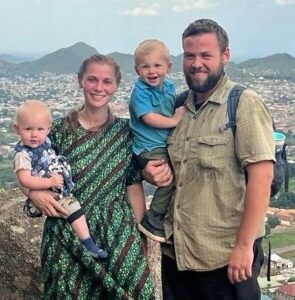
I had the privilege of growing up in a Christian home and of being saved at a young age. Around seventeen years of age, the Lord did a reviving work in my life. For the first time, I began to understand that Christ Himself was the answer for victory over sin. At that time, the Lord also gave me an opportunity to take a month-long mission trip to Kenya with two other young men. One week we devoted much time to witnessing to people on the street. I see this as a time of God pouring fuel on the fire of what He was doing in my heart. Since then, I have wanted to be a missionary in Africa, and I believe this desire came from the Lord (1 Tim. 3:1).
The choice of Cameroon has been a process. While I was in Bible college, there were a few young men that seemed to be considering missions in Cameroon. I thought, “There are other countries in Africa that need missionaries. We do not all need to go to Cameroon!” In 2024, we traveled to Burkina Faso. It seemed that the Lord had allowed some things to point us in that direction, and surely, He had His reasons for allowing us to go at that time. After seeking the Lord, we decided that Burkina was not the place where we were to stay for long-term ministry.
By faith we went through the next open door: Cameroon. We have connections there since my wife grew up in that country. After spending basically the first half of 2025 in Cameroon, we can testify that (1) the Lord has truly begun a great work in that country; but (2) there are so many more cities, towns, and villages still in need of the Gospel and Bible-preaching churches; and (3) many Cameroonians in this generation, even Muslims, are open to listening to the Gospel. A veteran missionary in Cameroon likes to say, “The doors in Cameroon are so wide open the hinges have blown off.” There is indeed a great need in Cameroon for many more laborers.
We believe the next step the Lord has for us is to return to Cameroon. Based on my experience and the testimony of other missionaries, Africa in general is ripe for Gospel labor at this time. The question is, will this generation of Christians obey the Great Commission and take advantage of the window of opportunity God has set before us, or will this be a wasted harvest? The labor will not be easy, but the Lord is able. Will we send and go?
Spring 2026
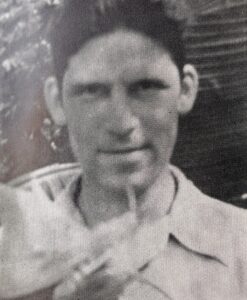


 The Banda, numbering 1,317,700 are the largest ethnic group in the Central African Republic. They live in hamlets of scattered homes under the leadership of headmen. Men hunt and fish, and women gather wild foods and cultivate crops of maize, cassava, peanuts, sweet potatoes, yams, and tobacco.
 Hardship would have been an appropriate middle name for Laura Hardin. Born in Calhoun, Nebraska, on September 28, 1858, Laura’s life of hardship began at four years of age. Her father, Even Hardin, enlisted in the Civil War in 1865, leaving his wife and five small children with no food or money. They endured a terribly cold winter with almost nothing to eat. God sent help, but the times were rough.
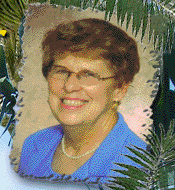 “From the very first, I wanted to go to the most primitive people in the world and so was thrilled when God gave me the privilege of going to West Papua.”* So writes Margaret Stringer, who served for thirty years among people who never heard the name of Jesus before 1980. After ten years on the southern coast of West Papua (1964-74), Margaret went to Senggo, an island village where mission work had just begun. As a linguist, she was there to help translate the Bible into the Citak language, but the team at Senggo had another assignment for her. Several villages had just been discovered further upriver—practicing cannibals who had recently killed four men from an oil company. The team sent Margaret with two Christian Senggo men to learn whether these villages spoke Citak, or some other language.
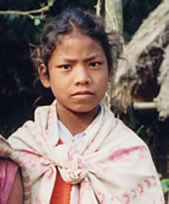 The 394,842 Dang Tharu of Nepal live just south of the Himalayan Mountains. They are of Mongolian descent and make their living by farming and raising livestock.
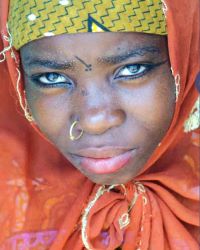
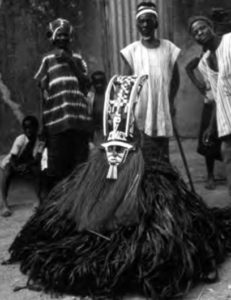 Speakers of the Marka Dafing language are manifold: 25,000 in the Mali Republic and 200,000 in Burkina Faso (located directly north of Ghana). The dialects of Marka Dafing are: Safané, Nouna, and Gassan. In Burkina Faso, these people live on the plains as agriculturalists.