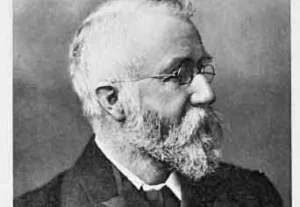
George Grenfell 1849-1906

by Joyce Reed

Does God lead children to yearn for the mission field and hope to go? Will God use people in missionary service who let sin ruin their testimony? We can look to George Grenfell’s life for answers.

George was born in Sancreed, England, August 21, 1849, and the family moved to Birmingham when he was three years old. He began attending Sunday School at Heneage Street Baptist Church at ten years of age and was saved and baptized at fifteen. Early on, he was interested in African missions, being influenced by men of the church and a book by David Livingstone.

In 1873, George was approved for missionary training, and in November 1874, the Committee of the Baptist Missionary Society (BMS) accepted him for service in the Cameroons, West Africa. He set sail with Alfred Saker, his hero. Because Alfred and George believed in self-sustaining economic life within a Christian community, they taught practical skills to the young men of the missionary community.

George married Mary Hawkes in 1876. Tragically, she died in 1877 after giving birth to a stillborn child. Desperately lonely, troubled, and confused, George began a series of exploratory journeys inland looking for the best route to the interior. In 1877, the BMS sent George and Thomas Comber on an exploratory journey of the Congo River with the idea of establishing a mission station. Unfortunately, on August 20, 1878, George resigned from the BMS. Rose, his Jamaican housekeeper was pregnant with his child. They married and named their child Patience. Was God through with George?

Thomas Comber made thirteen unsuccessful attempts to establish a route between Sao Salvador and Stanley Pool. However, it was even more important to establish a depot on the mouth of the Congo River, so Thomas requested the BMS reinstate George to run it. On April 23, 1880, the board reinstated him with restrictions. They would never have reason for regret.

George assembled a purchased steamer which was launched in 1884. He made six explorations of the upper Congo, preaching everywhere he went. George’s vision was to evangelize the whole Sudan Belt, and he made great contribution to that end.

Will God call children to the mission field? George’s life answers a resounding, “YES!” Can a child of God still serve in God’s work after backsliding and losing testimony? Yes, George served God for the rest of His life!

What are you letting hinder you?

Spring 2026

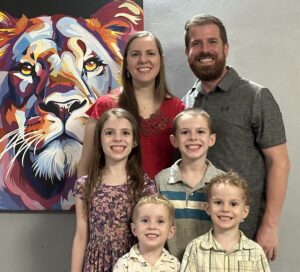
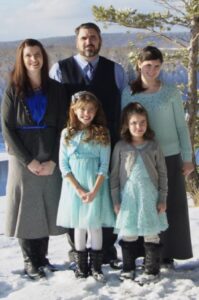
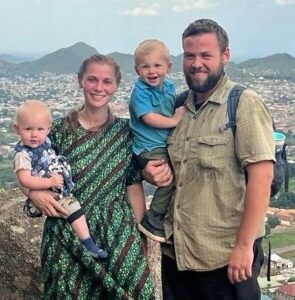
Lorin, Tayler,  Eden, Deacon, Chandler and Enoch Norris

When they are seeing God’s blessings on the field, I jokingly tell BBTI graduates that they are having too much fun, and we must stay here where life is boring.

Tayler and Lorin Norris are certainly enjoying their work in Zambia. Tayler was born into a godly home in the Azores Islands, Portugal. His father was in the United States Air Force. Like many children in Christian homes, he made a profession of faith at an early age. However, as he grew older, he realized that he was not saved. He trusted Christ at age twenty while in Bible college. Lorin was born in Oregon and grew up in a Christian home. She accepted Christ at age twelve. Both Tayler and Lorin were homeschooled.

Lorin’s parents, Jeff and Nanci Klein, came to BBTI in 2007 when Lorin was in her youth. The Klein family served in Argentina, working with the Mapuche Indians for several years. During a furlough, the Klein family met the Norris family, and after a long-distance relationship, Tayler and Lorin married.

When the Norris family felt the call of God to go to Africa, it was natural for them to attend BBTI and obtain the Advanced Missionary Training. They graduated in 2021.They are sent by Coast Hills Baptist Church in Santa Maria, California and assisted through Baptist International Mission Inc.

Their plan was to go to Mozambique, but the Lord redirected them to Zambia where they arrived in April 2022. They settled in the city of Chipata (population 300,000) and began serving with a veteran missionary family.

When Tayler and Lorin began learning Chichewa, they found their BBTI training to be a great help. English is the official language in Zambia, and they became very busy in ministry. Language learning requires careful planning and discipline, and ministry can conflict with language learning. Chichewa is a tonal language. With one tone chimbuzi means “toilet” and with a slight tone change it becomes “big goat.”

God has given the Norris family many opportunities to minister. In August 2022, they hosted a medical clinic in the village of Chiyembekezo where they treated 1,000 people and gave them a Gospel witness. Soon after, they began the Hope Bible Baptist Church in that town. By door-to-door visitation and Bible studies, the church has grown rapidly. Also, Tayler taught in a village Bible institute. This is much needed because, as hard as it is to believe, even some local Baptist pastors would say salvation is gained by good works, keeping the Ten Commandments, and baptism. In January 2025, they began a new church plant, Sunrise Baptist, in Katete, a city of nearly 80,000.

Lorin, besides being a wife, mother, and homeschool teacher, also teaches junior church. Her class started with forty to sixty children but grew to one hundred eighty! Talk about fun! Most Zambian churches have no ministry for children.

Pray for the Norris family. Medical help in Zambia is not always good. Enoch broke his arm. They took him from one hospital to another looking for one with an x-ray machine and a pediatric doctor. Two days later the bones were set. But while in the hospital, the metal curtain rod fell and cut his head.

The Norris’ fun will be diminished this year because they need to come back on furlough to visit supporting churches and new ones to raise more support. Perhaps your church could have them for a meeting. Contact them at: norrisfamilyministry@gmail.com.

Spring 2026

Tumari Kanuri woman photo: used by permission of International Mission Board

Over four million Kanuri people live in the West African countries of Nigeria, Niger, Chad, and Cameroon. Each of the thirty-four existing Kanuri dialects is distinct. Many have at least a portion of the Scriptures, and some have whole Bibles. The Tumari Kanuri of Niger, however, still need a translation. That is 110,000 souls without God’s Word.

Almost all Kanuri are Sunni Muslims and follow Muslim customs of food and dress; perform ceremonies for circumcision, marriage and burial; and observe holidays such as Muhammad’s birthday, the sacrifice of the ram, and the month of Ramadan. The vast majority of the Kanuri are educated in, and can read, the Quran. But the Tumari Kanuri have no Bible to read.

The Kanuri main occupations are farming, cattle raising, and trade. Craft production and salt processing are also of note. Kanuri people are hospitable and peace loving. The average man loves his tribe and feels his is the best culture and language. He knows nothing of a heavenly home.

Tribal face markings, the use of which is declining, are considered a mark of beauty, social status, and a symbol of pride in heritage. In the era of African slave trade, these markings protected the wearers from capture because it identified them as a member the powerful Kanem-Bornu Empire which was able to exact revenge.

The Lord of Lords wants the Tumari Kanuri to know him and be part of his Kingdom. But they never will unless someone gives them the message of God’s Word.

Spring 2026

by Chris Matthews, Director

A hill preacher once prayed, “God send me anywhere as long as I can see it from my front porch.” Like a fable, this fiction has a truth that we must consider. How far is too far for the Gospel’s sake?

The first word of the Great Commission is “Go:” not “wait,” not “gather,” but “go.” And not just go anywhere—go farther. Jesus did not say, “Stay where it is comfortable and convenient.” He said, “Go ye into all the world.” The heartbeat of the Great Commission has always pulsed outward, beyond familiar borders, faces, and languages.

When Jesus walked this earth, He was constantly moving toward the next town, the next village, the next soul. He said plainly, “Let us go into the next towns, that I may preach there also: for therefore came I forth” (Mark 1:38). That simple statement reveals the very purpose for which He came. His ministry was not stationary but advancing—never content with those already reached, always compelled by those who had not yet heard. He came to seek and to save that which was lost.

The apostles followed the same pattern. From Jerusalem to Judea, to Samaria, and unto the uttermost part of the earth—their direction was always outward. The book of Acts records a missionary movement that could not sit still. When persecution arose, the disciples “went everywhere preaching the Word.” Paul was driven by the same conviction when he wrote, “Yea, so have I strived to preach the gospel, not where Christ was named, lest I should build upon another man’s foundation” (Romans 15:20). He was not content to strengthen only the existing churches; he pressed toward regions beyond, longing to take the Gospel where it had not yet been heard. Shall we not first consider the unreached, then the misreached, before considering staying near home?

Sadly, many today have reversed the order. We consider near
before we ever consider far. We often invest time, effort, and resources in what benefits us, while the fields that are truly white unto harvest remain untouched. Churches raise funds for new buildings and better technology while millions still live and die without ever hearing the name of Jesus Christ. We are not wrong to care for our own community—but we are disobedient if we do so while ignoring the rest of the world.

The Great Commission is not sequential but simultaneous. Jesus did not say, “Once you finish in Jerusalem, then move on to Judea.” He said, “Ye shall be witnesses unto me both in Jerusalem, and in all Judea, and in Samaria, and unto the uttermost part of the earth.” The word both means that our vision must stretch to every circle at once.

To consider far before near does not mean neglecting our neighbors; it means seeing them through the same lens as the nations. It means we begin with God’s global purpose in mind and work backward to where we stand. If our first concern is the uttermost, our local efforts will be strengthened as our burden for the lost intensifies.

The truth is, our hearts tend to shrink to the size of our routine. We see only what is before us, and we justify it as faithfulness. But Jesus said, “Lift up your eyes, and look on the fields; for they are white already to harvest.” The problem is not the harvest—it is our eyesight. We must lift our eyes before we can lift our feet. Vision always precedes motion. When we look far, we begin to move far.

It may seem impractical to think about the farthest corners of the world when the needs nearby are so great. But that has always been the tension of obedience. The needs will never end at home—but obedience to Christ’s command must begin with His priorities, not ours. The Gospel should not stop with us. It is a river, not a reservoir.
Every believer must ask, “Am I going, sending, or standing in the way?” Every church must ask, “Are we structured around our comfort or His command?” The call to go is not a suggestion for a few; it is the identity of all who follow Christ. Whether our path leads across the street or across the sea, the direction must be outward.

The task is great, but the command is clear: Go. Go where Christ is not known. Go where there is no church, no Scripture, and no witness. Go where others have not gone because the cost is high and the path is hard. Go, because He went first.

To consider far before considering near is to think like Christ, to plan like the apostles, and to live like those who still believe that the Gospel is the power of God unto salvation, to every creature.

Spring 2026

by Rex Cobb 

Joe Moreno

I met Joe Moreno in 1975 when he visited BBTI. I was a missionary student preparing to do what Joe had done for nearly thirty-five years, reach the most unreached people groups. For him this meant finding and making friendly contact with the Ayorés, a savage Bolivian Indian tribe. We students stayed up almost all-night listening to Joe’s stories and asking questions. We did not fully realize we were in the presence of a truly great man. However, Joe would not call himself a missionary, probably because he had only a sixth-grade education and perhaps due to his material status. His wife had left him and his three young children.

Joe was born in Texas, and Spanish was probably his first language. By day he was a mechanic and by night a carouser. At twenty-four years old, he moved to Mount Pleasant, Michigan, where his life of debauchery would continue for six more years.

A group of mission-minded men and women in the Mount Pleasant area had learned of the helpless condition of the Ayoré Indians and were making plans to reach them. The leader of the group, Cecil Dye, was pastoring a church in Mt. Pleasant and had also begun a youth club with a strong emphasis on missions. Joe heard Cecil preach the Gospel and was gloriously saved. His life was instantly transformed, and he began witnessing to everyone. When he heard of Cecil’s mission plans, Joe said, “I can carry a missionary’s suitcase. I can go and be Cecil’s flunky! ” Read the exciting story in the book, God Planted Five Seeds, by Jean Dye Johnson, published by Ethnos360.

In November 1942, this newly formed group (that became known as New Tribes Mission) was founded by Paul Fleming and Cecil Dye and moved to Bolivia. The group consisted of Cecil and Dorothy Dye, Bob and Jean Dye, Dave and Audry Bacon, George Hosbach, Eldon Hunter, and Joe Moreno. Joe’s children, as was the practice of the group, were placed in a mission boarding school. Joe’s knowledge of Spanish was a great help to the group, and he also began reaching out to the Spanish-speaking people.

In June 1943, after much prayer, planning, and preparation, Cecil, Bob, Dave, George, and Eldon took to the jungle trails, seeking to make friendly contact with the Ayorés. The Ayorés had killed numerous so-called civilized ones, and civilized ones had killed many Indians and enslaved their children. The army and the railroad company wanted the Indians tamed or killed—it probably did not matter which—so they were in favor of the missionaries’ efforts. The group walked over thirty miles of mountains and cut through one hundred miles of dense jungle looking for Indian trails and footprints. When they found Ayoré campsites, they left gifts. Eventually the Indians left gifts for the missionaries. It is believed they made contact on November 19, 1943. They were never heard from again. Their wives and others hoped that they had only been taken captive, not killed, but it would be another five years before reliable testimony from the Indians who killed them eliminated all doubt. Their bodies were never found, but a few durable personal items proved the native’s account.

Joe was evangelizing Spanish-speaking villages and did not accompany the five men. After the group’s disappearance was obvious, Joe became the leader of the mission and dedicated himself to two things: finding the men if they were alive and making friendly contact with the Indians. Thus, Joe undertook the forward thrust of the mission. He would leave the base camp for weeks and sometimes walk hundreds of miles looking for Ayoré trails and campsites. Friendly contact was finally made after five years.

As we talked with Joe that night in 1975, he told of the Ayoré practice of burying alive an old person who could no longer keep up with the nomadic tribe. He tried to stop this, even by getting into the hole with the person. They either pulled him out or began throwing dirt on him.

My family moved to Oaxaca, Mexico, in 1979 and began working with an Indian group. People there asked me if I knew Tomás Moreno. They described him as an old man who traveled in the mountains telling people about Jesus. I said that I did not know him. Only recently I learned that Joe’s name was Ab Tomás Moreno. He died in El Paso in 1987. For someone unqualified to be a missionary, he did a great missionary work!

Fall 2025

By Chris Matthews, Director

We have seen a drastic reduction in the number of missionaries going to the field since 2020, and churches now struggle to find missionaries to support. We are losing more missionaries off the field than we can send to replace them. Too few are going, and of those who do, many return prematurely. Faced with these challenges, it is past time for us to assess the situation and take corrective action.

It is said that anybody can find a problem, but it takes leadership to find the solution. Let us dive into the problem and then start the conversation on some possible solutions.

Who is at fault? Was it COVID and the tightening hand of world governments that resulted from that season of time? Is it that the church is failing to promote missions and urge its members to consider missions as the primary call of the New Testament? Is it the family unit that is willing to give its finances, prayers, and well wishes to others but not willing to send its children and grandchildren?

COVID certainly had its damaging effect. Most governments around the world tightened their grip on their people. While we were busy arguing about whether a person should wear a mask or not, the governments were tightening their control in many more pressing ways. Some countries have used COVID-19 as a reason to expel foreigners from the country and have been reluctant to allow them back in. Visas in many countries are for shorter periods and more challenging to obtain. Nevertheless, some countries, seeing the detrimental effects of not welcoming foreigners, have opened their doors wide, allowing tourism, business, and even missionary work to flourish. We are not of this world, and it is not the governments that determines where we go as missionaries. It is time that we shrug off the excuses and get to the biblical mission, which is missions.

It is also possible that our churches took a lackadaisical approach to missions for a season. Just a few years ago, pastors received many calls and emails from missionaries, and they had to weed through and determine which missionaries they would accept and which ones they would refuse. It seemed that many were going, and so possibly the urgency to see folks sent from their church diminished. I believe it ought to be the goal of every church to fulfill the Great Commission beginning near them at what we might call their “Jerusalem and Judea,” then to the people in foreign places that maybe are not so easy to love in their “Samaria,” and to the unreached people groups in their “uttermost parts of the earth” (Acts 1:8). It seems that we can allocate labor and money for almost anything we want to accomplish in the church, other than sending missionaries. How do we fix this? I certainly do not have all the answers and would be a fool to assume I have the answers for every individual church, but here are some suggestions.

Beginning with the youngest ages, as we tell the Bible stories of people who went and served God, we can encourage our children that God will send them to do a great work for Him if they are willing. We could stop using negative statements, such as “not everyone is called to the pastorate or to be a missionary,” and instead tell every person that they have a calling. They are commanded to go. Going honors God, allowing us to trust in the promise found in Psalm 37:23, “The steps of a good man are ordered by the LORD: and he delighteth in his way.” God will order our steps, which will provide both the place and methodology if our feet are surrendered.

We must preach the truth to our people that the Gospel requires us to go and share it with others so that they might be saved. Yes, it ought to be to our neighbor and our coworkers, but it also ought to be simultaneously to the uttermost parts of the earth. We must realize and preach that God does not just want our prosperity but also our person to go overseas.

Families need to awaken to the great opportunity of missions and to the high calling that it is. I do not have a biblical command to be a doctor, lawyer, electrician, laborer, etc., but I do have a command to preach the Gospel to every creature. Our families ought to be on their knees together, praying that the Lord would allow them and/or their children or their grandchildren to go and preach the Gospel where it has not yet been proclaimed. Faithful worship at the house of God ought to take precedence over the worship at the stadium that many families seem to see as a priority. Let us cheer and shout when family members share the Gospel with a friend or somebody they meet along the way. I would rather my children be in the most dangerous place on earth and in the will of God than living at ease with riches and glory but without the presence and approval of God.

It is time that in every Christian setting, missions be our first priority. If you believe this to be extreme, then it would be a good time to consider the commandments given in the New Testament. The four Gospels all end with a Great Commission to go and preach the Gospel. Acts begins with the admonishment to go, and Romans asks the questions “how shall they believe in him of whom they have not heard? and how shall they hear without a preacher?” The New Testament is written by men who went, preached, suffered, and died for the sake of the Gospel. It is time that we live for the same cause.

Who is at fault? Certainly not God! He is the Lord of Harvest, and with his help, we must find solutions and make corrections.

Fall 2025


A non-native English speaker thought that “thanks for nothing” was a nice thing to say to a person who tried to help you with something but were unable to succeed. So instead of saying, “Thanks anyway,” she would acknowledge their effort by saying, “Thanks for nothing”!

by Tricia Paulichen

Marco and Tricia Paulichen serve in Uruguay

You do not realize how much of life you take for granted until you become a missionary.

Back “home,” you knew how everything worked. Paying bills, getting groceries, tracking down deals? Routine. Booking a doctor’s appointment, navigating paperwork, following traffic laws? Second nature. You knew how to handle emergencies and navigate social situations without thinking twice.

Now, imagine waking up on another planet.

Suddenly, nothing makes sense. The strange one-eyed blue aliens around you speak only gibberish. Their rules are different. Their systems are foreign. What used to be simple tasks now become monumental obstacles.

That is what it feels like to move overseas. You are still an adult, but your brain turns to mush, and you function like a toddler… and often, you are treated like it. Most people back home have no idea.

“When we cross cultures, we leave behind parts of who we are and must rebuild a sense of identity in a new place.”
– Sarah Lanier, Foreign to Familiar

You were once articulate, but now you speak like a caveman with confidence issues. Your ability to communicate determines your independence, and in the early days, you have none. You avoid conversations out of fear, but that slows your progress. The frustration builds—knowing what you want to say but being unable to express it—until you find yourself nodding along just to end the interaction.

Grocery shopping, once effortless, becomes a scavenger hunt. Baking soda? Only sold in pharmacies. Molasses? Available, but in greenhouses as fertilizer. (No kidding.) Opening a bank account requires stacks of notarized documents, multiple visits, and an abundance of patience.

Even something as basic as using a public washroom can go hilariously wrong—like walking in, only to realize, too late, it is being used by both genders as an election voting booth. (Yes, really.)
No one tells you these things outright. You learn through experience, sometimes painfully. And when you misstep, you might never understand what you did wrong. It is trial and error, and each attempt brings a new complication.

Contrary to popular belief, missionary life is not all fun and adventure. Sometimes, it is just exhausting.
You expect an adjustment period, but no one tells you how deep the exhaustion runs nor how long it lasts. Even after months or years, the challenge of culture shock still sneaks up on you. You miss the ease of shopping, the rhythm of daily life, the comfort of blending in. Building relationships takes effort and, even then, you often feel like an outsider. As my immigrant father-in-law often said, “Once you leave your birth country, no matter where you live, you’ll never fully fit in again.”

So why do we do it?

That reality is hard to explain. But underneath the exhaustion is a deeper sense of purpose—one that keeps you going, even when you feel clueless. At first, every day feels like a battle. But slowly, you change. One day, your brain is not fried by 2 PM. Life gets easier. And eventually… you adjust.

Fall 2025

by Janelle W.

A younger Janelle dressed
for a mission conference

My childhood was saturated with God’s Word and biblical instruction. I believed on the Lord Jesus as a child and since then have desired to serve Him in foreign missions. I dreamed of being called to Africa. While in Bible college, my eyes were opened to unreached and often avoided nations shackled and blinded by Islam. I volunteered to go and bring light if God would allow. 

Through the years, God has given me the opportunity to minister short term in several countries around the world which further strengthened my desire to go where “Christ has not been named.” After each trip, I asked God if He wanted me to return and serve in that country.
I was unsure if and when the Lord would allow me to enter into foreign missions, so I determined to help prepare the next generation of missionaries under my influence. For the last several years, I have had the amazing opportunity to teach God’s Word to children in our church, school, and community. 

In the last few years, God opened the door for me to take a trip to the Middle East and another to North Africa. I was able to see firsthand the lack of access to the Gospel. I watched people react to hearing the truth spoken in love. I met young believers who have had a fraction of the exposure to the Bible that I have and how they have endangered their lives to receive more truth. I saw people waiting for light.

After my trip to North Africa, I began praying about the possibility of taking God’s light there. While teaching through Hebrews 11 in my Bible class over several months, God confirmed in my heart that this was the step of faith I needed to take. It is impossible to please God without faith. God is pleased when we believe that He will do what He said He would do. When Abraham was called to a place he could not see, he believed God and obeyed. He believed that God WAS able and WOULD keep His promises. Philip left a city in revival and ran to the desert at the Spirit’s leading. He opened his mouth and shared Jesus with one man that would reach others in Africa. God desires that all people come to Him in faith, and I believe that God can use anyone … including me.

Would you pray with me that God would send laborers to North Africa? Jesus told us to pray for laborers and He told us to go! God wants all of us to be involved. How could God use you to change someone else’s story for eternity?

Winter 2025-26

by Joyce Reed

John Eliot 1604-1690

John Eliot was born in 1604 near London, England. We know little about his early years, but he received a degree from Cambridge University in 1622.

He became connected to the Puritans while serving as an usher in the grammar school of Rev. Thomas Hooker, where he saw the power of godliness in their lively vigor and service. John soon devoted himself to the ministry of the Gospel with the Puritans. However, the Puritan persecution by the Church of England was so great that they emigrated to America.

John, along with three brothers and three sisters, arrived in Boston on November 4, 1631. It was a very harsh time for them, but they made it. John entered the ministry there that year at the age of twenty-seven years. That same year, John married Miss Hannah Mumford. They would eventually have six children. He was called as pastor of the church in Roxbury where he would pastor until his death nearly sixty years later. John never received more than three hundred dollars a year for his service, but he considered himself rich. He was indeed rich in God’s blessings.

He longed to reach the poor Indians with Christ’s salvation message. However, he had to, first, gain their confidence and learn their most difficult language. It took him almost two years with the aid of a Pequot Indian named Cockenoe to do this, but the red men became devoted to him. The medicine men hated and persecuted him, but John was set to serve God among the Indians. He did this and still served his white congregation. In 1660, three thousand, six hundred Indians had become Christians.

John believed in the work of translating the Bible into the “heart language” of the people. He devised an alphabet for the unwritten Pequot language. With Cockenoe’s help, he translated the Bible into Pequot. In September 1661, the New Testament was printed, and two years later, the whole Bible was completed. This was the first Bible printed in America.

In John’s later years, he could no longer “go” to the Indians, so he asked church families to send their negro servants to him. Thus, he also became known as the founder of the Christian missionary work to the negroes of America.

Missionary opportunities lie at our very doors. John Eliot’s life teaches us to just go and do God’s will: reach the lost with the Gospel of Christ both near and far. Look what Christ can do through one life sold out to Him!

Winter 2025-26

No Birwa photo available.
This Sotho man is from a related ethnic group.
Photo: Source: Steve Evans – Flickr
Licensed under CC BY-NC 2.0

The Birwa, numbering 165,000, live mainly in the Bobirwa Subdistrict of Zimbabwe with smaller populations in Botswana and South Africa. They migrated from Transvaal (a pre-apartheid former province of South Africa) between the 16th and 17th centuries.

Main industries among the Birwa are agriculture, animal husbandry, and tourism. The soil of the Bobirwa Subdistrict is fertile. However, farming is difficult due to the inconsistent rain of the semi-arid climate. Tourism is increasingly important and is enhanced by the wildlife of the many national parks in the area. Tourists also come to experience the regional culture. Birwa crafts, foods, dances, and traditions are preserved at cultural festivals and the Bobirwa Cultural Center.

Although some Birwas call themselves Christians, most Birwas practice traditional beliefs of animism. Animism, the oldest pagan religion, is a belief that all things, both living and non-living, possess a soul. Respect for spirits and veneration of ancestors is an integral part of Birwa life.

Ethnologue.com classifies Birwa as “a stable indigenous language … [which] is thought to be used as a first language by all in the ethnic community.” There is no Bible in Birwa, no Jesus film, no Gospel recordings, and no Christian radio broadcast.

Tourists visit the Birwa people for a short time to get. Pray that missionary Bible translators will go there to stay and give!

Winter 2025-26

Steve Schnell was born in 1965 in Nebraska to a Roman Catholic family. He tried to be a good Catholic, confessing his sins to a priest and observing the sacraments. He joined the Navy in 1986. He led a sinful life until a fellow sailor confronted him with the Gospel of Christ. He trusted Jesus and became a bold witness. His buddies tried in various ways to tempt him back to his former lifestyle, and he got in “trouble” with his superiors for his bold witness for Christ.

Margie was born in Pennsylvania. Her family roots run deep in the Old Order (Horse and Buggy) Mennonite religion. A friend was killed in a highway accident which made Margie consider death and eternity. Her older brother was saved, and influenced greatly by his witness, she trusted Christ in 1986. Steve met Margie in Tennessee, and the Lord impressed Steve that she was to be his wife. Steve felt he needed the approval of her father, but his friends told him he did not have a chance. He was nervous but passed her father’s test, and they were married in April 1991.

Their plan was to settle down on a farm, work hard, serve God in Tennessee, and live a wholesome life. That plan was challenged by the call of the multitudes living and dying without Christ with little or no chance of hearing the gospel. The Schnells attended New Tribes Bible Institute for a time and also received extensive Bible teaching at their church.

The Schnells graduated from BBTI in 1996. In 1997, with the sponsorship of their church, they became missionaries to Cambodia. The Khmer language was Steve’s first experience at learning a new language, but it was Margie’s third language. With the Advanced Missionary Training (AMT) skills acquired at BBTI, they learned Khmer without attending a language school. They communicated the message of Christ to the Khmer people for several years, started indigenous churches, translated much Christian literature, and produced a radio program that continues today.

The Lord led the Schnells back to BBTI in 2011, and Steve’s experience in the Asian Buddhist culture became a valuable addition to our Culture Class. He has also taught Ethno-musicology and Chronological Bible Teaching. Outside of the classroom, his building skills have been an invaluable help. Margie has cared for students’ children so mothers could acquire the AMT along with their husbands.

It would seem that BBTI cannot function without the Schnells; but it must. Paul received the Macedonian vision, and the Schnells have received the “Slovenian vision.” Peter Marshall, after his first heart attack, was questioned by a friend if he learned anything from his health scare about overworking, and he replied, “Yes, I learned that the Kingdom of God goes on without Peter Marshall.” And the Schnells know that BBTI will go on, too! The 2.126 million people of Slovenia need the Schnells more than BBTI does.

Slovenians are friendly toward Americans. It is a beautiful country with a great part of the Alps in the northwest. Even though the cost of living is somewhat lower than in the USA, it is higher than at BBTI. This means the Schnells need to raise more support. They are currently visiting churches, asking for the prayers and the financial help of God’s people. Pray for an open door to Slovenia for Steve, Margie, and eighteen-year-old Joel who is a current student at BBTI. Their first challenge will be language and culture learning. It has been twenty-seven years since Steve and Margie learned a new language. Pray as they meet this challenge. Thank God for people that will take on new challenges and prove again the faithfulness of God.

Contact info: schnellfamily8@gmail.com

Winter 2025-26

by Chris Matthews, Director

It is easy to forget that the partnership between churches and missionaries is not merely financial—it is a partnership for the sake of souls. The missionary labors in the field so that churches can reach their fields. When communication between them becomes mechanical, the partnership begins to lose its vitality. The Great Commission was never designed to be carried out by individuals working in isolation. It is a shared work, with each contributing to the same spiritual goal: the salvation of souls. When communication thrives, the partnership flourishes. When it withers, the work weakens.

Modern missions often lose that personal touch. Churches give, missionaries write, and the relationship can quietly slip into a business arrangement—efficient, polite, and lifeless. The missionary’s letter becomes a report to donors, and the church’s offering becomes a bill to pay. The warmth of fellowship is replaced with the status quo of obligation. But missions is not a commercial transaction; it is a spiritual partnership. The missionary is not a contractor hired to do evangelism on behalf of the church. He is a representative of the church, extending the church’s reach to places its members cannot go. Likewise, the church is not a customer demanding results; it is a co-laborer sending reinforcements into the battle.

True missionary communication breathes life back into that relationship. When missionaries write with sincerity and transparency, sharing not only their victories but also their struggles, the church learns to pray more specifically and to care more deeply. A simple line like, “Please pray for strength,” may mean much more than physical fatigue—it may be the missionary’s quiet way of saying, “I am discouraged, but I am holding on.” Churches that read between the lines, that listen with spiritual ears, will hear the heartbeat of their missionaries and respond with compassion and prayer.

Likewise, churches must learn to communicate back. A missionary who spends months or years overseas may go long stretches without a single personal note from supporting churches. He may faithfully send letters, photos, and updates, yet hear little in return. A short handwritten letter, a kind email, or even a message from a Sunday school class can make a tremendous difference. It reminds the missionary that he is not forgotten—that his partners at home are praying, watching, and rejoicing with him. Real communication is not one-way. It is not the missionary always speaking and the church always reading. It is conversation, fellowship, and mutual encouragement.

The danger of purely transactional communication is subtle but profound. When churches expect constant excitement or visible results, missionaries feel pressured to perform. Reports become polished highlights instead of honest reflections. The numbers may look good, but the soul of the message is lost. Some missionaries begin to feel that their worth depends on how impressive their letters sound or how quickly they can produce measurable outcomes.

For communication to be real, it must be relational. Churches can cultivate this by praying for specific needs rather than general ones. When a missionary mentions an upcoming event, sickness, or ongoing struggles with government paperwork, a church that takes time to pray and follow up afterward becomes a personal part of that story. The church and the missionary share the journey and later the victory. It has never been easier for such communication to take place because of the technology we use daily. When churches and missionaries learn to communicate in this spirit, both sides are enriched. The church gains a living awareness that missions is a living extension of its own ministry. The missionary, in turn, draws renewed strength from knowing that his partners are not distant financiers but fellow soldiers who stand beside him in prayer. That is the essence of real missionary communication: shared joy, shared sorrow, shared work.

If the church views missions as a distant department, it will lose its heart for the world. If the missionary views churches merely as sources of funding, he will lose his connection to the body that sent him. But when both see themselves as “labourers together with God” (1 Corinthians 3:9), the lines between sender and sent blur into one united effort. The church becomes present on the field through communication, prayer, and giving; the missionary extends the church’s witness into places unknown. Communication becomes communion.

Real missionary communication is not paperwork; it is partnership. A partnership should have unity within it because of a shared mission and purpose. It is not “us and them,” but us together seeking the salvation of lost souls and planting churches to train believers to carry on the same purpose.

Both missionaries and churches need to develop ways to foster genuine and personal communication. Missionaries should certainly care deeply for the churches supporting them: “And by their prayer for you, which long after you for the exceeding grace of God in you” (2 Corinthians 9:14). And likewise, the churches should show care in ways that go beyond financial support. “I thank my God upon every remembrance of you, aways in every prayer of mine for you all making request with joy, for your fellowship in the gospel from the first day until now” (Philippians 1:3–5).

Winter 2025-26

I have been filling the pulpit where needed, and last Sunday I preached in Marianna. I met with one of the elders before service and meant to ask him if he also had a list of the preachers who would be preaching. But instead of saying “predicadores” (preachers), I said “pecadores” (sinners). I had just asked for a list of the sinners! I knew instantly I had made a mistake, when the elder replied that we don’t need a list because “somos todos pecadores” (We are all sinners.). —Rick, Bolivia

The Banda, numbering 1,317,700 are the largest ethnic group in the Central African Republic. They live in hamlets of scattered homes under the leadership of headmen. Men hunt and fish, and women gather wild foods and cultivate crops of maize, cassava, peanuts, sweet potatoes, yams, and tobacco.

The Banda are woodcarvers, crafting both general use and ritual objects. They are best known for their large slit drums. Slit drums, lacking a drum head, are played by striking near the slit and produce a resonance within the drum chamber.

There are eleven Banda subgroups in the Central African Republic, each of which speaks a distinct dialect. Many groups have at least part of the Bible, but the Banda-Banda Ndi speakers, numbering 167,000, are still in need of a translation.

Catholicism was introduced during the French colonization of the late 1800s, and Protestant missionaries arrived in the early 1920s. Islam has grown to 8% through both immigration and conversion. “Christianity” is the dominant religion. However, many Banda also practice their traditional beliefs of animism and sacrifice to ancestral spirits who are believed to have the power to destroy or to save. How can they know the truth without a Bible?

Spring/Summer 2025

Michael Shaver Family

I was born into a Christian family. One day, when I was ten years old, my relatives gathered all the kids in their living room. We sat down and waited. Then my cousin got up, stood behind a chair, and began preaching a sermon… AS A YOUNG TEENAGER!!!! I was blown away! It had never crossed my mind that a young person could be a preacher. From that moment forward, that is what I wanted to be.

Months later, our new church had its annual missions conference where thirty-five missionaries presented their works. The fellowship hall was filled with missionary displays representing the need in all corners of the earth. I was attending the Christian school and in every class a missionary told of their field and their burden to reach it for the Lord. Again, I was blown away. From that moment forward, I wanted to be a missionary.

That desire remained all through junior high and high school. I began college, majored in missions, and was burdened for many places. I graduated with a strong burden for India but had no peace about going anywhere.

I got married and the Lord very clearly moved me to a church in Kentucky. No paid position. Not even a promise of a position. Just a clear, “Go and serve.” So, we went. After five years, the Lord opened the door for me to take a paid position at the church, and I continued the roles I had already been filling. During this time, God gave me a lot of perspective and matured me.

During another missions conference, two years later,the Lord again stirred me. I told another staff member, “Pastor better stop preaching on missions or I’m going to the mission field!” Four months later, I knew very clearly that God wanted us in missions. When I approached my pastor, he said, “That’s wonderful! Where?” I looked at him and said, “I don’t know.” He replied, “That’s ok. If you don’t have a Where then pick a Who.” He began to list some quality missionaries, but I said, “Honestly God has already put someone on my heart.” (It was a cousin I was sitting next to on the floor when I first saw a young person preach.) Missions was on his heart as well but he had not yet confirmed it with the Lord. My pastor sent me to talk to him, and He told me he had been asking the Lord for a partner. Through prayer, God soon confirmed that we were to take the Gospel to Iceland as a team.

Spring/Summer 2025


Hardship would have been an appropriate middle name for Laura Hardin. Born in Calhoun, Nebraska, on September 28, 1858, Laura’s life of hardship began at four years of age. Her father, Even Hardin, enlisted in the Civil War in 1865, leaving his wife and five small children with no food or money. They endured a terribly cold winter with almost nothing to eat. God sent help, but the times were rough.
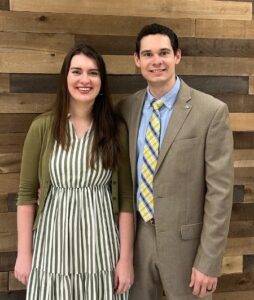
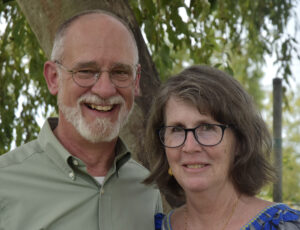
Around eight years of age, Laura checked out a missionary book from the Methodist Church. Her mother explained to her the need to tell the world about Jesus. Laura told her mother she would like to do that someday. God heard her heart and provided greatly so she could. One night, at a revival, she was saved! Her missionary desire grew strong.

God molded Laura in the fires of hardship that well prepared her for what she and her future husband would face on the mission field. Through an Indian uprising, a prairie fire, a freezing night alone on the prairie, a tornado, diphtheria, and typhoid, God prepared her. When crops failed and there was no money for her education, she questioned if she had been wrong about God’s call to her for missions. A well-meaning friend had mentioned that maybe it would not be so hard if God was really calling her to go. How many preparing for the mission field have let the devil so easily steer them from going? We must all realize that when hardships come, it is no indicator of whether God’s call is real or not. How tragic it would have been if she had listened to wrong advice!

On September 28, 1883, Laura set sail for Burma. In 1886, her fiancé, Arthur E. Carson, arrived. He was appointed to open a work among the Chins, who had never had a missionary. Laura and Arthur were married immediately. They soon left for the Chin people, going beyond civilization where no white woman had ever been. They faithfully served through daily hardships and sacrifices until God called Rev. Carson home on April 1, 1908. He had served faithfully for twenty-two years. Laura served for another twelve years before failing health forced her to return to America.

What if Laura had given up on her call because it was too hard? About ninety percent of an entire people group numbering nearly three million might not have ever heard the Gospel. This couple believed ALL hardships and sacrifices were endurable to give the Word of Life to people in their own language and to uplift the souls in darkness to God’s marvelous Light. Hardship and sacrifice come with every worthwhile venture. To what greater venture can we give our lives than to the fulfilling of Christ’s commission?

Source: Laura Hardin Carson, Pioneer Trails, Trials and Triumphs
Photo Source: HathiTrust Digital Library.


The Banda, numbering 1,317,700 are the largest ethnic group in the Central African Republic. They live in hamlets of scattered homes under the leadership of headmen. Men hunt and fish, and women gather wild foods and cultivate crops of maize, cassava, peanuts, sweet potatoes, yams, and tobacco.

The Banda are woodcarvers, crafting both general use and ritual objects. They are best known for their large slit drums. Slit drums, lacking a drum head, are played by striking near the slit and produce a resonance within the drum chamber.

There are eleven Banda subgroups in the Central African Republic, each of which speaks a distinct dialect. Many groups have at least part of the Bible, but the Banda-Banda Ndi speakers, numbering 167,000, are still in need of a translation.

Catholicism was introduced during the French colonization of the late 1800s, and Protestant missionaries arrived in the early 1920s. Islam has grown to 8% through both immigration and conversion. “Christianity” is the dominant religion. However, many Banda also practice their traditional beliefs of animism and sacrifice to ancestral spirits who are believed to have the power to destroy or to save. How can they know the truth without a Bible?

Spring/Summer 2025

Wil maps out places still in need.

God’s plans and ours do not always coincide, but you must admire missionaries who plan to stay for life! Wil and Trina Muldoon are of this group. They went to the mission field much later in life than most; Wil at sixty-three, and Trina several years younger. Theirs is not a comfortable place but a remote coastal village called Baimuru in Papua New Guinea (PNG). Wil describes their quarterly supply run to the capital: “We travel only by dinghy in our area. When heading into Port Moresby for supplies, we spend an hour going down river to the Gulf of Papua, and then 4 hours on the sea to arrive in Kerema, the closest place we can connect with a road to continue our trip to the city (another six to eight hours). The village grass airstrip has not been open for several years.”

Their village has no electricity. The Muldoons have a generator, but it is very expensive to operate and requires transporting barrels of gasoline ($5.94 per gallon) and a lot of prayer and ingenuity to keep the thing running! How did they arrive at such a place at that time in their lives?

Wil left Vietnam addicted to drugs, disillusioned with religion, and without purpose in his hippie lifestyle. He went west for a simpler life, learned the farrier trade, traveled in a mule-drawn wagon, and also worked as a cowboy. Then, a missionary to the Navajo Indians gave him the Gospel! Everything changed. He attended Bible college, married Trina, and became a missionary to the West and native Americans. Later, he founded a church in Wyoming which he pastored for sixteen years. He was comfortable.He spoke the language and understood the culture. The church was prospering. He could have stayed there.

But he learned from PNG veteran missionary Matt Allen that people in two dozen villages in his area were begging for missionaries to come start a church. But Wil was too old. Or was he? Matt said, “No! Men with age and experience are what we need. Get over here!” So, the Muldoons began at BBTI in 2010. They raised support and left for PNG in September 2012. God led them to a remote, abandoned mission station with fifteen acres of land. They have since developed a unique training program.

Poorly educated, ministry-minded people come as family units and live at Baimuru Baptist Bible Institute (BBBI). They plant and live off of their own gardens and hope to sell extra food for spending money. They work on the property to pay their tuition. Both husband and wife study. BBBI is not a one-size-fits-all program. It is designed to meet the needs of the worker. For instance, they offer a one-year course that includes preparation for Sunday School teachers, youth workers, and invitation counselors. Others will complete two or three years of intensive Bible study and practical training. This is a very heavy teaching assignment for two people, one of whom is seventy-five years old! Besides classroom study, Wil accompanies students to conduct evangelistic and teaching meetings in surrounding villages. God has blessed. Pastors and workers are in places where they are greatly needed. The current pastor of the Baimuru Baptist Church is a 2016 BBBI graduate.

After eight years in PNG, the Muldoons took a seven-month furlough in the States. Wil’s last words to me then were, “I plan to go back and die there.” However, if God gives them life, after this class concludes, they desire to take one more furlough so they can hug their children and grandchildren, meet their new grandchildren, and report to their faithful supporters. But Wil and Trina do believe that Baimuru is where they will be buried. Let’s pray that it will be many years from now! A book should be written about them—probably never will be. But God is keeping the record!

Raymond, the director of a mission agency and a graduate of Baptist Bible Translators Institute (BBTI), was explaining to a pastor why his church members, Jack and Linda, who planned to be missionaries, needed BBTI. The pastor was not seeing the point. Raymond had spent many years in Africa, and he knew the arduous task facing this young couple, and he also knew how much BBTI had helped him and his wife. Raymond asked the pastor how this couple was going to survive and succeed. The pastor’s reply was, “He’ll figure it out when he gets there.” Unfortunately, most new missionaries are going ill-prepared and trying to figure it out. Experts in the fields of linguistics and anthropology have gone before us and figured out many mysteries of language and culture. Wouldn’t it be wise of us to draw on their expertise? We explain our Advanced Missionary Training (AMT) to every prospective missionary who will listen; all agree that better preparation would be a good idea. Unfortunately, they almost invariably add, “But I need to get on the field quickly. The program takes too long.” Because Jack and Linda’s pastor had never communicated in a new language and culture, his natural thinking was to get on the field ASAP and just do it!

Suppose you took your car to an auto repair shop and found that the mechanic had a few tools but no experience or instruction on their use? He had not attended mechanical school or worked as an apprentice. But he assured you that God wanted him to be a mechanic, and he would lift the hood and figure it out. You would limp down the street to a different shop. Would you want a haircut at a barber shop or beauty salon if you learned that the operator had only watched a video on hair cutting, knew nothing about sanitation procedures and laws, had never been taught or tested, but said, “Sit down and I’ll figure this out as I go”? Suppose you went to a financial advisor to invest your hard-earned money only to discover that this advisor had never been to business school, had never studied finances, and knew nothing of the workings of Wall Street. He may be a Christian and believe God is leading him into the investment business, but if he says, “Leave your money with me; with God’s help, I’ll figure it out,” you might decide to use that money instead to build a house. You find a man whose motto is, “My name is Chuck, I have a truck, and I’m called to construct!” But he has never studied carpentry, plumbing, electrical, heating or A/C. He knows nothing about city codes or building permits. You might decide to rent a little longer or look for a trained contractor. Does Uncle Sam give a recruit a uniform, a rifle and some ammunition and say, “Go fight the bad guys; you’ll figure it out when you get there.” No, our government has better sense than that! “… for the children of this world are in their generation wiser than the children of light” (Luke 16:8b).
Yet we dare send a precious young couple, one in a thousand, to a strange new country to learn an extremely complicated language and culture with no specialized training in linguistics, cultural anthropology, or cross-culture communication! It is unreasonable to expect them to almost miraculously deliver a totally new message to heathen people blinded by Satan for centuries. Should we give Jack and Linda plenty of money, a pat on the back, a hardy “God bless you,” and send them out with the most valuable message known to God or man and expect them to just figure it out when they get there? The men that collect the trash on Tuesday receive training before they put on that florescent yellow vest!

Jack and Linda graduated college and took a few missionary courses, but they acquired no linguistic tools, skills, or instruction in actual language learning. Their church is convinced that they cannot fail because they are spiritual, dedicated, intelligent, and truly called by God. But the fifty percent of Baptist missionaries that returned prematurely before successfully communicating the Gospel were all of these things, too! Yes, some must return prematurely because of permanent problems, but over seventy percent of early departures are for preventable reasons. Those reasons are often related to (but seldom attributed to) language and culture challenges. Apparently, they failed to figure it out.

The pastor probably argued that his missionary couple needed to concentrate on raising support to arrive on the field quickly because people there are dying without Christ. Nine months at BBTI seemed too long and just not worth the time it required. During Raymond’s time on the mission field, he watched many fellow laborers leave when they could have stayed. He saw them struggle and leave, never understanding the culture because they simply did not know how to study it. And he knew that pre-field training would have made a difference. He wanted Jack and Linda to figure it out in the classroom and then thrive on the field.

Raymond explained that Jack and Linda need not discontinue deputation but could continue presenting their burden in the hundreds of mission-minded Fundamental Baptist churches in Texas and Oklahoma. He told them that BBTI has a good reputation with the churches and that being students there would open doors for them. He told them of the tuition-free training and the very low housing fee for a fully furnished house on BBTI property. Raymond was able to explain many benefits of pre-field training, and fortunately, the pastor was convinced! He sent Jack and Linda to BBTI.

After graduation, they arrived on the field and immediately began applying their training. They learned a complex language where no language school even existed. Within a couple of years both Jack and Linda could speak that difficult language well. (Jack’s cousin Mike also attended BBTI and is now speaking a new language on his field.) Maybe Jack and Linda would have figured it out without specialized training—but maybe not. They chose not to take that risk.

Spring/Summer 2025

by Janelle W.

A younger Janelle dressed
for a mission conference

My childhood was saturated with God’s Word and biblical instruction. I believed on the Lord Jesus as a child and since then have desired to serve Him in foreign missions. I dreamed of being called to Africa. While in Bible college, my eyes were opened to unreached and often avoided nations shackled and blinded by Islam. I volunteered to go and bring light if God would allow. 

Through the years, God has given me the opportunity to minister short term in several countries around the world which further strengthened my desire to go where “Christ has not been named.” After each trip, I asked God if He wanted me to return and serve in that country.
I was unsure if and when the Lord would allow me to enter into foreign missions, so I determined to help prepare the next generation of missionaries under my influence. For the last several years, I have had the amazing opportunity to teach God’s Word to children in our church, school, and community. 

In the last few years, God opened the door for me to take a trip to the Middle East and another to North Africa. I was able to see firsthand the lack of access to the Gospel. I watched people react to hearing the truth spoken in love. I met young believers who have had a fraction of the exposure to the Bible that I have and how they have endangered their lives to receive more truth. I saw people waiting for light.

After my trip to North Africa, I began praying about the possibility of taking God’s light there. While teaching through Hebrews 11 in my Bible class over several months, God confirmed in my heart that this was the step of faith I needed to take. It is impossible to please God without faith. God is pleased when we believe that He will do what He said He would do. When Abraham was called to a place he could not see, he believed God and obeyed. He believed that God WAS able and WOULD keep His promises. Philip left a city in revival and ran to the desert at the Spirit’s leading. He opened his mouth and shared Jesus with one man that would reach others in Africa. God desires that all people come to Him in faith, and I believe that God can use anyone … including me.

Would you pray with me that God would send laborers to North Africa? Jesus told us to pray for laborers and He told us to go! God wants all of us to be involved. How could God use you to change someone else’s story for eternity?

Winter 2025-26

Desire for Missions

by Janelle W.

A younger Janelle dressed
for a mission conference

My childhood was saturated with God’s Word and biblical instruction. I believed on the Lord Jesus as a child and since then have desired to serve Him in foreign missions. I dreamed of being called to Africa. While in Bible college, my eyes were opened to unreached and often avoided nations shackled and blinded by Islam. I volunteered to go and bring light if God would allow. 

Through the years, God has given me the opportunity to minister short term in several countries around the world which further strengthened my desire to go where “Christ has not been named.” After each trip, I asked God if He wanted me to return and serve in that country.
I was unsure if and when the Lord would allow me to enter into foreign missions, so I determined to help prepare the next generation of missionaries under my influence. For the last several years, I have had the amazing opportunity to teach God’s Word to children in our church, school, and community. 

In the last few years, God opened the door for me to take a trip to the Middle East and another to North Africa. I was able to see firsthand the lack of access to the Gospel. I watched people react to hearing the truth spoken in love. I met young believers who have had a fraction of the exposure to the Bible that I have and how they have endangered their lives to receive more truth. I saw people waiting for light.

After my trip to North Africa, I began praying about the possibility of taking God’s light there. While teaching through Hebrews 11 in my Bible class over several months, God confirmed in my heart that this was the step of faith I needed to take. It is impossible to please God without faith. God is pleased when we believe that He will do what He said He would do. When Abraham was called to a place he could not see, he believed God and obeyed. He believed that God WAS able and WOULD keep His promises. Philip left a city in revival and ran to the desert at the Spirit’s leading. He opened his mouth and shared Jesus with one man that would reach others in Africa. God desires that all people come to Him in faith, and I believe that God can use anyone … including me.

Would you pray with me that God would send laborers to North Africa? Jesus told us to pray for laborers and He told us to go! God wants all of us to be involved. How could God use you to change someone else’s story for eternity?

Winter 2025-26

Go and Serve

Michael Shaver Family

I was born into a Christian family. One day, when I was ten years old, my relatives gathered all the kids in their living room. We sat down and waited. Then my cousin got up, stood behind a chair, and began preaching a sermon… AS A YOUNG TEENAGER!!!! I was blown away! It had never crossed my mind that a young person could be a preacher. From that moment forward, that is what I wanted to be.

Months later, our new church had its annual missions conference where thirty-five missionaries presented their works. The fellowship hall was filled with missionary displays representing the need in all corners of the earth. I was attending the Christian school and in every class a missionary told of their field and their burden to reach it for the Lord. Again, I was blown away. From that moment forward, I wanted to be a missionary.

That desire remained all through junior high and high school. I began college, majored in missions, and was burdened for many places. I graduated with a strong burden for India but had no peace about going anywhere.

I got married and the Lord very clearly moved me to a church in Kentucky. No paid position. Not even a promise of a position. Just a clear, “Go and serve.” So, we went. After five years, the Lord opened the door for me to take a paid position at the church, and I continued the roles I had already been filling. During this time, God gave me a lot of perspective and matured me.

During another missions conference, two years later,the Lord again stirred me. I told another staff member, “Pastor better stop preaching on missions or I’m going to the mission field!” Four months later, I knew very clearly that God wanted us in missions. When I approached my pastor, he said, “That’s wonderful! Where?” I looked at him and said, “I don’t know.” He replied, “That’s ok. If you don’t have a Where then pick a Who.” He began to list some quality missionaries, but I said, “Honestly God has already put someone on my heart.” (It was a cousin I was sitting next to on the floor when I first saw a young person preach.) Missions was on his heart as well but he had not yet confirmed it with the Lord. My pastor sent me to talk to him, and He told me he had been asking the Lord for a partner. Through prayer, God soon confirmed that we were to take the Gospel to Iceland as a team.

Spring/Summer 2025


Resurrendered

Kyle and Elisabeth Burchwell

I was privileged to grow up in a Christian home. After my salvation at the age of four, the Lord called my father to preach. He left his career and moved our family to North Carolina to attend Ambassador Baptist College. His example of faith and obedience continually challenges me.

Growing up at a Bible college afforded me many privileges. At an early age, I encountered the idea of serving the Lord with my life in ministry. When I was twelve, I gave my life to God at a summer camp. I did not know anything about ministry, but it made sense that if Jesus was willing to die for me, I should be willing to live for Him. My mother did all she could to encourage this decision, and men and women of God from yesteryear were often the assigned topics of reading assignments and school reports. Missionaries became my heroes. Two years later, I told the Lord that I would do anything and go anywhere for Him, including following him to the foreign field as a missionary.

Being around a Bible college, however, was not always positive. My father was a deacon at a church whose pastor was a college staff member. The pastor disqualified himself and split the church. The spiritual damage caused by this scandal led me to turn my back on God and the ministry. I renounced my surrender and charted my own course.

After high school, my parents pressured me into taking a one-year Bible course at Ambassador. I was bitter, miserable, and under constant conviction, knowing that I was running from the Lord, but He continued working in my heart. That semester, God put me through a series of events that brought me back to the place where I realized that a life outside of God’s will was not a life I wanted to live. I rededicated my life to the Lord, changed my major to Missions, and began to seek and follow God’s leading.

When the time came for my missions internship, I chose to pursue several opportunities that piqued my interest and prayed for the Lord to give me guidance. He closed the doors on all of them. Then, through a series of Divinely orchestrated circumstances, he steered me to a unique opportunity in West Africa to minister in Ghana, Liberia, and the Ivory Coast. On this trip, the Lord burdened my heart for Liberia. Afterwards, he confirmed this calling to my wife and me through answered prayers and further opportunities. We are excitedly anticipating our first term in Liberia next year.

Winter 2024-25

Who Follows their Son?

                   John and Lena Allen

I was saved in my high school years. Immediately after graduation I joined the military, and a few months later I married my high school sweetheart (who is still my sweetheart and ministry partner forty-seven years later).

While stationed in Germany in 1980-81, we had part in planting a church for US service members. There we met our first missionaries, John & Alma Bettig, who served with Trans World Radio, recording and producing Russian language broadcasts to beam into the Soviet Union. After they spent an afternoon telling us of their twenty years of work in this ministry, we were moved in our hearts with both the responsibility and opportunity to share the Gospel of Christ with the world beyond us.

In 1981, after completing my four-year military tour, we moved to our present home church in Louisville, Kentucky, and became more involved in ministry and missions. Starting in 1991, I was able to take short-term trips to Eastern Europe and Russia to teach in Bible institutes and to preach. In 1999, we began taking yearly trips to Mexico with our church.

When I became pastor of our church in 2001, we were able to focus on missions through increased giving, more mission trips, and sending out our own. In 2003, we sent our son Matt and his family to Papua New Guinea (PNG). He was the first missionary sent from our church who grew up in the church. It meant much to our people.

My wife and I visited PNG in late 2005, and while we were there the Lord directly moved in our hearts that PNG was where we should be. We didn’t see it coming—after all, who follows their son into the ministry? The needs were for someone to learn the unwritten Kamea language with a view to translating the Bible, and for someone with medical experience and gifting to serve the people with a medical clinic. Those were a perfect fit for my wife and me (now empty nesters). I had always enjoyed working with other languages and had a burden for Bible translation; and my wife was a registered nurse with varied experience.

A few months later we resigned our positions and moved to Bowie, Texas, to begin training at BBTI. We are now in our seventeenth year in PNG and use lessons we learned at BBTI almost constantly.

Summer 2024

It Began with a Mission Trip

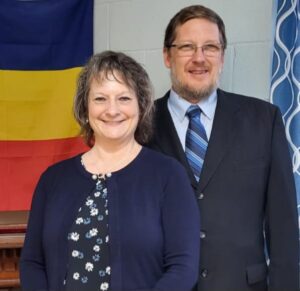
Our call to the mission field started when a ministry in Romania, supported by our church since the early 1970s, asked if anyone wanted to help on a construction project. I did not have any vacation time, a passport, or even a way to financially go. I told the Lord that if he would provide the way, I would go. He did provide! While in Romania, I passed out tracts and churches invited me to preach. After that trip, I knew the Lord would eventually have me go into missions but did not know where or when. I knew I needed to wait on the Lord to show me where he wanted me to be and when I was to go, so I remained active in our home church by serving in the bus ministry, jail ministry, nursing home and anywhere that I could help.


I met Lisa in 2001. On our second date, I told her that I believed the Lord would have us on the mission field, and that if she were not willing to go, we should not continue our relationship. Being close to her family, she did not automatically say yes, but did say she would pray about it. That night, sitting in her car before going into her third shift work, she looked up at the sky and thought of all Jesus had done for her. At that moment, she knew. If missions was what the Lord had for her, He would help her through it. Lisa let me know she was willing to go, and we married a year later.


I had been going to Romania on mission trips every two to three years since the year 2000. In 2007, while on one of those trips, I realized that I was ready to stay. The desire in my heart to be in Romania was honestly more than the desire to be in America. I became sure of the call to go.
I tried to schedule meetings and look for a mission board, but every door I tried was shut. I waited on the Lord, asking Him to open the door and make it obvious when it was time to start the deputation process. In 2012, the Lord answered that prayer in specific ways, showing us it was time for me to quit my job and go on deputation. We started full-time deputation with little support, but God answered prayer and provided a place for us to stay. I knew God would take care of my family.


In 2014, the Lord led us to BBTI to prepare for the mission field. It was hard to wait on the Lord to open doors in his timing instead of mine, but God’s timing is best. He used our lack of support to prompt me to contact churches in other states and keep me in America long enough for missionary training. At the right time, he gave us the support we needed, and we went to Romania.

Winter 2023-24

From the Navy to the Navajo

Bro. Ed Waddell
hewj1261@gmail.com

In January 1990, during a Sunday morning service at First Baptist Church of Mayport in Mayport, Florida, God saved me, a twenty-eight-year-old Navy electrician, under the preaching of a guest preacher. At that time I was stationed at Mayport Naval Base in Jacksonville, Florida, serving aboard the USS Saratogo CV-60.

In 1987, aboard the submarine USS Mendell Rivers, my right hand and arm were injured in a machine accident. I served for seven more years, receiving an honorable discharge and a partial disability after twelve years of service. God’s timing and ways are ALWAYS perfect (Romans 8:28; Philippians 1:6; 2 Timothy 1:9). Doing my best to trust and obey according to Proverbs 3:5-6; 16:3; Philippians 3:13-14; & 2 Peter 1:10, I have served God in my local church in whatever ministry capacity He has given me.

This was never more important than in August 2021 when God answered my prayer for strength to end the grieving process after my wife died from cancer in March 2021. God used a missionary family who visited our church to turn my attention toward the mission field and show me that I should be personally involved in missions.

God pointed me directly to the Advanced Missionary Training that I am now completing here at Baptist Bible Translators Institute. I knew about BBTI from their radio program on the Fundamental Broadcasting Network and from seeing Rex Cobb’s articles in the devotional booklet, Baptist Bread. So, I moved from Charleston, South Carolina, to Bowie, Texas, to begin preparing for the ministry the Lord was leading me to. On September 21, 2022, at East Side Baptist Church in Bowie, I met a native Navajo missionary, Aaron Nelson. God showed me how I could also serve as a missionary to the Navajo Nation. I saw the great need for indigenous Bible-based churches that have an accurate, textually pure copy of God’s Word in their native language.

Please pray for me as I move forward in the direction God has given me and begin serving in this capacity (as well as in any others that are necessary).

From the Navy to the Navajo: God is good!

Winter 2022-23

Is God Worthy?

Madison, a graduate of Pensacola Christian College, currently studies at BBTI.

By Madison Lehman

Why do missionaries go? Why do they stay? Why do believers risk their lives? Why do martyrs die? We have all heard that the need for lost souls to hear the Gospel is great; and the need is great! In fact, the need is numbing. However, the answer to these questions is not the need. Those who embrace the need struggle to maintain their zeal, while those who suppress the need struggle to minimize their indifference. So, the questions remain.

I heard a man answer these questions on Voice of the Martyrs (VOM) Radio. He said, “They do not go because the need is great. It is. But they go because God is worthy.” When I heard that, God pierced my heart! I serve the same God. Isn’t God worthy of my complete surrender and obedience?

I have heard about the need my whole life. Growing up overseas, reading VOM and Open Doors magazines, collecting missionary books, and hearing missionary testimonies continually kept the need fresh in my mind. I told God that I would go. Then, I told Him that I could not go. God gave me a taste of missionary life, and I shrank back. But last fall, He began convicting me of my need to yield to Him. God showed me that He is worthy of my obedience—at any cost to myself. He broke me and called me with Acts 26:16-18. By God’s grace, He will not let me be “disobedient to the Heavenly call” (v. 19). God has specifically called me to minister to Arab Muslims. I do not know many things, but I do not have to know to obey. I must obey.

The need alone is insufficient motivation for any missionary or ministry. God alone is The Motivation. I am not going because the need is great. I am going because God is worthy. God promises to save souls (Isaiah 45:3), but God doesn’t promise that I will get to see Him save souls. I may minister my whole life and never see one soul saved. Or I may die. If I live, I shall live unto the Lord; if I die, I shall die unto Lord; whether I live therefore, or die, I am the Lord’s (Romans 14:8). God alone is worthy of my life.

“This year, will you follow Christ, or will you ask Christ to follow you?” (Dr. David Jeremiah). Your answer to God’s call will change your life. My answer is changing my life.

Fall 2022

God is Able

Cassie, James, Emily, Melana & Lilyanna Dean love life in Siberia

By James Dean

At age thirteen, under conviction of sin, I repented and placed my faith in the Lord Jesus Christ, believing that His blood alone was able to save me. A few years passed and I began to grow spiritually. During the summer before my freshman year of high school, the Lord started to deal with me about going into the ministry. I did not respond to the call at first, because I felt unable, not possessing great oratory abilities. God showed me that is just the point; we are unable, but God is able. The ministry is such that we must rest in the power of God and not our own natural abilities. The Holy Spirit continued to deal with me. I yielded and upon completing high school, went to Bible college.

While attending Midwestern Baptist College, a chapel speaker came and presented the need for missionaries in the arctic regions. He spoke of the many distinct groups of people within the circumpolar region. One of the people groups mentioned was living in northern Siberia, Russia. During his presentation, the Lord broke my heart for the arctic people. I did not want to mistake God’s will, but clarity came as I prayed for direction. The Lord wanted me in the arctic, particularly Siberia. Unbeknown to me, during that same chapel service, the Lord dealt with my future wife about missions in the far north. Upon completion of Bible college, we married, and I returned to the Ohio Valley to work in my home church as my pastor’s assistant before beginning deputation.

During our final stages of deputation, we attended the Baptist Bible Translators Institute (BBTI) where my wife and I spent nine months studying linguistics, culture, and missions. We are so thankful for the training we received. At the time of this writing, we have been on the field for over thirteen years. We have studied language and collaborated with veteran missionaries in both children and village ministries. We are currently beginning in a fledgling work in a northern village with the goal of planting an indigenous church.

Summer 2022


Please Send Me!

Jessi Pontius

Growing up in a Christian home, it was easy for me to realize as a child that I needed to trust Christ with my eternity. Trusting Christ with my life, on the other hand, was not so easy.

God first dealt with me about surrendering my life to Him when I was eleven or twelve years old. I had been reading my Bible (a habit I was still trying to start) when I came across Isaiah 6:8, “Also I heard the voice of the Lord, saying, Whom shall I send, and who will go for us? Then said I, Here am I; send me.” I had never heard God speak to me from His Word in such a way, and I really did not understand what the verse meant. I knew it was very important, but I did not see how. I had a slight feeling that this was God calling me to the mission field, but I denied it and moved on.

As I grew older, I realized what God was saying through that verse. Still, I denied it, convincing myself that God had not called me to the mission field.

Around the age of sixteen, I decided I was going to go into the Lord’s service—as a paleontologist. I wanted to show through fossils that God was Creator. Although a very nice plan, it was not God’s plan for my life. God brought this squarely to my mind through the passing of a loved one a year or so later. I had never felt the reality of death quite so strongly until that time. It made me wonder about the eternity of those who have never heard the Gospel. God showed me through that trial that although Creation ministry is good, His plan for my life was to be a missionary. I was finally ready to say what I had read a number of years before: “Here am I, send me!”

God first led me to Massillon Baptist College and has now placed me at Baptist Bible Translators Institute to prepare me for the mission field. Ever since I surrendered my life fully to God, He has only strengthened the desire in my heart to share His love with those who have not yet heard. Where God will finally lead me, I do not know, but I am so excited to see His plan unfold. All I can say is, “Here am I! Please send me!”

Spring 2022

No! No! Yes!

Cliff and Mary Middlebrooks are sent from Redemption Baptist Church in Decatur, Alabama. cwm1611@gmail.com

by Cliff Middlebrooks

I had thought that missionaries were an extinct species who had all died off in the day of David Livingstone. But shortly after the Lord saved me, I met my first real, live missionary! Then, while serving a tour of service in Korea in the Air Force, I asked people in America for the names of missionaries that might be in my area. Every time I had leave, I took the bus as far as I could and then hiked back into the mountains of Seohae-Dong to help a missionary who operated an orphanage for the Deaf. After separating from the service, I laid a map out before the Lord and asked Him to send me to the Pacific Islands as a missionary. His answer was a resounding “no.”

My wife Mary and I busied ourselves in the work of the Lord. Over the last forty years we have served in many different capacities. We always sought to do what God led us to do as He led us to do it. Each time our ministry and focus changed and we asked the Lord, “What would you have us to do?” it was always preceded with, “May we go to the mission field now?” His answer was always “no.” However, we took young people on short term mission trips. As our son and several students that we had taught over the years surrendered their lives to the mission field, we resigned ourselves to the idea that perhaps the Lord felt a better use for us was to train others and send them off to serve on the foreign field.

After pastoring for a number of years, we found ourselves at the same ministry crossroad. This time, when we asked if we could go to the mission field our hearts began to be convinced that the answer was yes! (At first, we did not admit it to each other for fear the other would think we had lost our minds!) We needed confirmation that this was truly the will of the Lord and not our own desire. So, without saying much to anyone about why we were going, we went to Nicaragua seeking for answers. And God did answer!! He opened door after door and began to lay detail after detail in place for us. Some people have called us crazy for going to the mission field at our age when most people are thinking of retiring. We call it the greatest privilege of our Christian lives.

Winter 2021-22