Cliff and Mary Middlebrooks are sent from Redemption Baptist Church in Decatur, Alabama. cwm1611@gmail.com
by Cliff Middlebrooks
I had thought that missionaries were an extinct species who had all died off in the day of David Livingstone. But shortly after the Lord saved me, I met my first real, live missionary! Then, while serving a tour of service in Korea in the Air Force, I asked people in America for the names of missionaries that might be in my area. Every time I had leave, I took the bus as far as I could and then hiked back into the mountains of Seohae-Dong to help a missionary who operated an orphanage for the Deaf. After separating from the service, I laid a map out before the Lord and asked Him to send me to the Pacific Islands as a missionary. His answer was a resounding “no.”
My wife Mary and I busied ourselves in the work of the Lord. Over the last forty years we have served in many different capacities. We always sought to do what God led us to do as He led us to do it. Each time our ministry and focus changed and we asked the Lord, “What would you have us to do?” it was always preceded with, “May we go to the mission field now?” His answer was always “no.” However, we took young people on short term mission trips. As our son and several students that we had taught over the years surrendered their lives to the mission field, we resigned ourselves to the idea that perhaps the Lord felt a better use for us was to train others and send them off to serve on the foreign field.
After pastoring for a number of years, we found ourselves at the same ministry crossroad. This time, when we asked if we could go to the mission field our hearts began to be convinced that the answer was yes! (At first, we did not admit it to each other for fear the other would think we had lost our minds!) We needed confirmation that this was truly the will of the Lord and not our own desire. So, without saying much to anyone about why we were going, we went to Nicaragua seeking for answers. And God did answer!! He opened door after door and began to lay detail after detail in place for us. Some people have called us crazy for going to the mission field at our age when most people are thinking of retiring. We call it the greatest privilege of our Christian lives.
The 10/40 window covers Africa and Asia between 10 and 40 degrees north of the equator. The world’s most unevangelized countries are located in this rectangular area. Because it includes the majority of the world’s Muslims, Hindus, and Buddhists, it has also been called the “Resistant Belt.”
Several BBTI graduates that we must not identify serve in countries of the 10/40 window. Missionaries are most needed where they are least welcome, and we rejoice that they are declaring the Gospel in places controlled by atheists or religious fanatics. Because many of these countries have laws against proselytizing or even distributing Christian literature, missionaries must operate under the radar. We must be especially careful not to expose them as missionaries; our carelessness with social media or the internet could cause them to be expelled from their country or worse.
Brother C—— and his wife S—— were recently expelled from a large Muslim country. They are working and praying for visas to return. In the meantime, they are conducting Bible studies with their people by Zoom.
T—— and his wife C—— live in the Middle East and are currently helping individuals who are escaping from the Taliban. They are helping these desperate souls with food and of course, a Gospel witness. Their young son does not want the Taliban to be killed because he does not want them to go to hell.
P—— and L—— have worked very hard learning the language in their Communist Asian country. He was able to preach and teach over twenty times this last year, and L—— has also taught several lessons. C—— and K—— have worked in the same country for many years. C—— is busy teaching in a secular university, preaching in secret church services, and helping with a Bible translation project.
J—— and K—— work in a different Communist Asian country. They too have learned a difficult, tonal language. They have endured a severe lockdown, but they get out to visit people as much as possible without getting into trouble with government officials.
R—— reports that she is making good progress learning her new language. Her country is not closed, but she plans to work on a Bible translation project for a large people group in a neighboring Muslim country that is very unfriendly toward Christians. This means that R—— will need to learn two languages. We are praying for others to join this project in the days to come.
K—— and his wife Y—— have been in the states taking care of necessary family business, but they should be back in their country by now. Brother K—— is working hard to learn the language while Y—— already speaks it well. Their country is not closed to missionaries, but they hope to reach another nearby country that is very closed.
J—— and N—— desire to return to their field. They thought they had all the necessary paperwork together only to learn that the rules had changed, and they needed to show proof of the COVID vaccine along with their visa application. The next possible date to submit their visa request is in January.
C—— and B—— want to return to their Communist country in Southeast Asia to continue their language learning. Pray their new visas will be issued soon.
It seems to be the COVID restrictions that are hindering J—— and T—— from returning to their ministry. God has been using them there in a very special way, and the enemy does not like it!
S—— and M—— are doing unusually well raising their support, but the Communist country where they originally planned to work is completely closed. So instead, they are looking at Thailand. We will keep them unnamed because they might go to the Communist country in the future.
The 2000 census lists 45,000 ethnic Phunoi living in north-central Laos. Phunoi is one of eighty-four languages spoken in Laos. It is a Tibeto-Burman language which reflects the Burmese rule in Phunoi history. Phunoi is classified as a Loloish language which reflects a Chinese origin.
Experts believe there are 240 ethnic groups in Laos. In 1981, they were officially divided into five groups according to language. However, the former three group system is still commonly used, and it divides according to geographic location: lowland, hillside, and mountaintop. The Phunoi belong to the mountaintop group. The mountain forests furnish animals for hunting and food for gathering. Rice and corn are grown by the slash-and-burn method.
The official name of the Phunoi changed to Sinsali in the 1990s. The literal meaning of phunoi is “little people,” and Laotians now use this word in a disparaging manner. All tribal people are considered a low class of society and are referred to as phunoi.
Though many Phunoi have embraced Buddhism, the majority practice ethnoreligion. Ethnoreligion combines animism and ancestor worship. The spirits of animism are placated for favor in growing food or restoring health. The spirits of ancestors are invoked for protection and guidance. There is no Phunoi Bible to tell this people the story of the one true Creator God.
Allen Gardiner paced up and down the street, ashamed to go into the bookshop and ask for a Bible. He had thrown aside his religious upbringing at the young age of fourteen for the rowdy life of a sailor, but now he needed answers. The letter that arrived, telling of his godly mother’s prayer for him before her death, struck his heart with a desire to read the Book that he knew held life’s answers. Secreted with the newly purchased volume in the quiet of a Chinese temple, Allen Gardiner came to faith in Jesus Christ.
With an earnest drive for missionary work, Gardiner went to South Africa in 1834 to win the Zulus to Christ. Although they were notorious for savagery, he brought about peace between the warring tribespeople and opened the door for missions among them. When war broke out between the Dutch settlers and the Zulus, it became impossible to continue the work, and he set his face toward South America.
As he traveled through the continent of South America, seeking to work with the native tribes, he was repeatedly thwarted by governmental regulations, Jesuits, or lack of funding. He also sought to go to New Guinea but was told, “You might as well try to instruct the monkey as the natives of Papua…they’ll never be any different.” Gardiner retorted, “They are men, not animals, and they are included in our Saviour’s command to preach the Gospel to every human being.” Though access was denied him, he did not give up.
He turned to Tierra del Fuego, knowing there was no government or religious system to deny his entry. Two previous attempts to land there had taught him that the Fuegians were violent and thieving. His team, totaling seven men, arrived in December of 1850. The mission began to fail the moment it started. Part of their supplies were left on the ship that landed them, and most of the rest was stolen by the Fuegians who also drove them from the coastline. The men took refuge in a nearby area but were unable to find enough food to survive. One by one, they starved to death. The scheduled supply ship returned twenty days after the last entry in Allen Gardiner’s journal.
Their death created worldwide headlines. Most condemned their “folly and failure” in the venture, but it stirred the heart of the church. A new mission team was sent and, after much turmoil, succeeded in winning many of the Fuegians to Christ.
Twenty years earlier, Charles Darwin had stated that it was “completely useless to send missionaries to savages such as the Fuegians, probably the lowest example of human race.” Darwin later saw for himself the difference the Gospel had made. He was astonished at a people so changed physically, mentally, and spiritually that he not only stated his belief in the regeneration of the people but contributed to the South American Missionary Society during the rest of his life.
Understanding of a people’s culture is vital. If the missionary does not know the culture, he is likely to deliver a confused message. The following article by a BBTI graduate, whose identity we must conceal, demonstrates this fact. Understanding of a people’s culture is vital. If the missionary does not know the culture, he is likely to deliver a confused message.
In the process of language learning, we have heard several folktales and children’s stories and have learned much about the people’s cultural mindset and worldview. We have seen at least three common themes.
Firstly, people are collectivists, NOT individualists. In America, we have been rooted in humanism to the point that “I define me.” In other words, I get to decide what I think is right and wrong. In general, westerners want to stand out of the crowd, be their own person, and have their own opinions. It does not work that way here. A person’s goal in a collectivist society is to progress the community; all are equal, and everyone is happy. Nobody has more than anyone else, we are all one big family, and what is mine is yours. This could explain why communism, to a certain point, makes sense here culturally. It is when the people discover that the dictators are above everyone else, have more, and are bossing people around that things begin to change. Which brings us to the next point…
Authority (without reason) is almost always resisted and rebelled against. If others (the pu-nyai) are over you, they are expected to show respect and understanding to you and everyone else (the pu-noi) under them. This means that if you give a rule, you should also explain why that rule is being enforced. Giving a reason shows you care about others and are helping to further everyone so that all live in unity. Otherwise, you are just a jerk full of pride scolding the underlings.
Last of all, deception is considered heroic. A typical hero in a folktale is an underling (pu-noi) who deceives the dictator/jerk (pu-nyai) in order to shame him, make him “lose face” in the community, and bring down his pride. We have seen this pattern over and over in these stories. A clever trick played on someone, usually in a humorous way, shows not only how the trickster does not like the jerk, but that he thinks the jerk is something he should not be. It is a way to “get the upper hand” so to speak. Here is an example of a story involving these things:
“Please don’t put me in the bucket!” called a soft voice.
“Oi! The fish can talk!” the lady said with a startle.
“Please don’t put me in the bucket!” the little fish begged again.
“But if I don’t catch you, I will not have anything to eat!”
the lady replied.
“But I am so young and very small,” implored the fish. “You will not have enough to eat. Why don’t you put me back in the water and wait until I am fully grown? Then you can catch me again, and you will have more to eat for that meal.”
After some thought, the lady conceded. She gently placed the little fish back into the river.
The little fish, happy to be free again, swam and splashed as far away from the net as he could, determined to
never return to that spot in the river.
Here we observe the pu-nyai, the lady who will catch and eat the fish (which only benefits her and leaves no mercy for the fish). The pu-noi, the little fish, resists and outsmarts her, even lying to her that he will be there again for her to catch once he is grown up. His trickery saves the day, he swims free (a small victory for all fish everywhere), and the woman is assumed to go hungry that day.
How does this affect the missionary? Take, for instance, the story of Adam and Eve. At first, if you hear the story through our people’s ears, God could
be considered a bad pu-nyai, giving rules without reason; the hero of the story would be the serpent, Satan. In deceiving Eve (by mixing truth with lies), he really deceived God and foiled His plans. And now all the earth and humankind are as corrupt (thus on the same level) as Satan. Imagine trying to convey the Gospel when Satan is seen as the hero!
However, if we show that God is a good pu-nyai, giving reasons for his rules (“In the day that thou eatest thereof thou shalt surely die.”), thus trying to look out for and protect the pu-noi under Him, we see that deceiving Him is the worst blasphemy ever! Now, the deceiver is harming the one that protects the community, making himself the pu-nyai who is getting something only for himself and hurting everyone else. It shifts the situation entirely.
Now consider Christ Jesus. He was and is THE Pu-Nyai: Creator God, holy, sovereign, all-powerful, eternal, worthy of all praise. He stooped down and became a humble Pu-Noi. He had no more than anyone else around Him; He roamed homeless, often only finding solace on the Mount of Olives. He helped make the lives and souls better for those around Him. He had compassion on His fellow men. He did not come as Pu-Nyai, even though He is worthy to make the rules. He came as one of us, so He could be accepted by us.
As missionaries, we MUST be learners before we can be teachers, or we will find ourselves having to correct grave errors in our teaching. We cannot just spread the Gospel without giving due attention to culture. The way we pre- sent things may or may not make sense to the hearers. We must be pu-noi, just humans among fellow humans, serving our Heavenly Father, the Pu-Nyai of pu-nyai, the holiest and worthiest of all.
“I looked my guard over. He wore two belts of cartridges, a dirk knife and carried a rifle with a bayonet . . . I prayed, ‘Lord, you can handle him better than I can. You just put the fear of God in him and make him leave me here alone.’ Then I began staring at the guard as though I might eat him if he got too close. He began to get nervous; he twisted his hands and walked to and fro. In a few minutes, he started off. When he was about fifty yards away, he raised his rifle and cocked the hammer. I was looking at the shooting end. I could only pray, ‘Lord, if you don’t want him to kill me, just don’t let him pull that trigger.’ The Lord answered, for the bandit started off down the trail.”1
Born in north central Texas in 1885, the eldest son of a ranching family, Rex Ray learned early to work hard, to persevere regardless of his circumstances, and to hold to his responsibilities “come wind, come weather.” His father unexpectedly died at a young age, and Rex, at only fifteen years old, took over the responsibility of caring for his mother and younger siblings. Rex resisted the Gospel message as a teenager and entered college at the age of twenty intending to be a successful businessman. God had other ideas. Rex was saved during a revival meeting in a Baptist church. Later, after spending a week going to the cornfields every night to pray, he answered God’s call to the mission field.
Rex and his wife, Janet, served the Lord in China through the waves of turbulent attacks by the Japanese during the Second Sino-Japanese War (1937-1945) and takeover of communism in 1949. During that time, not only was Rex kidnapped by bandits, but he also ran blockades to provide supplies to the mission hospital and survived air raids and bombings. He buried his five-year-old daughter on the field. Through it all, he preached. Up and down the rivers and through the villages, thousands of precious souls heard the Gospel of Christ as he desperately gave the message of Christ while the doors were still open to do so.
When the doors to China slammed closed, Rex and Janet (their children now grown) answered the call to take the Gospel to war-torn Korea.
This only scratches the surface of what happened during Rex Ray’s forty-eight years on the mission field. His passion for the Gospel and his love for the Chinese and Korean people speak from every page of his autobiography.
In a letter to the Foreign Mission Board, published in the September 1928 Home and Foreign Fields, Rex Ray said, “Oh, that our voices could be multiplied into thousands to help rescue these millions who are lost, lost, lost! The Spirit of God is moving the hearts of the heathen. Oh, that He would awaken His children in Christian lands to the crying needs of this great harvest field! If Christian America fails to deliver God’s message to the lost of earth, what shall we answer the Master as these poor souls turn away from the gates of Glory into outer darkness?”
Located in the heart of the second largest island of the Philippines is a tribal people who cling tenaciously to their ancient customs and traditions. The Bagobos are a people steeped in ethnoreligion. They combine spirit worship, ancestral worship, and nature worship into a religion that is strict in ritual and full of fear. They are fiercely territorial, suspicious of outsiders, and very resistant to the efforts to assimilate them into the other cultures and languages around them. They believe to do so is to deny their religion and entire way of life.
The Bagobo are one of the largest groups of indigenous people of southern Mindanao. Historically a warring tribe, the Bagobos raided neighboring villages and offered human sacrifice to their deity, Pamulak Manobo, until the practice was forbidden under Spanish rule. They are largely agricultural, and rice is the staple of their diet. This diet is supplemented with hunting and fishing. The planting, cultivating, and harvesting of rice is deeply tied to religious rituals. Planting coordinates with the movement of the stars, hoping for the good-will of their god of the growing season. During harvest, the leader of their tribe (the Datu) will give an offering to the “spirit of the harvest.”
The Bagobo speak their own distinct dialect. It is an unwritten language with no Scriptures, therefore the 80,000-100,000 Bagobo souls are without God’s message.
This title comes from an article by Paul Fleming. It makes us laugh but should make us cry. In practice, a lot of men are saying, “Send my sister.” Fleming goes on to write:
We men! We are the stronger sex; it has always been so! We send our gifts to mission fields, to which the women go. While up the steepest jungle paths, a woman bravely treads, We men, who are the stronger sex, do pray beside our beds. When women leave to go abroad, the heathen souls to reach, We men, who are the stronger sex, do stay at home to preach. While women, in some far-off shack, do brave the flies and heat, We men, who are the stronger sex, in cool and comfort eat. Fatigued and weary, needing rest, the women battle on. We men, who are the stronger sex, do write to cheer them on! O valiant men! Come let us sleep and rest our weary heads. We shall not be the stronger sex if we neglect our beds!
We do not deny the important role that women play in God’s work. Women from Galilee followed and ministered to Jesus and his disciples. Paul named several faithful women who served in the early churches. Over the centuries, thousands of women, both single and married, have left their homes to work in heathen lands. Some, no doubt, preached a little more than we think they should have, but probably because no man was there to proclaim the Gospel. Whether on the foreign field or at home in our churches, women are often the spiritual leaders because men have abdicated the position. Many times, women have a heart for God and a compassion for others that is lacking in men. This naturally attracts them to the mission field.
Women oftentimes have a desire to serve the Lord full-time just like men. At home, their full-time opportunities may be limited to church secretary or Christian school teacher, but on the foreign field, they can serve as missionaries. Missionary women understand what they should and should not do. They should work under the leadership of a male missionary or national pastor. They should teach ladies and children but not men. They may teach men to read and write or to speak English but may not teach Bible doctrine. They should not attempt to work in dangerous places where they risk being violated. Of course, single men have limitations on the foreign field as well. A well-prepared Aquila and Priscilla team is perfect.
Over the last twenty-one years at BBTI, the single female students have outnumbered the single male students by two to one. Some single graduates get involved in short-term missionary work, but as a rule, if they remain unmarried, they will not be career missionaries, especially the single men. Unmarried ladies are much more likely to go to the field as full-time missionaries than single men.
The great need is for men, single or married, who will go to the foreign field and stay. Thank God for the ladies who have this desire, but where are the men? Why are they avoiding missionary service? Could it be that they are not being confronted and challenged? Spurgeon said, “Not all men should be missionaries, but all men should struggle with it.” Pastor, make the men struggle with it. When they say, “I’m not called,” pressure them to tell you how they came to that conclusion. How much did they pray about it and study God’s Word on the subject? How did God reveal to them that they are called to stay? Do not let them off the hook so easily. Most of our churches are not producing missionaries; we should find out why! We support missionaries, but are we producing them?
Military experts tell us that seventy-five percent of our military age men are unfit for service: 25% lack a high school education, 30% are too ignorant to pass the entrance exam, 10% are disqualified due to criminal convictions, 27% are obese, and 32% of the age group have other disqualifying health problems. And since we have an all-volunteer military, a man can simply not volunteer. The same is true in God’s army. God may impress a man that he should go to the mission field, but that man has a will and can refuse; men do it all the time!
Disqualifying factors for missionaries are different, but they are numerous: LifeWay Research reports that 66% of young people drop out of church after high school. Others are addicted to pornography, video games, social media, texting, pleasure, money, and tattoo ink. Most want to simply be comfortable and live the good life. For those who are even somewhat interested in missions, there are many pitfalls and detours that lead anywhere but to the mission field. We as a church must protect potential missionaries from the wiles of Satan. We must nurture and encourage them by keeping the mission challenge before them.
Nothing short of real revival is going to produce male missionaries. We must fall in love with our Lord Jesus Christ and get interested in what is on his heart. He said, “And why call ye me, Lord, Lord, and do not the things which I say?” (Luke 6:46). He said to preach the Gospel to every creature; yet billions have never heard a clear Gospel message. He said, “If ye love me, keep my commandments” (John 14:15). His commandment to go and teach all nations is ignored; there are still thousands of unreached nations (people groups). He said, “Ye are my friends, if ye do whatsoever I command you” (John 15:14). We are unfriendly toward Jesus because we are not evangelizing the world as He commanded.
Yes, we need a real revival, one that would result in men saying, “Here am I, send me” instead of saying, “Here’s my sister, Lord, send her.”
While visiting a church in the USA, a missionary told of one occasion when he was preaching a sermon (possibly his first) in Japanese. “Sin will ruin your life; you must forsake your sin!” he cried, only to see bewilderment on the faces of the congregation. After the service, a kind Japanese man explained, “I think you meant to say sin; but the way you pronounced the word, it means wife!”
An American missionary was preaching in Romanian on the subject of Jesus’ triumphal entry into Jerusalem. Vividly describing how the people shouted praises as Jesus rode into town, he failed to realize that he had mistaken the word Magyar (Hungarian) for măgar (donkey). The Romanians, of course, enjoyed a few laughs over the idea of Jesus being carried around on the back of a Hungarian. —G. Sutek
Years ago a missionary in Indonesia wanted his worker to cut the grass. However, he kept telling the man to get a hair cut. (Rambut means hair, and rumput means grass.) After three hair cuts and a nearly bald head, the error was detected.
Another blooper from Indonesia is the frequent misuse of the words kalapa and kapala. Kalapa means coconut and kapala means head. Though it is quite okay to drink coconut juice, it is not good to request head juice at a restaurant! —Christine
Once in Oaxaca, Mexico, while teaching in a home Bible study about Sabbath observance, I meant to say “sabatistas” (those who worship on Saturday), but I said “sabanistas.” “Sabanas” are bed sheets. Someone said, “Yeah, sabanitas are the people that stay in bed on Sunday and worship God between the sheets!” My preaching may not have always been edifying, but it was entertaining! —Rex
Today I sent my very first text message in Chinese characters (with the help of an English-Chinese dictionary). But I was still admittedly pretty proud of myself until I was double checking the last word… 谢谢 (xie xie-thank you) and realized it was the wrong characters… 腹泻. Although also pronounced xie xie, it has a totally different meaning (loose bowels or diarrhea). —Julie
Sam & Mary Beth Snyder (BBTI 2015 graduates) Tommy (age 10) Leland (age 7) Bethany (age 5)
To many in our world, sickness and death are never due to natural causes but always to some evil activity of spirits. People make sacrifices to protect themselves from sickness, to insure the fertility of the land and the women, or to bring the rain. There is usually a shaman or witch doctor who is the expert in communicating with the spirits. The spirits tell him or her what remedy is needed for healing or who is guilty of placing the curse that caused the sickness.
This is the world that a missionary comes to and the culture that he must understand and contend with. The following narrative was written by Mary Beth Snyder, who serves with her husband, Sam, in the remote mountains of Gulf Province, Papua New Guinea (PNG).
We have heard the hopeless sound of wailing off and on this past week, for the family across the road lost a son, a brother. Today, Leland said it reminds him of the man in Pilgrim’s Progress who was in a cage yelling, “No hope!” The young man who died, electrocuted in Lae, had adamantly opposed the mission, and Sam remembers it well. His father is a papa graun (landowner) who has consistently shown interest in gaining material possessions and may be involved in witchcraft. The young man who died has been mostly away from the village for the past several years, and it is sad to know that he was so close to the Gospel in the past but rejected it. We went over to be with family and friends this afternoon and sat on the ground with the grieving. A young child coughing with the ever-prevalent kus (mucus) and the dirtiness of it all is a stark reminder that the ground is cursed, full of disease and death. Tears dripped down my face.
Our Papua New Guinean surroundings boast abundant natural beauty. While hearing tropical birds sing and enjoying occasional butterflies floating by banana trees in the midst of lush mountains surrounded by misty clouds, I can imagine what the paradise of creation may have been like. Reality sets in when I hear the cries of children in the clinic, when I assist mothers in childbirth, when pouring rains drench the clay-like ground making it hard to grow food, and when our feet are habitually coated in mud. Today, the curse was more evident than other days as I sat and watched our friends sobbing, wailing, and falling on the casket. Actually, it is a blessing that there is a casket. This young man died in a coastal town many kilometers from here, and it took over a week to fly his body back to our airstrip. Sam then drove it here in the ATV. Another haus krai (funeral) I attended several years ago involved the typical practice of people wailing over and hugging the dead body.
We have heard reports that Covid is hitting hard in the towns the past two weeks. On top of that, its spread is even more inevitable because of the large town gatherings to honor the recently departed Grand Chief Somare. As I watched people hug and sob face-to-face today, the nurse in me saw how easy it is for sickness to spread. We customarily shake hands with those who offer their hand, make sure we wash our hands well when we get home, use vitamins and oils, and pray for protection from disease. Our good friend and only believer in that family had just returned with his dead brother’s body from a major town, and we shook his hand. Some things are just too culturally important to shun, for after health teaching is done and customs don’t change, it is best to avoid stumbling blocks. One consolation is that the temporary mourning tent, church building, and clinic are all airy.
Reminders of the curse are everywhere the past few weeks. Another elderly man, the papa graun of the mission property took another wife. He has had multiple wives in the past and many children, but he has not taken care of them well. Before our arrival, he made a profession of faith, but he has not attended church for a while now, blaming it on a sore leg. His wife and daughter attend church regularly. It is sickening to find out that he had his eye on a young girl from another village and that he and her family went through with the arranged “marriage.” It is child abuse. He must feel that he is powerful enough to take or buy what he wants, no matter the cost to others. It is sickening and infuriating and has been heavy on my mind this week. While I battle with anger, I really do pity him. How many sermons has he heard? How many verses has he listened to? How many chances has he had to follow the light? Yet, he seems to delight in darkness. He also lives almost across the road from the church buildings. Incredibly sad. Marriage is sacred and the first institution God ordained, and, of course, our enemy attacks it in any way he can.
After the children and I were back home from visiting the haus krai, a man, carrying an old lady who had been brutally bitten by a pig, came to the clinic. The pig unexpectedly bit off many of this poor woman’s fingers. The nurses gave her an injection of pain medicine, and Sarah drove her in the ATV to the small hospital at the airstrip. Tommy quickly mentioned that it could be that an evil spirit had entered the pig. Witchcraft is a reality in some situations.
In PNG, it is a common belief that grief shown at a death can assure that the dead spirit will not be angry, but instead, will bring blessing on the living. The Bible teaches that when we die, our spirit goes to heaven or hell; it does not linger around the village. Do our believers not understand that, or are they wailing to simply show their grief culturally, or do they wail because they realize the man was not a believer?
Sam is getting over a respiratory virus. His nose has been bleeding off and on, which could be from the infection or because he was hit there several months ago by an angry man who came up behind him when he was working on the road. God protected Sam and others and the situation was finally resolved. This morning, a woman came to the clinic with a severe knife wound to the back of her head, inflicted by her husband. She was returning up the mountain from the haus krai and was attacked by her jealous older husband when she did not hand over enough money she was supposed to have made at market. Later in the day, someone came running and said that when they were digging the grave at the village about a mile from here a man fell into the hole and was injured.
Our children are not completely sheltered from violence, anger, greed, decayed wood breaking and causing a bridge to collapse, nor from the sting of death. Though the sadness is a little sobering for our children, it has opened up good discussions on sin, sickness, Satan, and salvation. We can enjoy the beauty of God’s creation, but it is groaning.
While we see some encouraging progress in the lives of several believers, in the Bible Institute, and in the growth in new church music, Satan is not content to lose a foothold here. Spiritual oppression is evident. We are in a war. But we know Who the Victor is, and we are on His side. Greater is He that is in us than he that is in the world. As I recently taught in Sunday School, Jesus is more powerful than Satan and his demons. This is evidenced by Jesus’ sinlessness and victory in trials, by His performance of many miracles and casting out of demons, and by His death and resurrection. He has crushed the head of the serpent and will ultimately cast him into the lake of fire. Jesus is more powerful than witchcraft. That is what we need to be talking about in our houses at night.
Satan is the father of lies and delights in destroying lives. It can seem hopeless at times, but we are not without hope. We rest in the work that only the Spirit of God can do, and we continue to give out His Word. We are here for His glory and because of His grace. He is the Light of the World. He gives eternal life: joy in this life no matter the trial, and everlasting life with Him in heaven. Those who live for the things of this world sadly only have an imperfect ground to enjoy for a short time.
Imagine a dark place where superstition and fear rule peoples’ lives. It is a place where daily activities must be done in a prescribed manner or risk the ire of demons and the spirits of ancestors. There are no Christians, no Scriptures, and no hope. This is reality for the 123,000 Luobohe Miao (a group of the Hmong people cluster) who live in the mountains in southwest China. They keep to themselves in their own remote villages and live by farming.
The Luobohe are ethnoreligious—they are unified by both their ancestry and their animistic religion. Jewry is another example of ethnoreligion, especially in the Old Testament. To be a Jew was to be both a descendant of Abraham and a follower of the law of Moses.
The Luobohe language is tonal with three distinct tones that distinguish words. It is largely unwritten, though a Latin alphabet has been recently proposed. This language desperately needs a translation of the Bible. The Word of God can cross borders and go to places where missionaries cannot go.
Global Recordings Network recorded six Bible stories in Luobohe. You can listen to The Lost Sheep at https://globalrecordings.net/en/progra. Someone was the human instrument that produced this recording, the only glimmer of light for the Luobohe. Will you be another human instrument by praying for them? Pray for someone to take them the the Gospel, for heaven’s forces to bind the evil one, and for the light to shine brightly.
When a man decides to go to the mission field, his wife may have little to say about it. But for sure, his children have no voice or vote—they go. It is not a problem for young children; they simply go where mama and daddy go. Children seven or nine years old may be concerned that they cannot take all their toys, but it is probably not a disturbing event. However, for preteens or teens it is an altogether different story. They are facing a big struggle. Being teenagers is hard enough in a place where they know the language and culture perfectly. In a strange new place where they cannot speak the language and have no idea how to act, it can be traumatic and terrifying.
A family on deputation going to South America was in a distant state when their teenage son disappeared one evening. They did not know if he was kidnapped or if he ran away. The latter was the case. He decided he was not going to the mission field. The family did go to the field but stayed only a year or less. A family that graduated from BBTI many years ago planned to go to a first world European country. One of the sons told his parents that he would kill himself if they took him out of the country; they, of couirse, stayed home.
Consider these portions from a journal entry of an extraordinary fourteen-year-old girl facing a new life in a third world country on the other side of the world.
“Dad signed the last paper, and the farm is now in the hands of someone else. It will never more be my refuge, my shelter, my home. Home as I have known it will never be the same. Tears begin to stream down my face as I relive the many happy years I spent on the farm. Faces, places, and happenings start to flash through my mind. I remember spending wintry evenings with a fire crackling merrily in the wood stove and a kerosene lantern shining softly above me [their house had no electricity or running water], snuggled in the lap of an older sibling, listening to Dad or Mom read a book about the Anabaptists or about a missionary. I remember the happy hours gathered around the kitchen table playing games and just enjoying each other. I remember… I remember… I remember… I remember the many special memories that my family made on the farm. Fun, scary, hilarious, and sad memories race through my mind. I see the farm from stem to stern. I see where I spent fourteen years of my life. I begin to wonder, was it worth giving them up? I see my dog that I gave up, my special treasures, my life. Was it worth giving up? Was it worth leaving behind friends, family, and the only home I have ever known? Was it worth leaving it all to go to a place I have never seen, to a people I have never met, to a language I have never heard, and to a culture I have never understood? Was it worth leaving close friends to become the stranger and the newcomer? It will be worth it all. These temporal things such as our farm, will someday be gone, but the eternal things that we have done for Christ will last forever. Pictures of natives in [we dare not name the country] begin to play on the screen of my mind. I envision the souls that will get saved, the Bible that will get translated, and the glory that God will get. Now it doesn’t seem so hard to give up everything. In my mind I begin to replace the hardships and sacrifices with eternal rewards in Heaven. So, to me, it is worth giving up my friends, my treasures, and all this world can offer to fulfill the Great Commission and help reconcile the world to God. As I dry my tears and close my journal, I ask myself this question: Was it really worth it to give up the farm? My answer is yes!”
Does this mean that a family with teenage children should opt out of foreign field service? Absolutely not. But there are things that would help prepare young people for the field. First, parents should raise children to love and serve God as the above quoted girl was. Then, the churches, especially the sending church, should recognize the teens as missionaries in their own right. Churches should encourage and reward them in every way possible. Missionary dads usually get the recognition and love offerings. Give some accolades and gifts to the missionary mom, children, and teens. Generously finance survey trips to the field so that older children can accompany their parents. This is a good way to help relieve teens’ fear of the unknown, and they will probably learn that the place is not all that bad. God may even give them a great love for the people and a desire to return.
Consider also that teens would benefit greatly from pre-field preparation in linguistics and in language and culture learning. It is a big mistake for any missionary to go without adequate preparation, and teens will encounter the same difficulties in language and culture adjustment as their parents. Over the years, several teens have taken some or all of the Advanced Missionary Training courses at BBTI along with their parents. (Their homeschooling may have been somewhat curtailed or even postponed. In other cases, however, the teens took BBTI classes in the morning and worked to complete their high school course in the afternoon.) Young people that do this go to the field with confidence and skills that help them learn and adapt more quickly. They look at the new culture and language as a challenge, a very achievable goal, instead of a dreaded ordeal. One ten-year-old boy took the phonetics course with his parents. Once on the field, he quickly learned a difficult tonal language that he is comfortable speaking twenty years later.
The worldwide adolescent population is over forty percent. In some countries it is much higher. Young missionaries have more potential to reach those young people than their parents. If young people arrive on the field with a positive attitude and learn the language, they can be a great asset to the Lord. Their few years on the field can be a happy and fruitful time, and they may even return as adults to continue their missionary work.
I wanted to tell my language helper that we were finished for the day. But instead of saying “ta so” (we are finished), I said “ta sio” (go away). Thankfully my helper had a sense of humor and informed me that my way of dismissing people was probably not the best if I want to have friends. At times, living and learning in the village is very frustrating, but God is very abundant in His grace. —Cara
Yesterday, one of my fellow students said to me, “Tu es belle.” I responded, “Oui, c’est vrai,” because I thought he was saying the weather was beautiful. He chuckled a little. I replayed the short dialogue in my head because his chuckle seemed out of place, and it was an unusual way to remark about the weather. As I thought about what he said, I realized he was telling me I was beautiful (I was dressed up for church). My response was, “Yes, it’s true.” That was a bit humbling, especially when at that point I didn’t know what to say.Do I say, “Sorry, I thought you said something else,” or do I just let him think I’m conceited? —Becky
I was helping to clean the kitchen after a meal in Peru and called for a rag—or so I thought. The co-laborer to whom I was speaking stopped, looked at me quizzically, and burst out laughing. Since I had asked for a “tropa” instead of a “trapo,” she thought I wanted a “troop” of soldiers to help us clean the kitchen! —Cheri
Lungandan, a tribal language of Uganda, has many short affixes which give an utterance its meaning. These often string together to form long words which are difficult to read; and correct placing of word breaks is very important. When reading a passage in church, a native who was a poor reader caused some laughter and irritation. He sounded out a few syllables, returning to the beginning and adding a bit more each time until he could read the entire phrase. It came out: Awo Yesu which means “Then Jesus;” Awo yesuna— “Then he is pinching himself;” Awo Yesu n’abaga—”Then Jesus is chopping;” Awo Yesu n’abagamba— “Then Jesus saith unto them.” At one point, some in the congregation wondered aloud if Jesus were a butcher rather than a carpenter. What must they have thought about why he would be pinching himself!
It was 1782, and George Leile didn’t see any other way: to escape slavery once more, he had to become another kind of slave. Years ago, his former master, Henry Sharp, had graciously freed Leile so that he could wholly pursue preaching the gospel in the Savannah area. But now that Sharp was dead, his family sought to re-enslave Leile. And so he struck a deal. To escape to Jamaica with his family, he would become the indentured servant of Colonel Kirkland.
Arriving in Jamaica in 1783, at the age of 33, Leile paid off his debt within a year and immediately set off to spread the gospel. The fiery preacher, who God had made so successful in Georgia, now had greater success than ever. He preached to the slaves and to the free; and with the help of some other immigrants, started Jamaica’s first black Baptist church. God’s hand was on his ministry, and within only a few years the church grew to over five hundred members! But such dedication to God often comes with a price, and his could have cost him his life.
With the Church of England well established on the island, there came a time when the Anglican planters rose up in opposition to Leile’s work. They often interrupted his meetings, and persecuted him and his congregation in various ways. Eventually, he and his preacher friends were imprisoned. Accused of preaching “sedition” among the slaves and against the Church, they faced capital punishment. Most, including Leile, barely escaped the death sentence; but sadly, one was hung.
God encouraged Leile, however, and he did not quit. He continued to pastor the congregation, and trained men to preach the gospel in the more remote areas. Influential friends in Britain secured the funds for his ministry; and eventually, they even erected a permanent building for the congregation.
Leile, the first Baptist missionary to Jamaica, died in 1828. But the work God had begun with him in Jamaica bore yet more fruit! In the same spirit as Leile, the church had sent out over fifty missionaries to Africa by 1842. That’s how God works: He used a man born a slave in America, and sent him to Jamaica, to one day set captives free in the land of his forefathers.
It was 1782, and George Leile didn’t see any other way: to escape slavery once more, he had to become another kind of slave. Years ago, his former master, Henry Sharp, had graciously freed Leile so that he could wholly pursue preaching the gospel in the Savannah area. But now that Sharp was dead, his family sought to re-enslave Leile. And so he struck a deal. To escape to Jamaica with his family, he would become the indentured servant of Colonel Kirkland.
Arriving in Jamaica in 1783, at the age of 33, Leile paid off his debt within a year and immediately set off to spread the gospel. The fiery preacher, who God had made so successful in Georgia, now had greater success than ever. He preached to the slaves and to the free; and with the help of some other immigrants, started Jamaica’s first black Baptist church. God’s hand was on his ministry, and within only a few years the church grew to over five hundred members! But such dedication to God often comes with a price, and his could have cost him his life.
With the Church of England well established on the island, there came a time when the Anglican planters rose up in opposition to Leile’s work. They often interrupted his meetings, and persecuted him and his congregation in various ways. Eventually, he and his preacher friends were imprisoned. Accused of preaching “sedition” among the slaves and against the Church, they faced capital punishment. Most, including Leile, barely escaped the death sentence; but sadly, one was hung.
God encouraged Leile, however, and he did not quit. He continued to pastor the congregation, and trained men to preach the gospel in the more remote areas. Influential friends in Britain secured the funds for his ministry; and eventually, they even erected a permanent building for the congregation.
Leile, the first Baptist missionary to Jamaica, died in 1828. But the work God had begun with him in Jamaica bore yet more fruit! In the same spirit as Leile, the church had sent out over fifty missionaries to Africa by 1842. That’s how God works: He used a man born a slave in America, and sent him to Jamaica, to one day set captives free in the land of his forefathers.
“Picture a teenage girl in a school cafeteria…. She’s slouched in a chair popping bubble gum. The whole world passes her by, yet she doesn’t even notice. Why? Because she’s tuned in to that little thing in her hand—a cellphone. Most likely she’s texting, instant messaging her friends, or browsing Facebook. Picture a young man on a computer in an internet café somewhere in a third world country. Or how about a young college freshman browsing the web on a laptop? The new generation coming along is radically different from you and me. I’m a young man myself and can barely recognize or connect with this new generation. But what if we could present the gospel to each of these people through their medium of communication? ….We can!” (~Jared Rowe)
This is the need Jared Rowe saw, and the vision God gave him. When most people saw a predicament—a problem of the modern generation—God showed Jared a possibility. All his life, he had been intrigued by computers and set out to learn their inner workings. As the world of the web was opened up to him, he saw potential for the Gospel, and an idea was born—to “reach the masses right where they are”.
Together with his brother-in-law, Marlin Zimmerman, he created the iMissionaries website, designed to enable you to evangelize through the internet. With 16 major social media sites around the world and 1.5 billion active users on Facebook alone, it’s an open mission field that reaches into the places most people can’t go with the Gospel—from American schools to closed Muslim nations. iMissionaries walks even the most basic computer user through a simple process to place Christian ads on Facebook and other social networking sites. People around the world can click these ads and read Christian material in their own language. In the short time these ads have been being placed on Facebook, thousands of people have clicked and viewed these materials in such countries as Algeria, Iraq, Thailand, Ukraine, Indonesia, and Singapore.
However, while we do encourage you to check out iMissionaries.org and get involved in placing ads around the world, iMissionaries is only a product of a deeper motive. A greater challenge—a more far-reaching action—is that of thinking outside the box. Climb out of the rut of the typical perception of missions and use what tools you do have—no matter how unconventional—to reach out with the Gospel. Ask God, “What can I do?”
Fourteen-year old Attie Bostick sat in rapt attention, listening as her older brother, a missionary to China, preached on Mary anointing the feet of Christ with the most precious thing she had. “She hath done what she could.” Attie could not forget those words and years later would say, “That day God spoke to me, and said that I would not be doing all I could unless I was willing to go to China, too.”
Attie was born in 1875 (the sixteenth of seventeen children) on a rural farm in the foothills of North Carolina. Despite “the humbleness and crowded conditions of the home,” her parents “still found time to take in and entertain preachers and missionaries whenever they were in the vicinity.” This early contact influenced the hearts of three Bostick children toward missions.
Attie arrived in China in the summer of 1900, when the Boxer Rebellion was at its height. Hundreds of missionaries were killed during this time, and many fled the country. Attie stayed unharmed in Shanghai with a missionary family until the danger was over, then joined her brother (G.P.) at Taian in Shandong Province. Later, she worked in Pochow with her brothers and then at Kweiteh. Attie served as a Baptist missionary with the Gospel Mission and the Southern Baptist Foreign Mission Board for a total of 43 years.
The church and school that was started in Pochow is still in existence today, and the number of souls who have come to Christ has multiplied greatly. She wrote of the work in Pochow: “The work for 1935 included holding revival meetings, instructing candidates for baptism, and teaching the Bible in several churches. Although muddy roads made travel difficult, many Chinese attended these meetings. Some women who still had bound feet walked as many as fifty miles to hear the gospel message.”
On December 8, 1941, at age 66, Japanese forces arrested Attie and interned her for two years before releasing and repatriating her to the U.S. In a farewell letter to a Chinese Christain, she wrote, “God’s grace has abounded and He who watches over the sparrow has abundantly cared for me.” Truly, God abundantly cared for Attie through all 43 years she served Him in China.
Quotations from: Called To China: Attie Bostick’s Life & Missionary Letters From China
Ellie sat on the rough church bench clutching a small paperback book in her hands. Her brilliant white smile revealed her excitement as she spoke to me in Melanesian Pidgin, the trade language of Papua New Guinea. “This story strengthens my heart!” she exclaimed. The irony of her simple words silenced me for a few minutes. Ellie and I had just finished reading two chapters in a Pidgin biography of George Müller—a man who had been born two hundred years ago on the other side of her world but whose story was still living.
Most American believers know Müller only as the man who, through prayer, supported hundreds of orphans in England. But for many, his story dies there and is set on a shelf as admirable but impossible to replicate. As materialism engulfs our culture, believers increasingly look to their modern “stuff” to fulfill their needs. However, if we seriously look at Müller’s principles for living in complete dependence upon God, his stories of answered prayer will light a blazing fire of faith in our hearts, just like they did for Ellie.
George Müller grew up in Germany and was saved at the age of twenty; however, through the stories and encouragement of many missionary friends, he traveled to England at twenty-three to join the London Missionary Society for Promoting Christianity among the Jews. Müller learned English and Hebrew and planned to go to Israel, but God closed all doors leaving England and began to teach Müller to seek direction daily by faith.
Over the years, Müller refused to receive a salary from the churches that he pastored and determined to discuss his needs with God only. As the orphanage ministries began, Müller also refused to go into debt or use money that had been appropriated for other needs. Through unusual sources and uncommon circumstances, God always supplied the answer to his prayers. And whatever was bestowed upon Müller personally, he faithfully gave it to God’s work. For over sixty years of ministry, he was merely God’s steward.
The story of this man of prayer is really only one out of millions that could be told. George Müller responded to others’ testimonies of God’s faithful provision and thus encourages hearts around the world. We in turn can respond and leave a legacy, for that is the power of the story of one.
Solomon Ginsburg asked his father—a Jewish rabbi—this question when he was only thirteen. Despite being soundly slapped in the face, his interest in the prophesy of Isaiah 53 did not die. As a young man, Ginsburg left his native Poland for London, England. There, a fellow Jew found him on the street and explained Jesus as the Messiah prophesied by Isaiah. After reading the New Testament, Ginsburg trusted Jesus Christ as his Savior, but was promptly disowned and cursed by all his relatives. He bore it gladly, recalling that Christ had been made a curse for him. Even several assaults by orthodox Jews in London could not dissuade him from his new-found faith.
As Ginsburg considered what the Lord would have him do with his life, he remembered the Jews’ biggest stumbling block to accepting Christianity. They pointed to the Catholics who worshipped and prayed to idols, and proved to their children that no people who broke one of the Ten Commandments possessed the “true religion.” Now that Ginsburg knew the truth about the saving blood of Jesus, he decided to spread the glorious news in Brazil, a bastion of Roman Catholicism.
Ginsburg first spent several months in Portugal studying Portuguese until he was fluent in both the language and the beliefs of the Roman Catholics. He wrote two tracts and dispersed hundreds of copies before he departed for Brazil, literally fleeing from Portuguese Jesuits. To support himself in Brazil, Ginsburg printed and sold Bibles, tracts, and other material everywhere he could. Using his Jewish business skill of persuasion, he accosted Catholics along the road, on the train, in prisons, and even coming out of Mass. As Ginsburg simply preached Jesus and His cleansing blood, soon hundreds and then thousands trusted Christ. He traveled from town to town holding open-air meetings or playing hymns on his little organ in the middle of the marketplace. When one of Brazil’s most notorious murderers asked Ginsburg to come to his house to tell him more about Christ, Ginsburg gladly went, though many warned him of the great risk. Hearing the gospel, the man fell down weeping over the guilt of his sin and confessed Christ as his Savior.
In thirty years of ministry, Ginsburg helped to establish 820 self-sustaining Baptist churches with over 20,000 members. Although his family had forsaken him, and he faced persecution even in Brazil, the simple joy of knowing his Messiah carried him through it all.
After Maude Cary heard of the heathen in Morocco, no physical or spiritual trial could deter her from joining the missionary work in North Africa. Just before her twenty-third birthday, Maude and four other co-workers embarked for Morocco with the promise to spend their life’s energies evangelizing the Muslims and Berbers. As they departed, they sang, Anywhere with Jesus I can safely go; Anywhere He leads me in this world below; Anywhere without Him dearest joys would fade; Anywhere with Jesus I am not afraid. Surely there would be opposition and heartaches, but Maude thought only of exciting campaigns to bring the gospel to wild tribes!
Within the first few weeks in the city of Fez, the mud, physical labor, language study, and tedious household chores began to choke Maude’s spiritual fervency. She wrote that life no longer seemed “what it was on the way to Fez. The Saviour’s face does not seem so real.” In addition to her inner struggle, Maude’s co-workers chided her for pride, inattention, and idle talk. After two years, she felt that her work had been a complete waste even though she had fluently learned Arabic.
However, the Lord had already prepared many fiery trials to purify her faith. The wild Berbers, who had once seemed so enchanting, now repeatedly attacked the cities, sometimes protecting the missionaries and other times nearly killing them. Maude dreaded quitting and, instead, plunged into more work with a constant prayer for humility. She taught Bible classes for Jewish and Muslim children, translated hymns into Arabic to sing for willing ears, visited the rich and the lowly until her shoes fell apart, and tended to ill co-workers even through her own weakness.
Once the French had subdued the Berber tribes in 1910, Maude used her new fluency in Berber to set up new mission stations over the next several years. Co-workers came and went, but soon a steady trickle of converts were discipled and began ministering alongside their beloved missionary. Although an engagement to a fellow missionary fell through, Maude continued faithfully. She took only two furloughs in fifty years and was one of the four single women who continued the mission stations through World War II. The fantasy had long since passed, but Maude Cary found purpose and rest in Christ.
Anywhere with Jesus I am not alone; Other friends may fail me, His is still my own: Tho’ His hand may lead me over dreary ways, Anywhere with Jesus is a house of praise.
“A missionary who truly wants to see the gospel flourish and spread on the foreign field will work toward the end of seeing nationals won to the Lord and trained for the ministry to reach their own people.”
That is exactly what Sonny and Beverly Fritz did. Theirs was the work of many hands—national hands—and most importantly, God’s hand. God had used a very short mission trip to Mexico to set a fire so great in Sonny’s heart that he would give his entire life to God’s work among the Mexican people. His wife followed with an identical zeal. In 1965, after only a year and a half of deputation, they took their few belongings and their daughters to a new life in Monterrey. Working closely with the Ashcraft family, Sonny eagerly began witnessing as soon as he could; Beverly and the girls threw themselves into the lives of the women and children around them. They were careful not to Americanize the people they won to the Lord. They immersed themselves in the language, the culture, and the lives of people with such fervor that one man remarked, “To us they are truly Mexican!”
Within only a few months of being in Monterrey, Calvary Baptist Church (Iglesia Bautista Calvario) was established. Soon it was put under the leadership of José Silva, their language helper and a faithful servant of the Lord. When José left to start a church in another area, Sonny asked Roberto Arellano, a man saved in his village through the work of another missionary, to take José’s place. The church has grown immensely over the years. By 2004, fourteen pastors and three missionaries had been called out of Calvary. It was often noted that the Fritzes “never [imposed] their own plans and methods on the pastor or church, but rather [encouraged] and [gave] advice when asked.”
By 1984, the ministry had grown to the point that Sonny knew they needed a way to train more nationals to pastor the churches that were being planted. This would ensure the ministry’s continued life and growth. So, in their own home, they began New Life Baptist Seminary. This too, in time, was put under the oversight of a Mexican national, their son-in-law Ruben Murillo. By 2004, it had produced 111 graduates. Today, many of the men and women that the Lord has touched through the Fritzes’ ministry are taking the gospel to their own people.
The son of a wealthy British planter, C.T. Studd accepted Christ at the age of 16. He lived the next several years in selfish pleasure and fame. An outstanding cricket player, he became captain of his team his last year at Trinity College, Cambridge. In 1882, Studd heard the preaching of Moody and began to be burdened for lost souls around him. However, it wasn’t until 1884, when his brother took seriously ill, that Studd was faced with the question, “What is all the fame and flattery worth … when a man comes to face eternity?” He made a decision and later wrote: “I knew that cricket would not last, and honour would not last, and nothing in this world would last, but it was worthwhile living for the world to come.”
In 1885, God led Studd to China as part of the famous “Cambridge Seven” of the China Inland Mission (CIM). This was not without opposition from his family, but he would obey God in his calling to the “thousands of souls perishing every day and night without even knowledge of the Lord Jesus.” While in China, he reached the age to receive his inheritance, today equal to over four million dollars. After much prayer, he gave away most of it to various ministries. Soon he met and married Priscilla Stewart, a dedicated missionary with CIM. When presented with the rest of Studd’s inheritance before their wedding, she urged that they give away even that. They had four daughters which Studd believed was God’s way to teach the Chinese the value of girls.
The couple served in China until 1894, when ill health took them back to England. Studd traveled to America to urge university students to live for the Lord. Years later, they went to India where Studd pastored a church. Finally, in 1910, against the admonishments of many, Studd left his family in Britain to pioneer work in the Belgian Congo, saying, “God has called me to go, and I will go… though my grave may only become a stepping stone that younger men may follow.” He died in Africa in 1931, saying, “My only joys therefore are that when God has given me a work to do, I have not refused it.”
“Only one life, ’twill soon be past,
Only what’s done for Christ will last.
And when I am dying, how happy I’ll be,
If the lamp of my life has been burned out for Thee.”
Born in 1941 in Duncan, Oklahoma, Thomas Laymon Sloan, M.D., grew up during the post-depression years. His unbelieving father permitted Tom’s mother to take him to church regularly. He was saved at age seventeen when a pastor led him to the Lord. Tom was a quiet but radical young man, criticized by some as an eccentric fanatic. He graduated as a pediatrician and planned to enter the medical field, until God changed his plans.
Billie Jean Ashcraft was born during WWII. Her mother was a believer. Her father was a drunkard until, when she was six months old, he was saved. Eight years later, he became pastor of a church in Waxahachie, Texas, where Billie was saved at age eight. During her teen years, her family moved to Mexico as missionaries. The change was difficult, but in time she sensed God calling her to be a missionary in Mexico, and to that she gave her life.
Tom met Billie on a short-term missions trip in Mexico where their initial attraction began. Shortly after, Tom felt called to minister in Mexico and changed his plans accordingly. Tom and Billie married in 1969, and they arrived in Mexico in 1972. Their personalities were incredibly different: Tom was a quiet man and a poor speaker, while Billie was a fun-loving, almost reckless young woman.
Their story is one of strong commitment to God and to each other. The story of the five churches that were started, the nine men saved who became faithful pastors, the jail ministry, and the thirteen missions that came of their work in Mexico cannot be told apart from the story of their life together as the man who loved and served God with all his heart and the loyal woman who served by his side. Tom contracted Parkinson’s in 1981, and in the twenty-four year battle that followed, Billie remained his faithful lover and caregiver until Tom’s death in December 2005. During those years, they stayed on the field and stayed in love; suffering strengthened their love.
Tom and Billie had eight children who love the Lord, most of whom are missionaries around the world. The Sloans’ story reminds us that God uses ordinary people who answer the call to love God and one another with a pure heart fervently.
“..I can’t tell the story of Tom’s life without telling mine… He was who I was, and he made me who I am.” Billie Sloan
“Should I tell you I do seriously think of leaving my native dwelling, my friends and companions for ever; would you upbraid me?” Harriet Atwood asked her sister in a letter. “[God] now offers me an opportunity of visiting the Heathen.” She then poured out the great conflict of her heart—the choice between living a normal life at home among friends or accepting the proposal of Samuel Newell, an aspiring missionary. Samuel was bound for India with Adoniram Judson; and in the year 1811, a life of missions was practically exile.
As Harriet struggled, friends accused her of wanting nothing more than adventure and a great name for herself. “But God commands me!” she rejoined. “I would not oppose it. . . lest I should be found fighting against God, discouraging missions, and preventing the Gospel being spread among the Heathen.”She accepted Samuel’s proposal, and they departed with the Judsons for India in February 1812. In June they reached Calcutta, but as the East India Company was “violently opposed to missions” they were ordered to leave. While awaiting passage, Harriet described what was then known as Bengal. She wept to see the people worshiping dumb idols. “Miserable wretches!” she wrote. “O that American Christians would form an adequate idea of the darkness which covers this people! Do Christians feel the value of the Gospel?”
The Newells left on a ship bound for the Isle of France, whose governor favored missions. Harriet gave birth to a girl who lived only five days and was buried at sea. They arrived at the Isle of France, but Harriet had already contracted tuberculosis, and her health rapidly declined. “I have never regretted leaving my native land for the cause of Christ,” she told Samuel. And on the evening of November 30th, Harriet passed away, just nineteen years old.
Her many writings were later sent to America where they were published. Harriet was the first American to give her life in missions, and her memoirs were so full of truth and passion for God that many people were brought to Christ; and many went to the foreign field, having read Harriet’s dire entreaty:
“As we value the salvation which a Savior offers; as we value his tears, his labors, and his death, let us now seriously ask what we shall do for the salvation of the benighted heathen. If we are not permitted to visit them [ourselves]…yet we can ardently pray for them. And not only pray for them, but by our vigorous exertions we can awaken a missionary spirit in others.”



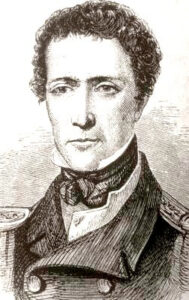 Allen Gardiner paced up and down the street, ashamed to go into the bookshop and ask for a Bible. He had thrown aside his religious upbringing at the young age of fourteen for the rowdy life of a sailor, but now he needed answers. The letter that arrived, telling of his godly mother’s prayer for him before her death, struck his heart with a desire to read the Book that he knew held life’s answers. Secreted with the newly purchased volume in the quiet of a Chinese temple, Allen Gardiner came to faith in Jesus Christ.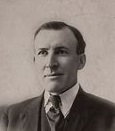

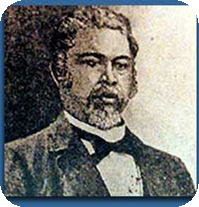 It was 1782, and George Leile didn’t see any other way: to escape slavery once more, he had to become another kind of slave. Years ago, his former master, Henry Sharp, had graciously freed Leile so that he could wholly pursue preaching the gospel in the Savannah area. But now that Sharp was dead, his family sought to re-enslave Leile. And so he struck a deal. To escape to Jamaica with his family, he would become the indentured servant of Colonel Kirkland.
 “Picture a teenage girl in a school cafeteria…. She’s slouched in a chair popping bubble gum. The whole world passes her by, yet she doesn’t even notice. Why? Because she’s tuned in to that little thing in her hand—a cellphone. Most likely she’s texting, instant messaging her friends, or browsing Facebook. Picture a young man on a computer in an internet café somewhere in a third world country. Or how about a young college freshman browsing the web on a laptop? The new generation coming along is radically different from you and me. I’m a young man myself and can barely recognize or connect with this new generation. But what if we could present the gospel to each of these people through their medium of communication? ….We can!” (~Jared Rowe)
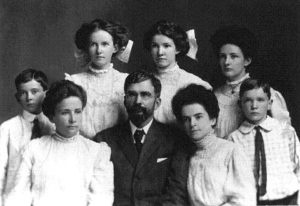 Fourteen-year old Attie Bostick sat in rapt attention, listening as her older brother, a missionary to China, preached on Mary anointing the feet of Christ with the most precious thing she had. “She hath done what she could.” Attie could not forget those words and years later would say, “That day God spoke to me, and said that I would not be doing all I could unless I was willing to go to China, too.”
 Ellie sat on the rough church bench clutching a small paperback book in her hands. Her brilliant white smile revealed her excitement as she spoke to me in Melanesian Pidgin, the trade language of Papua New Guinea. “This story strengthens my heart!” she exclaimed. The irony of her simple words silenced me for a few minutes. Ellie and I had just finished reading two chapters in a Pidgin biography of George Müller—a man who had been born two hundred years ago on the other side of her world but whose story was still living.
 Solomon Ginsburg asked his father—a Jewish rabbi—this question when he was only thirteen. Despite being soundly slapped in the face, his interest in the prophesy of Isaiah 53 did not die. As a young man, Ginsburg left his native Poland for London, England. There, a fellow Jew found him on the street and explained Jesus as the Messiah prophesied by Isaiah. After reading the New Testament, Ginsburg trusted Jesus Christ as his Savior, but was promptly disowned and cursed by all his relatives. He bore it gladly, recalling that Christ had been made a curse for him. Even several assaults by orthodox Jews in London could not dissuade him from his new-found faith.
 After Maude Cary heard of the heathen in Morocco, no physical or spiritual trial could deter her from joining the missionary work in North Africa. Just before her twenty-third birthday, Maude and four other co-workers embarked for Morocco with the promise to spend their life’s energies evangelizing the Muslims and Berbers. As they departed, they sang, Anywhere with Jesus I can safely go; Anywhere He leads me in this world below; Anywhere without Him dearest joys would fade; Anywhere with Jesus I am not afraid. Surely there would be opposition and heartaches, but Maude thought only of exciting campaigns to bring the gospel to wild tribes!
 “A missionary who truly wants to see the gospel flourish and spread on the foreign field will work toward the end of seeing nationals won to the Lord and trained for the ministry to reach their own people.”
 The son of a wealthy British planter, C.T. Studd accepted Christ at the age of 16. He lived the next several years in selfish pleasure and fame. An outstanding cricket player, he became captain of his team his last year at Trinity College, Cambridge. In 1882, Studd heard the preaching of Moody and began to be burdened for lost souls around him. However, it wasn’t until 1884, when his brother took seriously ill, that Studd was faced with the question, “What is all the fame and flattery worth … when a man comes to face eternity?” He made a decision and later wrote: “I knew that cricket would not last, and honour would not last, and nothing in this world would last, but it was worthwhile living for the world to come.”
 Born in 1941 in Duncan, Oklahoma, Thomas Laymon Sloan, M.D., grew up during the post-depression years. His unbelieving father permitted Tom’s mother to take him to church regularly. He was saved at age seventeen when a pastor led him to the Lord. Tom was a quiet but radical young man, criticized by some as an eccentric fanatic. He graduated as a pediatrician and planned to enter the medical field, until God changed his plans.
 “Should I tell you I do seriously think of leaving my native dwelling, my friends and companions for ever; would you upbraid me?” Harriet Atwood asked her sister in a letter. “[God] now offers me an opportunity of visiting the Heathen.” She then poured out the great conflict of her heart—the choice between living a normal life at home among friends or accepting the proposal of Samuel Newell, an aspiring missionary. Samuel was bound for India with Adoniram Judson; and in the year 1811, a life of missions was practically exile.