Brother Johnny Leslie, missionary to Croatia, was preaching about John the Baptist having his head cut off. He should have said odrezati but instead said narezati. Both words mean “cut,” but the congregation roared with laughter because narezati is only used when talking about slicing something like salami!


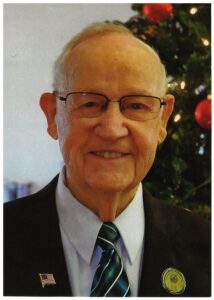
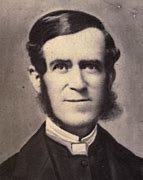
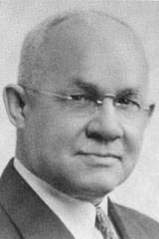
Charles V. Turner in 2021

Charles V. Turner was born in Greenville, South Carolina, in 1934 and born again in 1951 at a summer camp ministry of Marcus Hook Baptist Church in Pennsylvania. It was at this church that he dedicated his life to the work of missions in 1952. The following year, he enrolled at Columbia Bible College and graduated in 1957.

Classmates of Charles were Wanda Sifford, Mary Lou Pruitt, and Joshua Crocket. Charles married Wanda and they served the Lord in Papua New Guinea as missionaries with New Tribes Mission. Joshua married Mary Lou, and they were home missionaries helping struggling Native American churches.

Charles was busy in 1957. He finished Bible College, took the Summer Institute of Linguistics (SIL) course in Norman, Oklahoma, got married, and began training with New Tribes Mission (NTM). No sense wasting time when you know what God wants you to do! During summer vacation of 1959, while still students at New Tribes, the Turners returned to Norman to re-take the SIL training.

In 1960, after six years of formal training, the Turners were sent by Marcus Hook Baptist Church to Papua New Guinea where they served until 1980. First, Charles and Wanda learned the trade language, Tok Pisin. Then they learned the unwritten language of the Sinasina tribe. Applying the linguistic skills, they learned at SIL and NTM, they developed an alphabet, giving the language a written form. They produced literature and taught the people to read. In 1975, they completed the translation of the New Testament. After several years of use in the churches, Brother Turner and the church leaders revised and improved the Sinasina scriptures. For twenty years, Charles and Wanda spread the Good News, baptized converts, taught literacy, and began four or five churches and a Bible institute. In recent years, the work has flourished, and many more churches have been established in the Sinasina area. According to family members and medical experts, Wanda should never have gone to the mission field because of a heart condition. However, she did go and was a good missionary/linguist. In 1975, Wanda had open heart surgery, and then returned to the field.

In 1980, the Turners returned to the NTM training center where Charles taught Bible translation, linguistics, and language and culture learning. He began writing the book Biblical Bible Translating. In 1982, they transitioned to Baptist Bible Translators Institute (BBTI). They took the BBTI training which was a review that prepared Charles to teach the same courses at BBTI. In 1991, he became the director of BBTI and served in that position until 2005.

Wanda passed away in December 1994. Later, Charles married Mary Lou, whose husband, Joshua had died a few years earlier. Mary Lou took the BBTI training and served the Lord and the BBTI students. She went to be with the Lord in November 2020.

Charles desires to visit the Sinasina people again; pray that his health will allow it. He currently serves the Lord as a BBTI trustee, a deacon at Truthville Baptist Church in Truthville, New York, and a teacher in their Christian school. Servants of Christ may change locations and job descriptions, as Brother Turner has, but when he signed on, it was for a lifetime of service.

Fall 2022


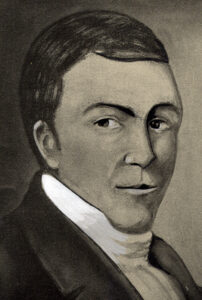
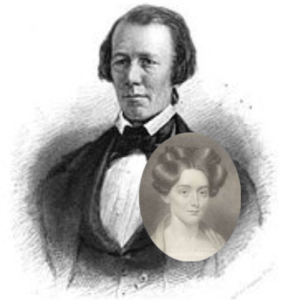
Isaac McCoy 1784 -1846

Isaac McCoy was born in Fayette, Pennsylvania, in June 1784. He was the son of a Baptist preacher who, as incredible as it sounds, did not believe in evangelizing. Isaac and his father argued over this, but Isaac was not afraid to stand for the truth. He became a missionary to the Native Americans. Before moving west to the wilderness of Indiana and Illinois, Isaac pastored a church for seven or eight years. His first missionary assignment paid him $500 per year, and he worked with the Weas, Miamis, and Kickapoos in Indiana. He later worked with the Pottawatomie tribe in Michigan.

McCoy used education as a tool to evangelize children. In 1820, he moved to Fort Wayne and opened a school with ten English pupils, six French pupils, eight Indian pupils, and one African pupil. By the end of the year, he had thirty-two Indians living in his own home as members of his family! A year later, he reported that he had forty-two pupils. In 1822, he began a temperance society and made his first trip to Washington D.C. to plead for fair treatment for the Native Americans. Our government was shamefully famous for making and breaking treaties with the Indians They stole their land, relocated them, and viewed them as something less than human. However, Isaac McCoy did not see the Indians this way. He loved a people that others despised.

For many years, McCoy served under federal appointment as a commissioner, surveyor, or teacher among the Native Americans. On a trip to Washington [believed to have been in 1829] to report on his exploration, he visited the Mission Board in Boston. He found them making pleas for missionaries to Burma (Myanmar), Africa, and other countries, but not to the Native Americans. Not everyone shared McCoy’s burden to reach them. Some believed that the Indians would soon die out; therefore, they believed there was no need to evangelize them.

In 1828, McCoy preached the first Baptist sermon ever heard in Chicago. In 1832, he was present in the organization of the first Baptist church in the Oklahoma Territory. He was instrumental in the founding of Grand Rapids, Michigan, and Kansas City, Missouri, where he lived until 1842. At that time, McCoy moved to Louisville, Kentucky and established the Indian Mission Association. On a return trip from Jeffersonville, Indiana, he was exposed to severe weather which resulted in a serious illness that caused his death on June 21, 1846. His dying words were, “Tell the brethren to never let the Indian mission decline.” It was said of him, “The American Indian never had a better friend than Isaac McCoy.”

Fall 2022

Madison, a graduate of Pensacola Christian College, currently studies at BBTI.

By Madison Lehman

Why do missionaries go? Why do they stay? Why do believers risk their lives? Why do martyrs die? We have all heard that the need for lost souls to hear the Gospel is great; and the need is great! In fact, the need is numbing. However, the answer to these questions is not the need. Those who embrace the need struggle to maintain their zeal, while those who suppress the need struggle to minimize their indifference. So, the questions remain.

I heard a man answer these questions on Voice of the Martyrs (VOM) Radio. He said, “They do not go because the need is great. It is. But they go because God is worthy.” When I heard that, God pierced my heart! I serve the same God. Isn’t God worthy of my complete surrender and obedience?

I have heard about the need my whole life. Growing up overseas, reading VOM and Open Doors magazines, collecting missionary books, and hearing missionary testimonies continually kept the need fresh in my mind. I told God that I would go. Then, I told Him that I could not go. God gave me a taste of missionary life, and I shrank back. But last fall, He began convicting me of my need to yield to Him. God showed me that He is worthy of my obedience—at any cost to myself. He broke me and called me with Acts 26:16-18. By God’s grace, He will not let me be “disobedient to the Heavenly call” (v. 19). God has specifically called me to minister to Arab Muslims. I do not know many things, but I do not have to know to obey. I must obey.

The need alone is insufficient motivation for any missionary or ministry. God alone is The Motivation. I am not going because the need is great. I am going because God is worthy. God promises to save souls (Isaiah 45:3), but God doesn’t promise that I will get to see Him save souls. I may minister my whole life and never see one soul saved. Or I may die. If I live, I shall live unto the Lord; if I die, I shall die unto Lord; whether I live therefore, or die, I am the Lord’s (Romans 14:8). God alone is worthy of my life.

“This year, will you follow Christ, or will you ask Christ to follow you?” (Dr. David Jeremiah). Your answer to God’s call will change your life. My answer is changing my life.

Fall 2022

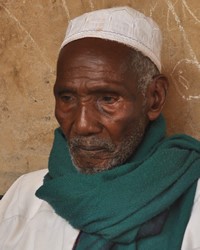
Photo Source: Mouahé – Wikimedia Licensed under CC BY-SA 4.0

There are forty-four subgroups of the Jula, a sub-Saharan people, one of which is the Odienne Jula. The majority of the 183,000 Odienne Jula live in the northwest town of Odienne, Côte d’Ivoire which is an historic trading center. Odienne lies within the savanna region of Côte d’Ivoire where the soil is fertile. People make their living as merchants, craftsmen, and farmers. Rice is grown in the region and cashews have recently become an important cash crop (2019 Indiana University Press).

The Odienne Jula are resistant to the Gospel because they are both religious and clannish. They are 95% Muslim but also adhere to much of their ethnic religion. Ethnic religions consist of rituals, charms, and involvement in spirit worship which are entrenched in the people due to strong cultural and generational ties. The Odienne Jula are organized by clans, the lineage of which is traced through the men. Rather than viewing themselves as individuals, they find their identity in their clan. They guard against anything that might divide or weaken their kinship ties.

This unreached people group speak Wojenaka, a language also spoken by 18,000 Wassulu people, also of Côte d’Ivoire. It is reported that a Bible translation has begun; however, there are no scriptures in Wojenaka. Translators need prayer to overcome obstacles and wisdom to produce a faithful translation.

Fall 2022

Seventy-five percent of our military age men are unfit for service. Some military branches are lowering standards and increasing financial incentives to recruit personnel. Sadly, recruitment for overseas missionary service is very low as well. The apostle Paul declares that salvation is available to everyone everywhere. “For whosoever shall call upon the name of the Lord shall be saved” (Romans 10:13). Then he launches into a series of rhetorical questions intended to motivate us to deliver the good news to the world. “How then shall they call on him in whom they have not believed?” They cannot. “How shall they believe in him of whom they have not heard?” They cannot. “And how shall they hear without a preacher?” They cannot. “And how shall they preach, except they be sent?” Send preachers! God must send them, of course, but the church must recruit and prepare them for Him to send. “Pray ye therefore the Lord of the harvest, that he will send forth labourers into his harvest” (Matthew 9:38). Prayer is not a suggestion but a command. However, we seldom hear a public prayer for more laborers. We have not because we ask not! But why do we ask not? We ask for what we want. Apparently, we really do not want missionaries; or, we want them to come from other churches, not ours. The Antiochian church was a missionary recruitment center. The believers prayed for missionaries and produced them. According to Acts 13:14, God sent them; “So they, being sent forth by the Holy Ghost, departed….” As co-laborers with God, we are failing to produce laborers for Him to send.

A few missionaries are coming from a few churches. Why so few? Why not ours? Childbearing is normally not a problem for a young couple, but when it is, they may seek medical help. We must admit our missionary infertility and consult the Great Physician.

Failure to produce foreign missionaries is so widespread that it seems almost normal.We would all agree that missionaries should come from our churches—where else would they come from? Yet most churches do not produce missionaries. This missionary barrenness may be common, but we must not accept it as normal.The purpose of the church is missions, and missions cannot be accomplished without missionaries. So, our missionary scarcity is a grave problem that must be addressed. A first step toward fixing the problem is to increase missionary emphasis in our church services. Look at the amount of time given to missions in the church services. What does it say about our missionary priority? We wonder why God is not calling enough missionaries to reach every kindred, tongue, people, and nation. Missionaries do not magically appear! They are developed in the home and the church where there is a strong missionary emphasis.

While we thank God for what churches do for missions, we must do more. There are many ways local churches can be actively involved in missions. We could give missions more priority by reading prayer letters from the pulpit and praying for the requests. A church could purchase good missionary books and strongly suggest that people read them. Someone could read short, interesting portions from these books to whet the congregation’s appetite. Occasionally, we could show missionary videos or short presentations downloaded from the missionaries’ websites. Someone could research and give a brief report on the spiritual condition of a certain country. Before the service, why not project pictures of missionaries that you support? Get to know them. Hosting missionaries is expensive; they need meals, money, and often a motel. But they help keep our minds on missions. They convey a burden for their field and make a plea for help. A church could also display the current faith promise goal and giving along with a list of missionaries that could be supported if the mission giving increased. Missions must be emphasized all year long, not just during the annual missions conference. Sing missionary songs occasionally; preach missionary sermons. If reaching the world is your church’s priority, keep missions before the congregation. If it is not, repent! Encourage communication with missionary wives and children. Use different creative ideas to promote missions in the church services. Do not just say world evangelism is important; show that it is! Let us prepare our young people for missionary service and let them go! For too long we have cautioned them to stay unless they are absolutely sure that God wants them to go. It is time to challenge them to go unless they are absolutely sure God wants them to stay!

Pastors must call people to the altar of total surrender (Romans 12:1-2.) We preach, “Give God your heart.” But God says, “Give me your body.” He demands that the body be holy, and not conformed to the world. Look at the worldliness of our people. They often wear the immodest clothes of the world. They deface and stain their bodies like the heathen. Worldly music and sinful images enter their eyes and ears, and worldly speech comes out of their mouths. Most Christians probably do not even try to “prove what is that good, and acceptable, and perfect, will of God.” They are neither transformed, nor renewed, and are anything but missionary material. Perhaps one young person out of one hundred has an inclination toward fulltime missions. One percent is pathetic! We need a radical change in thinking about missions! Let the world provide its cab drivers, plumbers, lawyers, and programmers. Let the church produce missionaries!

Change is needed because what we are doing is not working. There remain thousands of unreached people groups and Bibleless languages. At the rate we are producing missionaries, billions will never hear the Gospel. When we compare what we are doing with what we are not doing, we must conclude that something is terribly wrong. God, give us a revival in missions. Make our churches recruitment stations that produce laborers for You to send!

Cassie, James, Emily, Melana & Lilyanna Dean love life in Siberia

By James Dean

At age thirteen, under conviction of sin, I repented and placed my faith in the Lord Jesus Christ, believing that His blood alone was able to save me. A few years passed and I began to grow spiritually. During the summer before my freshman year of high school, the Lord started to deal with me about going into the ministry. I did not respond to the call at first, because I felt unable, not possessing great oratory abilities. God showed me that is just the point; we are unable, but God is able. The ministry is such that we must rest in the power of God and not our own natural abilities. The Holy Spirit continued to deal with me. I yielded and upon completing high school, went to Bible college.

While attending Midwestern Baptist College, a chapel speaker came and presented the need for missionaries in the arctic regions. He spoke of the many distinct groups of people within the circumpolar region. One of the people groups mentioned was living in northern Siberia, Russia. During his presentation, the Lord broke my heart for the arctic people. I did not want to mistake God’s will, but clarity came as I prayed for direction. The Lord wanted me in the arctic, particularly Siberia. Unbeknown to me, during that same chapel service, the Lord dealt with my future wife about missions in the far north. Upon completion of Bible college, we married, and I returned to the Ohio Valley to work in my home church as my pastor’s assistant before beginning deputation.

During our final stages of deputation, we attended the Baptist Bible Translators Institute (BBTI) where my wife and I spent nine months studying linguistics, culture, and missions. We are so thankful for the training we received. At the time of this writing, we have been on the field for over thirteen years. We have studied language and collaborated with veteran missionaries in both children and village ministries. We are currently beginning in a fledgling work in a northern village with the goal of planting an indigenous church.

Summer 2022


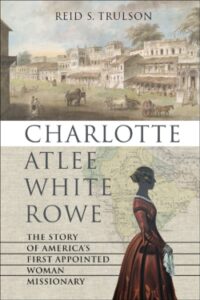
There was no headstone for Charlotte Rowe until her name was uncovered among the missionaries appointed by American Baptist International Ministries during research as it prepared for its 200th anniversary.

Charlotte White Rowe was the first woman missionary to be officially appointed from the United States by any denomination or agency. Charlotte was born in 1782. Her early life was marked by sadness. She was orphaned at age twelve and widowed at twenty-two. She moved to Massachusetts where she was saved and joined First Baptist Church of Merrimac.

In 1813 Charlotte moved to Philadelphia and joined the Sanson Street Baptist Church. There she met and joined Charles and Phoebe Hough who were going to Burma to help Adoniram Judson with printing work. She applied to the Baptist Board of Foreign Missions in the summer of 1814. After much discussion, the majority consented to her approval but then said they did not have the funding to send her. She pledged her own small estate to the work and left for India. The next year, the mission society’s new ruling forbade the appointment of single women missionaries.

After four months at sea, Charlotte and the Houghs landed in Calcutta and traveled to Serampore. It took two months for them to arrange shipping for the printing press and supplies to Burma. During that time, she met missionary Joshua Rowe, a widower with three small boys. They were married and Charlotte stayed in India with her new family while the Howes went on to Burma.

Charlotte’s first task was to learn the local language, Hindi. She was a remarkable linguist and learned so quickly that she soon began establishing schools. It wasn’t hard to get native teachers for the boys. To get teachers for the girls she had to hold classes and train the women first. Her resources were limited so she began writing schoolbooks in Hindi.

After only seven years of marriage, with six children and a busy and thriving ministry, Joshua Rowe died. Charlotte was only financially able to continue for an additional three years. She traveled to London in hope of being appointed by the British Mission society, only to find that they, too, had established a ruling against single women missionaries. She then worked to raise passage back to the United States where she ran a boarding school with the help of her twin daughters until the girls died, one in 1851 and the other in 1852. Charlotte died in 1863 at the age of eighty-two and was buried beside her twin daughters in an unmarked grave.

“I am but a mere instrument in God’s hand . . .” —Charlotte Rowe

Summer 2022

Joe and Lindsay Risinger are 2019 BBTI graduates. Their children are Joseph (6), Abbie (4), and Titus (1).

It was August of 2019 when we began living in a village in northern Uganda where we could not understand a single word of our neighbors’ heart language. The language they spoke during their growing up years is the same language they use to ponder deep thoughts, and it was nothing but meaningless noise to our foreign ears. This local, tribal language called Lugbara was one that we were warned would not be an option for a foreigner to grasp. No language school exists [although Lugbara is spoken by 1.7 million people]. Because it is tonal, the most subtle change in one’s tone profoundly alters the expressed meaning.
God called us to these people, therefore we felt it prudent to take whatever steps necessary to understand their culture and communicate in their heart language. For months we would go out every single day, notebook in hand, and use the language acquisition tools we were given at BBTI. Under the shade of a mango or avocado tree while our three-year-old and one-year-old played on a papyrus mat with the African children, we carefully transcribed words and phrases to commit to memory afterwards.

What was their reaction? Absolute fascination! They could not fathom why this family would come from America to learn their language and do life with them. They were overwhelmingly humbled by our desire and anxiously supported our effort. The most frequent question was “Why? Why are you here? Why are you learning our language?” I explained, “Our plan is first, to learn the language, and second, to help people understand the truth of God’s Word.”

There is a mosque in our village which half of our local community attends. The Imam (leader) of the mosque is a man named Agobi. The only language he speaks is Lugbara. I met Agobi during our early months on the field but had very little ability to communicate with him. The Lord gave me a burning desire to share the Gospel with him. Our surface relationship was maintained for some time until two years later when he invited me to his home for tea. My heart was full as I was able to sit in his home and share, in Lugbara, the simple, powerful truths of who Jesus truly is. We pray he will one day turn to Christ.

The preaching of the cross and the hope we have in Christ is well worth any amount of language learning effort if it causes a single lost man to become more tender to such a message. By striving to speak the language of these people, a powerful statement of sincerity resonates in their hearts and minds. Every Lugbara person we encounter is met with an immediate connection and highly effective bridge to the Gospel because of the ability to speak their heart language. I cannot think of a better way to invest our time during these first few years on the field than learning this language.

Summer 2022

Photo Source: Jialiang Gao – Wikimedia Licensed under CC BY-SA 2.5

Among the mountains and valleys of the Shan state of Myanmar live the Golden Palaung. Over 200,000 Golden Palaung speak the Shwe dialect of Palaung, which comes from the Mon-Khmer language family.

The Palaung are able to grow a number of crops in their area and they trade for additional foods with their pickled tea (also called laphet). This exclusive novelty is made by fermenting tea leaves over a long period of time and then preparing them to be eaten as a salad.

In addition to their special pickled tea, their traditional houses are quite distinct, and very impressive. They are raised off the ground and can house as many as six families. Some houses are nearly one hundred feet long! In spite of all this room, there is little if any division for each family in the house. Consequently, it is not surprising that single family dwellings are now becoming the norm.

Most Golden Palaung practice Theravada Buddhism. In addition, they continue to practice their traditional animistic religion. A distinction in their animistic belief is that of “nat worship.” Nats are the spirits of inanimate objects. If the people experience hardship, they believe it is because the nats need to be appeased by offering items such as betel or tobacco. Offerings are also given by a shaman at ceremonies during marriages, births, and deaths.

Summer 2022

Billions of people in the world are bilingual and even multilingual. It is not unusual for people in India or Africa to speak four or five languages. Why should it be so difficult for missionaries to learn a new language or two? Perhaps we are going at language learning in the wrong way. The normal procedure for our missionaries is Bible college, deputation, and then a language school on their chosen field. There is a vitally important step that is usually overlooked: pre-field linguistic training such as has been available for Baptist missionaries at BBTI for nearly fifty years. Some have greatly benefited from it, however, the vast majority have either not known of its existence or chosen not to take advantage of it.

The language school method of language learning presupposes that a school is available for the language the missionary needs to learn. Language schools teach trade languages such as French, Portuguese, Spanish, Swahili, Arabic, Russian, Chinese, Japanese, Korean, etc. There are 7,151 languages in the world, and it would be safe to say that 6,000 or more of them have no language schools. Yet there are billions of lost souls that speak these languages: souls for whom Jesus died, souls that He desires to save, and souls that deserve to hear the message in their heart languages. Some of these languages have only a few hundred speakers while others have several million. With few exceptions, our Independent Baptist missionaries are not attempting to reach people whose languages have no schools because of the seemingly impossible language barrier. Many of these languages are still unwritten which of course means they have no portion of God’s Word. An estimated eighty-five percent of our missionaries go to only fifteen countries and then only to the major trade languages. Most of these countries have several other language groups. For instance, in the African country of Côte d’Ivoire, there are 77 languages besides the official French. Would you not agree that all people deserve to hear the Gospel in the language they understand best, just as we did?

A language school where one is available is a good idea but not when the missionary first arrives on the field. We suggest that he begins vigorously learning the language from the people and progress to a point of fluency in a more natural way. Schools are not the natural way to learn languages. We did not learn our first language in one! The method of language learning that we suggest may sound radical to Americans, but it works, and it is usually better and faster. This plan will require extreme dedication and diligence on the part of the missionary. If he is too undisciplined or unwilling to take on this responsibility and become a learner, leaving behind the mentality of a student, then he should simply go the language school route and live with its results and limitations.

We are not suggesting that the missionary simply go out with the people and “pick up the language” the best he can. No, we are suggesting a plan that involves a tried and proven method. The missionary can go to the field with this method and begin using it upon arrival. But he must learn the method here first. Before you ask, the answer is no; he cannot learn it on the internet. And it will take time. (Missionaries spend the necessary time to prepare theologically in Bible college and financially on deputation. Why should they not spend the necessary time to prepare linguistically?)

This natural language learning method is part of the overall nine-month Advanced Missionary Training (AMT) program of BBTI which provides many language and culture learning tools that are not available in Bible colleges. The first skill we teach is phonetics. I have said it a thousand times; one more time will not hurt: No missionary should attempt to learn a new language without first studying phonetics! (At BBTI both husband and wife take the same classes.) Students spend at least one hundred fifty literal classroom hours learning to recognize and reproduce any sound they may encounter (there are about eight hundred of them). Because he learns to produce the new sounds exactly as the native speaker, he can speak a new language with little or no foreign accent. An accent does not disappear with time; from the beginning, he must keep from superimposing his English habits on the new language by forming new habits that will last for life.

The missionary student uses his newly acquired phonetic skill for a following course, Situational Language Learning. This includes using a language helper (I did not say a language teacher) who speaks a foreign language well. (In recent years, we have used Sina-Sina from Papua New Guinea, Japanese, Korean, Khmer from Cambodia, and Spanish.) The student learns how to elicit the language from the helper in a step-by-step process, beginning with simple object-like words and slowly increasing the length of the utterances. In a short time, he is fluent in all the sounds of that language. In a few weeks, he, along with a partner, will progress to eliciting and learning dialogues natural to the native culture such as buying food in the market. If his target language has no language school, he can continue using this method for as long as needed. If a language school is available, he can enter it after a few months and advance rapidly in grammar and more vocabulary. He begins at the top of the class because he is not struggling with pronunciation. He will sound like a native. Speaking and acting like a native should make him much less of an outsider. He will be comfortable with the people and hopefully they will be more willing to listen to his message. They may even tell him, “You eat our food, you spend time with us, you talk like us. Hey, you are one of us!”

Jessi Pontius

Growing up in a Christian home, it was easy for me to realize as a child that I needed to trust Christ with my eternity. Trusting Christ with my life, on the other hand, was not so easy.

God first dealt with me about surrendering my life to Him when I was eleven or twelve years old. I had been reading my Bible (a habit I was still trying to start) when I came across Isaiah 6:8, “Also I heard the voice of the Lord, saying, Whom shall I send, and who will go for us? Then said I, Here am I; send me.” I had never heard God speak to me from His Word in such a way, and I really did not understand what the verse meant. I knew it was very important, but I did not see how. I had a slight feeling that this was God calling me to the mission field, but I denied it and moved on.

As I grew older, I realized what God was saying through that verse. Still, I denied it, convincing myself that God had not called me to the mission field.

Around the age of sixteen, I decided I was going to go into the Lord’s service—as a paleontologist. I wanted to show through fossils that God was Creator. Although a very nice plan, it was not God’s plan for my life. God brought this squarely to my mind through the passing of a loved one a year or so later. I had never felt the reality of death quite so strongly until that time. It made me wonder about the eternity of those who have never heard the Gospel. God showed me through that trial that although Creation ministry is good, His plan for my life was to be a missionary. I was finally ready to say what I had read a number of years before: “Here am I, send me!”

God first led me to Massillon Baptist College and has now placed me at Baptist Bible Translators Institute to prepare me for the mission field. Ever since I surrendered my life fully to God, He has only strengthened the desire in my heart to share His love with those who have not yet heard. Where God will finally lead me, I do not know, but I am so excited to see His plan unfold. All I can say is, “Here am I! Please send me!”

Spring 2022

Elisabeth on her last birthday

Tom and Barbara Needham were farmers, and they went to Cameroon, Africa, to teach the people better farming methods. There a missionary led them to Christ. They returned to Iowa, sold the farm, went back to Cameroon as missionaries in 1991. Their daughter Elizabeth, the fifth of seven children was two years old at the time. There she grew up and served the Lord with her family. She learned Pidgin English and Fulfulde, the language of the Fulani Muslim people, as well as sign language. Elizabeth was homeschooled and was saved at age six. At age twelve at summer camp, she was memorizing the words to the hymn their group was about to sing. “All to Jesus I surrender. All to him I freely give.” She realized that it was not true of her, but she immediately surrendered all! Suddenly she had a burden to reach the lost.

Cameroon is divided into two parts; one speaks English and the other French. The Needhams worked in the smaller English-speaking section until forced to move to the French side because of violence that arose in 2018. Elizabeth is currently learning both French and French Sign Language.

Elizabeth graduated from the Baptist College of Ministry in 2012 and then returned to Africa. She and three of her sisters attended BBTI from 2019 to 2020. She was an excellent student and a blessing to all each day. Elizabeth’s childhood friends named her Sangle which means “joy,” and to this day, she wears a perpetual smile. She returned as a missionary to Cameroon in January 2021.

Through her church, Elizabeth ministers to women and children, but God is especially blessing her outreach to the deaf. Here are a few testimonies:

“One deaf man who trusted in Christ last week said, ‘I want my wife and all my deaf friends to hear this same preaching.’ He invited us back the next Saturday to preach to all the deaf that he could gather but was disappointed that none of them came. We taught him how to share the Gospel with others and arranged to meet him again next Friday to meet his wife and other deaf friends. Another deaf man who was a Jehovah’s Witness also trusted in Christ two weeks ago after Synthia and I had witnessed to him multiple times. He came to church with two friends and really enjoyed it. He is still holding to his connection to the JWs, trying to decide which one he will follow. Another deaf woman told me, ‘I have gone to church many times, but I have never heard before what you have told me today about Jesus.’ She was so surprised and amazed to hear that Jesus died to take away her sins. Today I stopped by to give her a Bible. She was so happy! Charnelle, another deaf woman I have reached out to came to church last Sunday. She told me afterward, ‘I do not understand anything in the church that I have been attending. I just sit and stare at the pastor until he is done. But here you interpreted for me, and I could understand. I want to come back next week.’ Charnelle’s deaf husband came to me with one of the tracts I had given her. He told me he is a believer and said, ‘This paper is so true…I want to gather all my deaf friends in my house on Saturday and explain to them all what I read in this paper, and I am going to invite them all to church on Sunday.’ One very tall deaf man with large hands stood in front of the rice shop where he loads and unloads 50 kg bags of rice. He meekly listened to the Gospel and asked questions. Then he prayed a sweet, simple prayer, ‘Jesus forgive me. I believe in you.’”

We praise the Lord that He allowed us to have a small part in a great work in Africa. But what if Elizabeth had not surrendered all? Most missionary kids do not return to the mission field. Thank God Elizabeth did!

Spring 2022

John Geddie
1815 – 1872

“The love of Christ banished the terrors of the law.” Those were the words of John Geddie concerning his salvation at age nineteen in 1834. He tirelessly preached this same message of Christ’s love as a missionary in the New Hebrides islands for twenty-four years.

John was an avid reader; his favorite subject being stories of mission efforts and the desperate need of the Gospel in unevangelized areas. After completing secondary school at Pictou Academy in Nova Scotia, he studied theology. Small and slightly built, he was often referred to as “little Johnnie.” While at seminary, his health became so poor that he was told to give up his studies. He promised the Lord that if his health were restored, he would go as a missionary to a heathen land. On March 13, 1838, he was ordained and began pastoring a church on Prince Edward Island.

During his time as pastor, he promoted foreign missions which was a new idea to the colonial churches. Up to this point, they had sought financial aid for their own work, but had not considered sending out missionaries. It took several years and many pleas, but a mission society was finally formed. John and his wife were the first missionary volunteers. Their destination was Aneiteum, an island in the New Hebrides where people practiced cannibalism.

The Geddies arrived in New Hebrides in 1848 and soon felt the reality of their situation. They were on an island, surrounded by people from whom they had much to fear and whose language and customs they did not know. Geddie wrote, “We have His promise, at whose command we have come hither, ‘Lo, I am with you alway.’”

Their first task was to learn the unwritten Aneiteumese language. Then they began to print materials and teach the people to read. After three years and much labor, John had won a total of ten people to the Lord. Several times, while walking the trails, spears and clubs were thrown at him. He once faced an angry crowd of men who threatened to kill him for interfering as they strangled a young widow to death that she might “join her husband in the afterlife.” He unwittingly violated some cultural taboos and made the chieftain angry. But eventually the message of Christ’s love penetrated the hearts of the people and hundreds turned to the Lord.

As people were saved and their lives changed, John began to teach them and send them out to other islands with the message of the Gospel. People came from all over the region to see what had happened in Aneiteum. One group even brought a pig in the hopes they might use it to purchase a teacher to take back to their village. When John Geddie died on December 14, l872, a tablet was placed behind the pulpit of the church in Anelcauhat which reads: In memory of John Geddie, D.D. When he landed in 1848, there were no Christians here, and when he left in 1872, there were no heathen.”

Spring 2022

The ground is level at the foot of the cross, meaning that all are welcomed and received equally when they come to God through faith in Jesus Christ. Jesus made a full and final atonement for the sins of Adam and all his descendants. Not only does God desire that all would arrive at the cross (1 Timothy 2:4), He commands it (Acts 17:30). The ground is indeed level at the foot of the cross, but the road leading there is not. For some there are seemingly insurmountable obstacles along the way.

To the place I heard the Gospel for the first time, I drove one mile on a paved road. I passed no checkpoints, and no armed guards asked where I was going. I walked into the building in broad daylight. It was not an underground church service. I feared no retaliation from a religious system. No family member opposed my going or persecuted me afterward. I heard the message in my language without it going through an interpreter. If I did not know better, I might think God loves me more than most people in the world. For me, the road to the cross was smooth and easy. I wish it were for everyone.

Most in the world know nothing about the cross or that there is even a road to it. No one gets to the cross without the message of the Gospel, and it simply has not been declared where they live. Contrary to God’s will, these poor souls live and die without the Gospel.

Another huge obstacle is social control, commonly called peer pressure. A society keeps its people in line with the threat of punishments. Punishment might be mild like gossip or ostracism or as serious as death. We have heard of a father killing his child that converted to Christianity. It is much easier to get to the cross from North Carolina than from North Korea! The fear of exile from a family or group is terrifying. A Muslim in Indonesia told a BBTI graduate, “I am an Indonesian, a Sunda Muslim. If I trust Christ, I am no longer a Sunda. If I am not a Sunda, I am nothing. I have no home, no family, no house, no relationship. I know I am a sinner, and I do not want to be punished for my sins. I know Jesus Christ is the Savior of the world, but I would rather risk suffering eternally in the lake of fire than to lose my social identity in this life.” (Missionaries in these difficult places are not going to see quick results; we need to be patient with them.)

To illustrate this difficult struggle against social control, consider the following from BBTI graduate Emanuel, who along with his wife, Courtney, works with Afghan refugees in Greece:

“Iman is not like the normal Hazara Afghans that are the majority here. In fact, there is a lot of fighting between Iman’s Panjshir group and them. Iman says they all convert easily because they don’t take their religion seriously. They will change again later from Jesus to something else when the situation affords. Iman on the other hand owns his faith. He has a very strong national pride that relates to his religion…But then here comes the dichotomy. For all this die-hard insistence, in the same conversation he will confess that he is tired of religion and wishes there were a way to connect with God directly without going through books, prophets, and go-betweens.

Over the weeks, we have had many conversations about the identity of Jesus. We showed him many scriptures, each of them shedding more light, but still, he would insist that he cannot accept that Jesus is God. We learned not to press the point. Instead, we befriended him, along with many others. We built trust, and he started coming and reading the Bible. When his younger brother was missing for days, we prayed with him. We let him talk about his life, his brothers who are fighting the Taliban, his mother whom he loves more than any other person, the three cows they have, the customs and values they live by, the climate of his mountain home, why he left it, the challenges along the way, and how he misses his family. For every hour we have spent teaching, we have spent as much listening. Slowly he was drawn in.

Now, he enjoys the Bible more and interacts with it better than most Christians I know. I can give him a passage, and he will read it and then preach it to me. He would make a great preacher. He loves Jesus… Still, he could not accept Christ’s identity. Until recently that is.
The other day we had a God-ordained hour with him, showing repeatedly that Jesus was in fact worshipped by men and angels, that he not only permitted it, but God commanded it, and that one day every tongue, including Iman’s, will confess that Jesus is Lord. At the end, he confessed that he believes it is true, but he has a family, which I suspicioned, for all his claims of independence, was the real reason he could not accept Jesus as the Son of God. If Jesus is right, his family, his nation, his heritage, has been mistaken for hundreds of years. That is an incredibly hard pill to swallow for one who is not bitter and hurt by his native culture, but proud of it…For such a person to become a follower of Jesus, what must he lose? Father, mother, brother, and sister, yes, Islam. He must find a new reference point, with new values, new beliefs, a new community, a new Lord and Master, a new Book, a new road, a new everything. Nothing old can stay the same. All that is dear to him must be eclipsed by One who beckons to him with nail scars in his hands and feet.”

It was easy for me to accept Jesus. I did not lose my family, my job, or my country. Not so for many. What will it take to get people like the Sunda Muslim or Iman down the road to the cross? Someone must obtain specialized training for the task. He must give up all he knows and loves and go to where they live, he must patiently learn new tongues and cultures, and he must not look for shortcuts or quick results. He must be willing to walk a difficult, dangerous road with the seeking sinner until they reach the level ground at the foot of the cross.

Spring 2022

We asked our language helper for the two statements: (1) That is a shovel. (2) That is not a shovel. I felt certain he didn’t understand my instructions because the two statements sounded identical. I challenged him by confidently saying, “You are saying the same thing.” What was I doing, correcting my language helper when I knew so very little about his language? I felt so foolish when I realized that though the two statements did have identical sounds, there was a difference in the stress placed on one of the syllables. —Charlie, Ghana


The missionary’s  audience was a little perplexed as he told them the disciples were all on a “rock” in the middle of the sea.  The audience wondered why the disciples were there and how they even got there. It was even more confusing when the missionary illustrated that Jesus Christ is our “boat” that never moves.  They were curious to know how the motionless boat represented Christ.  The message was clarified when the missionary realized he had confused the word “dunga” (boat) with “dhunga” (rock).  —Justin


In Nepali culture, as in many cultures around the world, children are often a conversation piece. You often hear compliments such as kasto ramro chhori! which means, “What a GOOD girl!” given to the parents. However, an untrained foreigner who attempts to reproduce this compliment could easily offend the other parent by saying, kasto ramro chori! which means, “What a good THIEF!” —Justin

We finished our first semester of Hebrew a few weeks ago. We are enjoying a break but are also looking forward to getting back to our studies. We now know enough Hebrew to be dangerous, and if we’re not careful, get into conversations past our understanding. The word for the phrase see you later is “lehitraot,” but I didn’t say it right. What I said was the word for pasta; it’s so easy to get some strange looks! —M.P.


Cliff and Mary Middlebrooks are sent from Redemption Baptist Church in Decatur, Alabama. cwm1611@gmail.com

by Cliff Middlebrooks

I had thought that missionaries were an extinct species who had all died off in the day of David Livingstone. But shortly after the Lord saved me, I met my first real, live missionary! Then, while serving a tour of service in Korea in the Air Force, I asked people in America for the names of missionaries that might be in my area. Every time I had leave, I took the bus as far as I could and then hiked back into the mountains of Seohae-Dong to help a missionary who operated an orphanage for the Deaf. After separating from the service, I laid a map out before the Lord and asked Him to send me to the Pacific Islands as a missionary. His answer was a resounding “no.”

My wife Mary and I busied ourselves in the work of the Lord. Over the last forty years we have served in many different capacities. We always sought to do what God led us to do as He led us to do it. Each time our ministry and focus changed and we asked the Lord, “What would you have us to do?” it was always preceded with, “May we go to the mission field now?” His answer was always “no.” However, we took young people on short term mission trips. As our son and several students that we had taught over the years surrendered their lives to the mission field, we resigned ourselves to the idea that perhaps the Lord felt a better use for us was to train others and send them off to serve on the foreign field.

After pastoring for a number of years, we found ourselves at the same ministry crossroad. This time, when we asked if we could go to the mission field our hearts began to be convinced that the answer was yes! (At first, we did not admit it to each other for fear the other would think we had lost our minds!) We needed confirmation that this was truly the will of the Lord and not our own desire. So, without saying much to anyone about why we were going, we went to Nicaragua seeking for answers. And God did answer!! He opened door after door and began to lay detail after detail in place for us. Some people have called us crazy for going to the mission field at our age when most people are thinking of retiring. We call it the greatest privilege of our Christian lives.

Winter 2021-22

“ I have made my boast of God amongst the people, and told them that I had unshaken trust in God…”

At just forty-three years old he was financially ruined, ostracized by many of his fellow missionaries, and teetering on the brink of insanity; John Thomas was a failure. But that is only half the story.

Thomas’s work is virtually obscured by the dazzling ministry of his much more famous partner, William Carey, yet Thomas was the very agent that brought Carey to India. Not only did John Thomas play a pivotal role in the establishment of modern missions, but he was also the first European to preach in Bengali, the first to undertake a translation of the Scriptures into Bengali, and one of the earliest Europeans to actively evangelize the native population.

Thomas, a former Royal Navy surgeon, spent five arduous years in India, pioneering a ministry among the Bengalis before returning to England for a brief period in 1792. In the course of his travels through England, Thomas brought his burden for India before the newly formed Baptist Missionary Society. The timing was perfect: Thomas and the Society united for the cause of the Gospel. John Thomas and William Carey were sent out that same year as the first two missionaries of the Baptist Missionary Society.

Unfortunately, Thomas was overtaken in the later years of his life by debts he had incurred, mostly through his well intentioned, though poorly planned efforts to aid the Bengalis. Younger missionaries, misinterpreting his plain speech as evidence of bitterness, avoided him, and the greatest hopes and dreams he had built came tumbling down around him. Only a year before his death, Thomas suffered a mental breakdown. He recovered, however, by the grace of God, and shortly before he died saw the first printing of the complete Bengali Bible.

Overlooked and forgotten, his life might almost seem a waste, until we see the great door of missions that opened when John Thomas, trusting God to guide him aright, took his first step into the pathway of faith.

Story from John Thomas : first Baptist missionary to Bengal, Arthur C. Chute


Unshaken Trust

“ I have made my boast of God amongst the people, and told them that I had unshaken trust in God…”

At just forty-three years old he was financially ruined, ostracized by many of his fellow missionaries, and teetering on the brink of insanity; John Thomas was a failure. But that is only half the story.

Thomas’s work is virtually obscured by the dazzling ministry of his much more famous partner, William Carey, yet Thomas was the very agent that brought Carey to India. Not only did John Thomas play a pivotal role in the establishment of modern missions, but he was also the first European to preach in Bengali, the first to undertake a translation of the Scriptures into Bengali, and one of the earliest Europeans to actively evangelize the native population.

Thomas, a former Royal Navy surgeon, spent five arduous years in India, pioneering a ministry among the Bengalis before returning to England for a brief period in 1792. In the course of his travels through England, Thomas brought his burden for India before the newly formed Baptist Missionary Society. The timing was perfect: Thomas and the Society united for the cause of the Gospel. John Thomas and William Carey were sent out that same year as the first two missionaries of the Baptist Missionary Society.

Unfortunately, Thomas was overtaken in the later years of his life by debts he had incurred, mostly through his well intentioned, though poorly planned efforts to aid the Bengalis. Younger missionaries, misinterpreting his plain speech as evidence of bitterness, avoided him, and the greatest hopes and dreams he had built came tumbling down around him. Only a year before his death, Thomas suffered a mental breakdown. He recovered, however, by the grace of God, and shortly before he died saw the first printing of the complete Bengali Bible.

Overlooked and forgotten, his life might almost seem a waste, until we see the great door of missions that opened when John Thomas, trusting God to guide him aright, took his first step into the pathway of faith.

Story from John Thomas : first Baptist missionary to Bengal, Arthur C. Chute


Nothing Withheld

And shall I now draw back? Shall I withhold anything  from Jesus?”      —Eliza Grew Jones, March 24, 1830

February 17, 1831: The brig Bucephalus unloaded its cargo on the banks at Moulmein, Burma. Among the disembarking passengers was newlywed couple John and Eliza Taylor Jones. In a land just beginning to experience Western influence, the Jones were part of a great influx of foreigners: merchants, diplomats, and teachers. The Jones, however, were not seeking to fulfill any personal interest.

John and Eliza Jones were among the earliest missionaries to respond to the cry of the Far East. The American Baptist Missionary Union originally sent the linguistically talented couple to Burma, where they studied Burmese and Taling simultaneously. Within a year, John preached his first Burmese sermon. Soon, however, the Jones were called to Siam (present day Thailand) by the request of another missionary, Karl Gutzloff. There they remained for the rest of their lives, the first permanent Protestant missionaries in Siam.

Here in Siam the Jones’ linguistic skills became more apparent. Eliza  produced a Siamese–English dictionary. Continuing her work, she created a Romanized script for Siamese and recorded various Biblical stories in  Siamese. John also succeeded in learning Siamese and in 1843 finished a translation of the New Testament into that language. In fact, he applied himself so diligently to the language that he was more eloquent in Siamese than in English, often surpassing the native teachers in knowledge of their own tongue.

The price of living in countries with abysmal sanitation was high: two of Eliza’s children died before she herself succumbed to cholera after seven years of service in Burma and Siam. Such dedication greatly moved the Siamese people, and Jones touched both rich and poor with his ministry. He became an indispensable asset to the king of Siam, who often called upon him to translate in various diplomatic affairs. When he died in 1851, there was no question as to where he should be buried; Siam was his home, the Chinese and Siamese believers his brethren.

Today, all that marks John and Eliza Jones’ graves is two modest headstones in the Bangkok Protestant Cemetery. Perhaps this is because no monument could capture the spirit with which they gave their lives to God’s service.


Striving or Abiding?

Most of us have at least heard the name of Hudson Taylor. Perhaps many of us know something about his life’s work, his beautiful relationship with Maria, and his establishment of the China Inland Mission. However, it seems that well known missionaries are often viewed as super-spiritual   giants of faith who seldom, if ever, struggle with the “common” battles of “ordinary” Christians.

This is certainly far from the truth. Though the circumstances in which a missionary is engaged in battle may be more dramatic than those faced at home, victory is achieved in the same way in both locations – and it has little to do with the supposed spiritual invincibility of the missionary soldier. Hudson and Maria Taylor were people just like you and me, with the same flesh, the same weapons, and the same God.

The founding of the China Inland Mission marked the beginning of a new conquest: the advancement of the glory of God into the interior of China. The Taylors’ policy of identifying with the Chinese by adopting their dress, language, and culture was changing the image of Christianity from a Western religion to a universal religion.  As the soldiers of God advance, however, it is certain that the enemy’s attack will intensify.

The first wave of trouble for the Taylors was dissension and disloyalty among certain members of the mission stationed in another town. Pride swelled hearts and caused some to rebel against the mission’s principles. They returned to dressing and eating as Westerners, which caused confusion and mistrust among the Chinese toward the Christians. The result was a riot, the beating of a Chinese Christian, and the forcible expulsion of the estranged missionaries from the town.  Yet, the personal attack against the Taylors continued, including letters written to smear their reputation in their home country.

Though they were hurt deeply, Hudson and Maria chose forgiveness and love over anger and bitterness. Victory was not found by striving in their own power, but by relying on God’s. Abiding in God’s grace allowed them to overcome their natural response and live the love of Christ, which would faithfully sustain them through every trial to come.

The early years of the China Inland Mission (CIM) brought tremendous struggles to Hudson and Maria Taylor. During this time of tempest and tragedy, though, the mission did not lose focus on their purpose: they pressed inland to pioneer new stations and carried on with the work at the home base. In August of 1867, the Taylors’ oldest daughter became ill. Hudson had to leave her side for a day, but he hoped to find little Gracie well when he returned. However, an urgent message that a missionary at another station was sick took him further away from his daughter. Discovering it was a false alarm, he rushed home, only to find Gracie languishing. Hudson diagnosed her condition, but it was too late. She died, leaving her father wondering if an earlier return could have saved her.

June of 1868 found the Taylors and several other missionaries moving to the city of Yangchow to begin a new work. During this time, the feelings of the Chinese toward missionaries were changing. The situation, inflamed by suspicion and rumors, came to a head on August 16th. A mob attacked the station with a lust for loot and blood. The missionaries escaped from a second story window, and one man of their number suffered a serious injury. The Taylors demanded and desired no restitution, but they soon found themselves in the middle of a political storm. The English government stepped into the situation, and soon the missionaries were being accused of inciting riots, demanding redress, and preaching the gospel with English guns.

Attacked from all sides, Hudson also began to feel the weight of his own failures. Like every Christian who desires Christ’s life, he longed for freedom from self and sin and intensely struggled to find it. The answer he discovered was a profoundly simple truth that continues to hold power for those who realize it today.

“Not a striving to have faith, or to increase our faith, but a looking at the faithful One seems all we need. A resting in the loved One entirely, for time, for eternity. It does not appear to me as anything new, only formerly misunderstood. To let my loving Savior work in me His will…abiding, not striving or struggling.” (179)

Pollock, J. C. Hudson Taylor and Maria.



Victory in Jesus

The year was 1914. William Christie had called China and Tibet home for twenty-two years when the outlaw band led by Bai Lang (also known as “White Wolf”) swept through Central China, ruthlessly pillaging and slaughtering. Through God’s protection, the missionaries of Min Chow were spared the physical harm that ravished their city and many others.
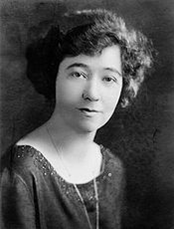
After escaping through an unguarded city gate, Christie led his wife, young daughter, and two single lady missionaries 110 miles to refuge across the Tibetan border at the Lupa mission station. From there they could make plans for relieving and rebuilding Min Chow after the decimation White Wolf had left.

Days after the missionaries’ arrival at Lupa, two loyal Tibetan believers made a furtive nighttime visit to them with a somber warning. One hundred seventy armed Tebbu tribesmen were en route to attack the station. After two hours of armed vigil, William discovered a few Tebbu who had scaled the wall and were preparing to burn the mission buildings. While sounding an alarm, William directed the women to hide and pray as the Tebbu rushed to open the gate for the waiting warriors outside. The missionary men took positions and fired their rifles into the air. Twenty minutes of chaos later, the confused Tebbu fled out the same gate through which they had stormed in.

A Tibetan friend later told Brother Christie, “Your Jesus gave you the victory!” Those words aptly sum up not only the harrowing experiences William Christie faced in 1914, but also the other sixty-three years of unreserved service he rendered to his King. In a time when Tibet was considered to be a land forbidden to outsiders, Christie devoted himself to evangelizing its people. He carried God’s Word on horseback through mountains and valleys, in driving rainstorms, and under the sun’s relentless heat.

In the face of demonic opposition and physical persecution, he lived in God’s strength and looked to God for victory. Our God has not changed; He offers the same strength and victory to those who will passionately pursue Him today. May we live and serve rejoicing in our victory in Jesus!

See William Christie, Apostle to Tibet by Howard Van Dyck for the complete story.


Brick Walls

After twenty-two years of serving the Lisu, John and Isobel Kuhn came to a brick wall. It was 1950, and the communists recklessly took over China. With an uncertain future, Isobel (Belle) decided to take six-year-old Daniel to America for schooling. John agreed with their mission agency to survey Thailand before joining her. He  assured Belle he would make no promises until they had discussed together the possibility of serving in Thailand.
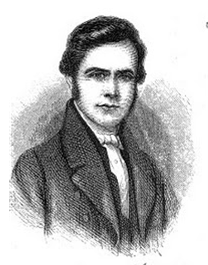
Back home, Belle chose not to set her heart on retirement; instead, she sought the Lord. God spoke to her as she read Amy Carmichael’s book, Climb or Die. It spoke of the decline of those who suddenly refuse spiritual exertion and instead seek ease. A picture of snow-covered mountains reminded Belle of her climb out of China. Her legs had been numb from the knee down, but if she had stopped, she would have died!

As she reflected on the possibility of Thailand as a new mission field, Belle realized that she would have some mountains to climb. Old age had arrived, a new language would have to be learned, and life in Thailand would include actual, rough mountain-climbing! What about retiring for her children’s sake? God answered, “Do you think your children would benefit by being with parents who made such a choice?” (Kuhn 18).

God confirmed to both John and Belle that they should continue their ministry by planting indigenous churches among the Lisu in Thailand. In Thailand, the “White Community” rallied for the Kuhns to join their social circle. The Kuhns, however, chose “the indigenous pattern,” spending times of relaxation with the nationals (36, 37). Belle found that the nationals loved their welcoming lifestyle, and in this way the Kuhns were able to make contacts with non-believers.

Because the Kuhns chose a lifestyle of identification with the people, the natives noticed their sacrifice. A Chinese neighbor once asked, “Just why are you here in this rough-living country?” Belle was able to honestly reply, “For the love of One who loves you” (274).

When our brick wall appears, may we seek God and not retreat.

Kuhn, Isobel. Ascent to the Tribes. Chicago: Moody Press, 1967.


Press Onward!

John Hunt sailed for Fiji in the 1800’s and immediately began studying the language and spending quantity time with the natives.  Knowing the people motivated him to preach and begin translating the Bible within six months.  He would first read from the Greek and English New Testaments, research word definitions, and study Bible resources.  He then consulted many natives to improve his use of the Fijian language.
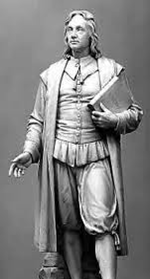
Culture shock hit hard.  Hunt’s firstborn died as natives mocked, an elderly woman was strangled at Hunt’s door, and eleven bodies were dissected by cannibals in front of his home.  Worse yet, Hunt was asked by local chiefs to leave.  However, God gave a supernatural love which grew in proportion to the mounting hate.  He wrote, “I am determined to…be spent in trying to do them good, until God…shall remove me from them…”  (The Life of John Hunt:  Missionary to the Cannibals – George Stringer Rowe, pg. 106)  He concluded, “We seem to labor in vain, but faith can never come to such a conclusion.”  (pg. 111)  Hunt pressed “onward,”  as was his motto.

God soon sent encouragement.  God rescued Hunt’s ship from attacking natives, and transformed a prominent chief into an effective missionary.  Finally, God anointed the island with revival.  Hunt wrote, “During the first week of the revival, nearly one hundred…[obtained]… forgiveness of sins through…Jesus Christ…Many who were careless…have become…devoted to God…Many never understood till now…”  (pg. 184, 185)  Hunt gave God the glory!

Those newly saved refused to renounce Christ although warriors gathered to feast on them one night.  God moved again, and the warriors admitted, “We came to kill these people, and we cannot lift a hand.” (pg. 190)  The retreating warriors were shocked when the Christians assisted them in carrying their weapons back to the canoes!

No missionary should expect to provide God’s Mighty Word to a spiritually-oppressed people without a struggle.  John Hunt’s life proves that Satan’s attacks are powerless against God’s victory.  Faith is the victory.   Though John Hunt died at thirty-six, he had translated most of the New Testament!  Let us also press “onward”!


Pastor, Missionary & More

“You are a good man; we will not harm you.” Roger Williams was face to face with the fierce Native American warriors. There was fighting all around him, and the town was on fire.  Roger was an old man now, and the Indians still respected him. Perhaps he was the only white man in the colonies that they trusted. This time, however, his peace-making efforts had been swept aside.

Roger Williams was a pioneer in politics, theology, church-planting, anthropology, and linguistics. He is best known as the governor of Rhode Island, the founder of the First Baptist Church in America, and an early advocate of religious liberty. He is less known for laying the groundwork for missions among the Native American tribes of New England.

Born in England c. 1603, Williams was converted as a young man. In college, he studied theology, Greek, and Hebrew. His separatist views brought the persecution of the archbishop, and he sailed for America in 1630. Upon arrival, he discovered that the Puritans were not as separated from the Church of England as they professed to be. There was no religious liberty. The state enforced the doctrines of the church. They persecuted Baptists and Quakers. They treated the Indians as inferior and took their land by force.

Williams pastored two different churches during a five-year period. His own churches loved him, but the community hated him for his outspoken views.  He strongly opposed the unfair treatment of Native Americans, urging that the colonists pay the Natives for the land. He also preached the right of every man or woman to follow his or her own conscience in religious matters.

The Salem court sentenced Williams to banishment in the winter of 1635.   He fled on foot into the snowy forest. He walked 105 miles to an Indian village where he was accepted into their homes for the winter. The following spring, he was joined by his wife and ten of his friends, and together they founded Providence Plantation, and eventually Rhode Island colony.

Williams was a true friend to Indians and settlers alike. As a peacemaker, he saved the colonies on several occasions. He studied the Algonquin language and wrote a linguistic key called, A Key into the Language of America. This book also contained many pages of cultural notes, touching every aspect of culture—from salutations to death and burial. He laid the groundwork for Bible translation and the missionaries who would come after him.

Near the end of his life, Williams saw his own town of Providence burned to the ground and many of his friends killed in King Phillip’s War.  However, he lived to see peace restored and the town rebuilt.


A Road Builder

Alexander Mackay was born in Scotland in 1849 and surrendered his heart to Christ as a young boy. Reports of David Livingstone, a fellow Scotsman and missionary in Africa, inspired young Mackay. He was interested in mechanics and building and went to engineering school, but he longed to serve God, too. In 1875, a letter published in the local paper spurred Mackay to action. The letter was written from Uganda by Henry Stanley: “King M’tesa has been asking me about the white man’s God… Oh that some practical missionary would come here…who can cure their diseases, build dwellings, and turn his hand to anything.”
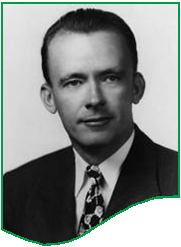
Four months later, Mackay was on a ship for Africa. The first thing he did was build a road 230 miles through the jungle to Lake Victoria. Mackay identified his pioneer ministry with that of John the Baptist, preparing the way for the coming of the Savior. The road he built through the dense jungle was symbolic of the spiritual inroads he would make into the dark land of spirit worship. Mackay wrote: “This will certainly yet be a highway for the King Himself; and all that pass this way will come to know His Name.”

Uganda was one of the larger kingdoms in Africa. Mackay was welcomed into the court and invited to preach before King M’tesa himself. The king wanted to learn about the white man’s God because, in contrast to the Muslim slave traders, the white men he met did not exploit the Ugandans. The king and his court were impressed by Mackay’s skills such as carpentry and basic medicine. Men, women, and children began to repent and believe in Christ. Mackay began translating and printing portions of the New Testament. The king spoke of being baptized. But Mackay knew there was no repentance in his life as he was unwilling to give up his 300 wives, involvement in slave trade, and other cruel vices.

Opposition began to mount against Mackay because he preached against the king’s vices; and the Arab slave traders—who hated Mackay for interfering with their business—flattered the king and spread lies about Mackay. An era of persecution began with the beating and torturing of Mackay’s converts. King M’tesa died, but his son M’wanga was even more wicked.

Mackay toiled on and a few years later, at the age of 41, he succumbed to a tropical fever.  But within thirty years of his death, the king and tens of thousands of Ugandans were Christians, and the slave trade was abolished.


Gentle Giant

The patient stirred. Dr. Wallace tried to soothe him in his Tennessee-accented Cantonese. The patient was waking from an abdominal surgery. They alone were left in the upper story of the Stout Memorial Hospital in Wuchow, China. Everyone else had taken refuge in the basement when the air raid alarm had sounded. The year was 1938, and the Japanese were invading China. Just then there was an explosion on the roof directly above them—and doctor and patient were thrown to the floor! Miraculously, neither were hurt.
Bill Wallace heard God’s call to be a medical missionary at seventeen years of age while tinkering in his garage one summer afternoon. For the next ten years, he did not cease to prepare himself until he was an excellent surgeon in the residency program at Knoxville, TN. At that time, Dr. Beddoe, administratorof the Southern Baptist mission hospital in Wuchow, China, sent a desperate plea to the mission board: “We must have a surgeon!” Bill Wallace sent in his application for missionary service the same month.

Dr. Wallace was a humble servant, a man of action and not a man of words. But his presence brought a new vitality to the mission hospital. “The Chinese had heard sermons before, but [now] they began to see one, and that made the difference. ..Sometimes his soft, stuttering witness to [God’s love] was more effective than the most eloquent evangelist’s plea. ” The influx ofpatients increased by 50%, and there was spiritual revival. While Wallace was saving lives with his scalpel, God was saving souls.

The hospital survived the Japanese invasion, while Wallace, a handful of other missionaries, and the Chinese staff continued the work. Dr. Wallace operated day and night, sewing up the mangled bodies of the victims of war. Later on furlough, Wallace was asked why he would return to Wuchow. He simply said, “It’s where I’m supposed to be.” By the time Wallace was forty, the Communists were persecuting Christians. Many missionaries left. Wallace chose to stay. Now the beloved doctor who stood so tall for Christ was a threat to the communist agenda. They planted a gun under his pillow and arrested him. After weeks of public accusations, humiliation, and torture,the night guards beat him to death in his cell. Chinese Christians erected a shaft over his grave with the inscription, “For me to live is Christ.

1 Quotations from Bill Wallace of China, by Jesse C. Fletcher


Labor until Life Ends

Nathan Brown, the oldest of five boys, was born on June 22, 1807, to devout Baptist parents. At age nine, he was convicted of his sinful condition after attending local revival meetings, trusted Christ as his Savior, and was subsequently baptized in a stream.

Brown graduated from Williams College at the top of his class and married  Eliza Ballard on May 5, 1830. They moved to Brandon, Vermont, where he edited a religious newspaper. As he prepared to print letters from Adoniram Judson, the Lord  burdened him and his wife for Burma. “What Christian,” he wrote, “can read the late appeals from Mr. Judson, and not feel a desire to go? I cannot think of staying back.”   After seeking his pastor’s and parents’ advice, he resigned his job and entered Newton Theological Institution.  He and Eliza sailed for Burma under the Baptist General Convention on December 22, 1832.

Mr. Brown worked two years in Burma with Adoniram Judson. Then he was sent to Assam, India, where he translated the first Assamese New Testament, baptized numerous converts, planted Baptist churches, and appointed national assistant pastors. Due to shattered health, the Browns returned to the U.S. in 1855. Mr. Brown wrote, “One of the hardest partings (and I have had many) I ever experienced. The native women and girls wept as if their hearts would break. We sorrowed most of all that we should see each other’s faces no more. … If God in mercy restores my health so that I can again be useful, I will return and labor for them till life ends, with all my heart.”

Mrs. Brown died in 1871. Mr. Brown later remarried, and at age 65, he and his second wife went to Yokohama, Japan, to assist in church planting and Bible translation. Brown resigned from a translation committee that insisted on translating baptism with the Japanese word for sprinkle. He began his own translation, completing the very first Japanese New Testament in 1879. He died in Japan at age 77, leaving eight Baptist churches and numerous converts. The Bible he completed is an accurate translation and is still referred to today. May we also “labor till life ends.”

“As yet I am as strong this day as I was in the day that Moses sent me: as my strength was then, even so is my strength now, for war, both to go out, and to come in. Now therefore give me this mountain…” (Joshua 14:11-12a)

Work Cited: Brown, Elizabeth, W. The Whole World Kin: A Pioneer Experience Among Remote Tribes, and Other Labors of Nathan Brown.