
250

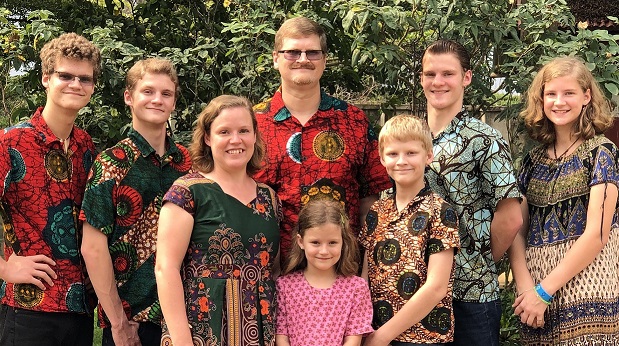
The Jason Ottosen Family—serving faithfully in the mountains of Papua New Guinea since 2012Ten years ago, we featured the Ottosens in the Winter 2009 issue of Lift Up Your Eyes. Cherith Stevens spent ten months in Papua New Guinea, and then, rather unexpectedly, God gave her a husband worth waiting for. She became Mrs. Jason Ottosen, and the two were on their way to PNG to help reach the Kamea tribe in the mountains of Gulf Province. Today, there are six Ottosens ministering there in the village of Komako! The newest missionary is nine-month old Josiah. In March 2012, Jason and Cherith went to PNG with their first daughter, Grace Elisabeth, who joined their team in September 2011. Melody Joy followed in September 2013. Their third daughter, Hannah Faith, arrived the last day of September 2016 and soon began helping to win the hearts of the Kamea people. A lot can happen in ten years!

The Ottosens began adjusting to life in PNG and learning two languages (Melanesian Pidgin and Kamea) in the village of Kotidanga where other BBTI graduates serve. A young man from Komako, a village ten hours north, walked to Kotidanga several times to attend church services and to ask for a missionary for his village. (Ten hours for a Kamea man was a twelve-hour hike for Jason.) Many others have arrived in Kotidanga, begging for church-planting missionaries for their villages. The Ottosens have made Komako their home since 2013 and have established the Komako Baptist Church.

Missionary work in Komako is not all fun and games! A church member named Ems recently died, leaving a wife and five sons. Some members of his clan blamed another clan (also with family members in the church) of killing Ems by witchcraft. Many from the two clans continued to attend services, albeit with the wrong motive. But the Word of God began to work in their hearts. Paimba, Ems’ oldest brother who was leading the conflict, got saved, as did Suwanas, another of Ems’ clan who is the oldest and most respected witchdoctor. Here, as in other places, sickness and death are not seen as the result of natural causes. There is always a hidden spiritual reason. If death is believed to be caused by witchcraft someone must pay! Only the Gospel can break this vicious cycle of ignorance and revenge.

Why would a missionary family endure such isolation and primitive living conditions in a place with no roads or electricity? Why would they pay exorbitant rates to fly in and out of their village? Why would they hike ten hours to the nearest Baptist mission to use wi-fi? Once a church member, upon hearing a missionary lady tell of the living conditions on her mission field, said, “I would not live there for a million dollars!” The missionary responded, “I wouldn’t either; but I will live there for Jesus!”

In the midst of such debauchery, superstition, violence, disease, and enormous spiritual darkness, God is at work. Scripture is being translated. Souls are being saved. Lives are being changed. And the church of Jesus Christ is being built in places where Satan has reigned supreme for centuries. We have received exciting prayer reports from the Ottosens over the last ten years. (A book needs to be written about God’s blessings!) There is much more to do.

The Ottosens desire to see men trained, serving, leading, and spreading the Gospel throughout their mountainous area. Raford Bart is one such man. He is small in stature and the youngest of several brothers, but has been very faithful to church. His faith has been strong despite being tested through discouragement from his brothers and ridicule from his wife. Recently Raford raised his hand to follow the Lord’s leading anywhere. Pray for the Ottosens as they disciple and train men like Raford.

Winter 2019-20

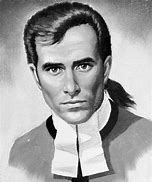
Rochunga Pudaite 1927-2015“My grandfather was a headhunter. But by God’s grace, today I am a heart-hunter.” -Rochunga Pudaite

Determined to see more of the village won for Christ, little Ro set out and began witnessing to the renowned ‘wild’ people of the Teisieng village in Manipur, India. With a heart full of prayer and fierce determination, Ro went to the first home. The man wanted nothing to do with the ‘dead man Jesus’. Most Christians would have walked away downhearted, but a little boy with a fire in his heart was not so easily deterred. He marched to the next house; his hands clenched in determination. Around a fire, three men sat, and to Ro, they were like three giants needing to be felled. Standing silent for a moment, he gathered his courage and asked permission to proclaim the name of Jesus. “WHERE IS MY DAO?” a man shouted as he sprang to his feet.

Ro’s eyes widened as he realized what was happening. A dao was a knife used by mountain people for generations for many things, but one use was head hunting. Ro turned and ran out of the house and down the road. He heard someone calling to him asking him to wait, but he dared not stop, lest he be killed. But his short legs were no match for a grown man and he was soon overtaken. “Someone from another village has been coming around and telling me about Jesus, and I wish to hear more. Come with me and tell me about Jesus,” the man begged him.

Ro feared this was some sort of trap, but he trusted that the Lord would go with him. For an hour he spoke the name of Jesus to the man, who eventually said these words, “I want to give my name to Jesus.” Ro knew that this was the real thing; the man was giving himself completely to the Lord. He was the first Christian, the first follower of Jesus, in this so-called wild village. Rochunga’s heart was filled with joy and rejoicing. He had led his first soul to the Lord.

God took this young man with a heart for the Hmar people of India and used him to translate the Bible into their language. Rochunga Pudaite came from a village of former headhunters and let the Lord use him in a way that no one thought possible. God is a God of extremes; He can use the least of the least for His honor and glory.

Through God we shall do valiantly: for he it is that shall tread down our enemies. —Psalm 60:12

(For further information about Rochunga’s story, read God’s Tribesman by James and Marti Hefley. Watch Beyond the Next Mountain, a film about Rochunga on YouTube.)

Winter 2019-20

CEphoto, uwe aranas

The 750,000-900,000 souls comprising the Bajau or Sama people are dispersed throughout the Malaysian section of Borneo and are thought to have originated in the Philippines. There are various Bajau languages, and they are mutually unintelligible. While some of the Bajau have Bible translations or Gospel resources, at least one of them—the West Coast Bajau people— have no known Gospel resources: no Bible, no New Testament, not even a John and Romans! Although there is now a translation process underway, it could be years before its completion. Meanwhile, more than 250,000 souls remain Bibleless.

The West Coast Bajau (WC Bajau) were once sailing nomads, but have since settled along the northern and western coasts of Borneo, adapted to an agricultural lifestyle, and adopted Islam. Because of language mixing between the vernacular and the national language (Malay), “pure” WC Bajau is increasingly rare. Written WC Bajau existed only informally until the last thirty years when linguists, trying to encourage literacy in both Bajau and Malay, began working on formalizing an orthography. Both of these factors—a transitioning spoken language and a young, if not underdeveloped, written language—only serve to complicate Bible translation work among the WC Bajau.

Please pray for a reliable Bible translation for the WC Bajau as well as the development of literacy and other Bible resources.

Winter 2019-20

The story is told of the farmer who didn’t plant corn for fear of blight, he didn’t plant beans for fear of drought, and he failed to plant wheat for fear that a fire might burn his crop just before harvest. He told a friend, “No, this year I’m playing it safe!” A BBTI graduate in the world’s most populous country just wrote, “Pray for more laborers; we sure do need them.” Missionaries never say, “Don’t send any more missionaries; we have more than we need.” And the heathen, in their own way, are pleading, “Come over and help us!” Meanwhile, many, realizing the seriousness of missionary service, are playing it safe and staying home.

Millions, yea billions, if we could only hear them, are crying out, “Stop playing it safe and come over and help us!” The heathen seek happiness in intoxicating substances, illicit sex, material possessions, education, sports, and vain religion. They are left empty and disappointed. But we know the One who gives abundant life and eternal satisfaction! They live in bondage to evil spirits, always trying to manipulate or appease them to receive their blessings and avoid their curses. But we know the Spirit who can make them free. They bow to idols that have hands that cannot help, ears that cannot hear, and eyes that cannot see. But we know the all-powerful, all-knowing, omnipresent Creator whose ear is always attentive to our prayers. In vain the heathen look for help from shamans and priests who offer them forgiveness of sins if they will do enough good works, say enough prayers, do enough penances, and of course, give enough money. But we have God’s promise of free forgiveness without any of the above dead works. If they knew we have what they need, they would beg, “Stop playing it safe and come over and help us!”

Why are there thousands of cities and villages with no gospel-preaching church? Why do thousands of languages still have no Scriptures? And why are literally thousands dying every day having never heard the name of Jesus Christ, let alone a clear message of salvation? It is not for lack of a command to tell them. Jesus made it perfectly clear that He expects us, His church, to give the Good News to every soul on Earth. They will not all accept it, but they all have the God-given right to hear it. God desires all men to be saved and come to the knowledge of the truth; He wants none to perish. The God of truth wants no one to live and die ignorant of the Gospel. Jesus who tasted death for all men wants all men to know it! Are we being too careful, playing it too safe, about who goes to tell them?

Ask one hundred young Christian men why they are planning to stay here and not planning to go to the mission field? Almost all of them will say that God has not called them to be a missionary. And so, we usually drop the subject and don’t challenge them further. But if we dare ask them how they know God has not called them, they can only say that they just don’t feel called. (So then, the eternal fate of the heathen depends on how we feel?) Ask them what this call would feel like, and they probably cannot tell you that either. Ask them for two New Testament verses that show them if they are called or not, and my bet is they will not find even one. Ask them if they have ever surrendered their lives to serve God on the mission field. Ask them if they have volunteered and asked God to let them go tell the heathen about Christ. The prevailing thought is that God will give an overwhelming emotional experience, a special supernatural revelation, to those He wants to serve on the mission field; otherwise, they should stay home. Unfortunately, this play-it-safe mentality often takes precedence over God’s command to go. And aren’t we inadvertently blaming God for not calling enough laborers to reach our world?

Some say that God hasn’t called them as a pretext; they wouldn’t go if He did. Others, however, have heard misleading rhetoric that has convinced them to play it safe and stay home: “Don’t go unless you are one hundred percent sure that God is calling.” (But they are given no scriptural instruction on how to be sure.) “Don’t confuse a burden with a call.” (No scriptural explanation is given to explain the difference, and the heathen won’t care if the message comes from someone who is called or burdened.) “If you can do anything else, God hasn’t called you.” (And our young people can find a hundred things they’d rather do than preach to the heathen.) “Wait until God calls you.” (While we wait in comfort, the heathen wait in despair!) “We have too many mama-called daddy-sent people.” (Oh no, I wouldn’t want to be accused of that! Better stay home and play it safe.)

My friend, withholding the Gospel from the lost is a much bigger sin than going to the mission field without a special call! We hear over and over about the call to go. When is the last time you heard preached the command to go? The call is subjective and ambiguous; the command is absolutely clear. I tell young men this: “In light of Christ’s command, you better go or have a good reason to stay!”

How many potential missionaries have stayed home because they have always heard and believed these warnings to play it safe concerning the mission field? Wouldn’t it be much better to risk sending three or four people to the mission field that really should have stayed home than have three or four thousand stay home that could have and should have gone? And lest you fear that unqualified missionaries will go, wasting our precious mission funds, remember that God has provided a safeguard. He has given the church the responsibility to determine who should go or stay.

As one brother said, “If you are not called, why not go and stand in until a called missionary gets there?” The heathen man who gets saved and goes to Heaven probably won’t care who it was that brought him the Gospel. For the sake of the heathen and the glory of God, let’s run some risks. Let’s ignore the religious rhetoric. Let’s hear the heathen’s desperate plea, “Stop playing it safe; come over and help us!”

David Brainerd Missionary to the American Indians 1718-1747

With a cry of pain, the horse lurched forward causing her master to topple to the ground. David Brainerd stood, brushed himself off, and looked to see what had happened. The mare lay in agony on the ground, her leg snapped in two. David was beyond despair as he knew the inevitable must take place. With two Native Indians and a fellow missionary looking on, David raised his weapon and killed the faithful horse. He and his travelling companions then trekked thirty miles to the next house.

Such was the life of a young man who gave his life to see others won to Christ. Literally working himself to death, David Brainerd made it a point throughout his life to see to it that men, women, children, old and young, could have a chance to know Jesus.

David Brainerd was a young man with a heart for missionary work. He once said, “I never, since I began to preach, could feel any freedom to enter into other men’s labours and settle down in the ministry where the Gospel was preached before.” He wanted to do something for God that had never been accomplished.

After spending much time as a young man struggling with his salvation, he gave himself to prayer and sought the face of God to know how he might be saved. On July 12, 1739, while walking in the forest, David Brainerd gave his heart to the Lord and was gloriously saved. He became a zealous and fervent witness for his Lord. Although at times he suffered from depression, self-pity, and loneliness, he always righted himself in the Lord.

When his desire to serve the Lord returned, he was too zealous for some, and after calling his Yale professors less than zealous, he was expelled. After battling disappointment and bitterness, he learned to give it to the Lord, and he instead devoted his life to God’s service. An excerpt from his life journal reads, “I hardly ever so longed to live to God and to be altogether devoted to Him; I wanted to wear out my life in his service and for his glory.”

Although his ministry was full of many heartbreaks, hardships, sicknesses and unexplained difficulties, David Brainerd served the Lord for five years with over one hundred converts. He also did some Bible translation into an American Indian language. When ill health incapacitated him, he returned home and spent his last days with the Jonathan Edwards family. Even then his zeal was infectious. At the young age of twenty-nine, David Brainerd breathed his last on this earth. And as he entered heaven’s portals, may we not say he was eagerly welcomed?

God takes what we think is of little worth and uses it for His honour and His glory. He can use the weak or the sometimes depressed to serve Him. So, dear Christian, do not give up. Keep serving the Lord! He will be everything that you need!

Fall 2019

Photo: Robert Middleton


The Pamiris of Central Asia have never had their own country nor lived independently of surrounding powers. The majority of Pamiris live in an area called the Badakhshan Autonomous Province which covers parts of Tajikistan and Afghanistan.

Pamiris are linguistically, religiously, and culturally distinct from their Tajik and Afghani landlords. They are a highly misunderstood people group and face great prejudice and discrimination. This is primarily due to a difference in the practice of Islam.

Most Pamiris practice Ismailism which is viewed negatively by their Sunni neighbors. Pamiri women are free from some of the stricter Islamic laws. They do not have to wear burkas or hijabs, are encouraged to get a good education, and are allowed to work outside the home. Although dating is not acceptable and marriages are usually arranged by a maternal uncle, women are not expected to marry before age eighteen.

It is unclear how many distinct languages/dialects exist in the Pamiri language family. A BBTI graduate working with this people group says there are at least seven. There are only three teams currently working to translate the scriptures into Pamiri languages.

Fall 2019

Katie always serves with a smile.It is common for a young missionary to leave his parents and take his children to the foreign mission field. In doing so, he is taking the grandchildren away from their grandparents. Occasionally, a middle-aged missionary will leave his grown children at home and go to the mission field. It is rare, however, for a grandparent to leave both children and grandchildren and go to the mission field. Many grandmothers have watched their grandchildren leave, but Kathryn Walker did it in reverse. Her grandchildren watched her leave. No doubt, this widowed grandmother loves her grandchildren as much as any grandmother could, but she felt God leading her to Africa. She left her own grandchildren safe in the care of their parents and went to help African children come to Christ.

I’ll never forget the day we met Katie. She showed up at our school at the end of a chapel service. We had a guest speaker that day, and there was a lot of activity. I was able to give her only half of my attention. She said, “I am Katie Walker. I’m going to Kenya, Africa, and some people have told me I need to attend BBTI. What do I need to do?” I found her an application and said, “You just need to send us this.” With that she was gone. I would never reveal a lady’s age, but that was in the fall of 2008, and she was fifty-six at the time. I said to myself, “We will never see this lady again.” But we did! She sent her application and was sitting in the classroom in August 2009. She did well in the classes and graduated the following May.

Katie did not grow up in a Christian home, but her parents allowed a neighbor lady to take her and her sisters to church. She was saved at age twelve or thirteen at a church camp. She recounts, “I will never forget how I felt His love, and I knew that something in me was different!” Without the help of godly parents, her spiritual growth was slow. She laments, “I did not know about giving myself fully to Him. I thought being saved was all I needed. Oh, if only I had known and understood then how much more there is, my life would have been so different!” It was not until she was married and had three children that she was baptized and began attending church consistently. Not long after, her husband was killed in a car accident.
Katie did not have the opportunity to attend college. Actually, she did not quite finish high school. Nevertheless, she did well at BBTI and kept up with the younger missionary students. She claimed no great talents or teaching ability. Katie said, “If I can do it, anyone can do it!” She did have, however, confidence that God would help her learn, and she knew she could be a servant. With that, Katie left for Africa in February 2011 and served the Lord with the Luke Shelby family in Kisii, Kenya, for the next eight years. She discipled ladies, cooked for Bible school students, did office work and tract and scripture distribution—anything to lighten the load of her fellow missionaries. Katie retired and left Kenya in June of this year. Before leaving, she prayed for her replacement. That person is at this moment sitting in the BBTI classroom, preparing to serve the Kenyans. Kathryn Walker will probably not be listed with Mary Slessor, Amy Carmichael, Gladys Aylward, or Lottie Moon as a famous missionary lady, but she has been a faithful witness and servant of Christ. She has also been a mother and grandmother to many precious African children; she will be greatly missed by them.

Fall 2019

“There is no price too high to pay for proper preparation.” This is the conclusion of veteran missionary Jon De Rusha, Asian Field Administrator with Baptist Missions to Forgotten Peoples. He goes on to say, “We first arrived in the Niger in 1971. We, along with two other families, were there to reach the Taureg people of the Sahara. To our knowledge, the Gospel had never been preached to these people. At first, we did not know they even had a script of their language, Tamachek. Later, we learned there was a script but very few of the Tauregs could read it. We went with a minimum of French language study, no linguistics, no proficiency in Hebrew or Greek, no understanding of translation principles, etc. At that juncture in the history of Independent Baptist missions, I am not sure how much awareness existed among us as to what preparations were necessary to accomplish the objective. Once we were there, we realized quite pertinently just how unprepared we were.”

No doubt the testimony of Brother De Rusha is that of hundreds of other missionaries before and after him. Two years after he went to Africa, the Baptist Bible Translators Institute began offering specialized preparation for Baptist missionaries. It continues forty-six years later with an even better Advanced Missionary Training (AMT) program. Often, we hear missionaries on the field, retired missionaries, or those who have left the field prematurely say, “I wish I would have known about BBTI before going to the field!” Some admit, “I knew about BBTI but didn’t want to spend nine months preparing.” When explaining our AMT to a new missionary candidate, he will invariably say, “Yes, that sounds good. I know it would help me, but I can’t take the time.” The missionary knows it takes time to prepare financially, but he needs to realize it also takes time to prepare linguistically. There is a price of time to pay for preparation. But no price is too high if it enables you to survive and succeed in your mission.

It is estimated to cost $350,000 to $500,000 to train a single Navy SEAL or Army Ranger. Nevertheless, our government believes the mission is worth the price. We want our soldiers and sailors to survive and succeed in the mission. No price is too high to properly prepare them. Each year, over 20,000 US students begin medical school. If they earn the MD title, they could spend over $2.5 million dollars, approximately $50,000 each year! And they will probably graduate with a student load debt of $170,000. We all want the best possible doctors; we believe that no price is too high for their preparation.

So, what about the preparation of those who are expected to do a work a thousand times more important than that of a doctor or a SEAL? How are we preparing the missionary who does the most important work on this earth? A missionary receives a few Bible classes, some courses in missionary history and theory, and maybe a year in language school; and we think he is prepared. Brother Jon De Rusha had all this, and he considered himself unprepared.

Consider the need. There are over 7,100 languages spoken today, and Jesus expects His Gospel to be preached in all of them. There are probably 6,000 of these languages that have no language schools. Many of them are unwritten, meaning they have no grammar books, teachers, and certainly no Scriptures. The BBTI graduate has training to learn any of these languages and cultures. He knows how to develop an alphabet and write the language. He knows principles of Bible translation. He has training to help others become literate. His mission is the establishment of a truly indigenous, Bible-believing church. With proper preparation, he has a good chance of survival and success.

No price is too high to pay because of the value of the sinner. We may doubt his worth, but God doesn’t. Jesus shed His blood for every single sinner. We believe in Heaven; we must also believe in Hell. We believe that without the new birth, a person will not see the kingdom of God but will be cast into the lake of fire. The heathen are lost, and the Gospel of Christ is their only hope. They are not going to be reached by the unprepared missionary who is unable to communicate in their language and culture!

No price is too high to pay because of the value of the servant. He is literally one in a thousand. A thousand other young people have not surrendered their lives to serve on the mission field; but he has. A thousand others will avoid missionary service at all cost; he has chosen it! The Army Ranger has chosen to risk his life and serve for a few years on a foreign field; the missionary choses to do this for a lifetime. The least we can do is send him well prepared. To send an ill-prepared family to the field is unnecessary and unfair. It is unnecessary because training is available. It is unfair to the missionary, to the churches that send him, and especially to those who are so desperately in need of his message!

No price is too high to pay because the Saviour is worthy. The goal of missionary work is the glory of God. He is not glorified when people live in ignorance of Him. He is glorified by lives changed by the Gospel. He is glorified when people turn from idols and serve Him, the true and living God. People won’t understand the Gospel, be converted, and glorify God if the missionary’s message is unclear. The missionary is an ambassador of God. He owes it to God and to his people to go to them with the best possible preparation. Unwillingness to pay the price necessary for proper preparation might reflect lack of dedication to the mission.

It is especially necessary for the pastor to educate himself and know exactly what training is needed and where it is available. He must not allow a precious missionary family to leave without it. Proper preparation should not be a suggestion but a requirement. The mission is too important. Lost souls are too valuable. The missionary is priceless. And God is worthy of our best!

The Hernandez family can be described as cheerful people. How appropriate for them to serve God in the Land of Smiles! Ahmet received Christ as his Savior at the age of seven. Unfortunately, as many young people do, he drifted away from the Lord, wasting precious years in the world. Rachael always believed in God. As a child, she would look at the clouds and imagine seeing Jesus coming—on a surfboard! (She lived in Pensacola, Florida, where surfing is a big sport.) It wasn’t until after she married Ahmet that she understood the Gospel and was saved.

Ahmet served in the United States Navy. While stationed in Guam, the family attended a church that was started and pastored by a missionary. Rachael remembers thinking, “I could never be a missionary!” (Strange, isn’t it, that men and women serve overseas in the military in difficult or dangerous places but going to the mission field scares them to death!) Today, Rachael feels very much at home raising her family in a foreign culture and speaking another language.

After leaving the Navy, Ahmet found work in a nuclear power plant near Zachary, Louisiana. The Hernandez family aslo found Grace Baptist Church, a very mission-minded church that was pastored by Tom Schreeder, a former missionary to Ukraine. (Today Brother Tom and his wife, Linda, are missionaries to Armenia.) It was there in Louisiana, with a wife, three children, and a good job, that God began dealing with Ahmet about missionary service. By 2008, the Lord had shown him that Thailand was the family’s place of service.

The Hernandezes began raising support and then continued deputation while attending BBTI. They graduated in May 2013. Knowing that they were facing a very difficult, tonal language, they took seriously the Advanced Missionary Training they were receiving in phonetics, linguistics, and language and culture learning. It was drilled into them, “Get the language first. Don’t get too busy in ministry and neglect your language and culture learning. Don’t rely on a translator. Language learning is your ministry!” God abundantly blessed their pre-field ministry as they worked hard and traveled many miles. They did not endure deputation; they enjoyed it! They departed for Thailand in December 2014.

The Hernandez family went right to work learning the language. Mistakes are inevitable; we call them bilingual bloopers. Rachael sent us one for our Summer 2016 issue. She wrote, “I have really come to appreciate the difference between ‘learning’ a language and ‘using’ a language. All this ‘using’ has produced an even higher amount of language funnies! I wanted to buy a notebook (sa-moot) but asked for a brain (sa-ong). I asked our new helper to wash the mattress (tee non) instead of saying sheets (paa bpoo tee non). She had no idea what I meant!” Shortly after their arrival in Thailand, the government enacted a new policy for obtaining a missionary work visa, and Ahmet had to pass the Grade 6 Thai Competency Test. He said, “I didn’t realize how fluent 6th graders are in a language until I started studying for this test!”

God gave this family opportunity to teach English at a university where they followed English classes with Bible studies. In slightly over a year, Rachael began teaching children’s Bible stories in Thai, and in a year and a half, they began the Hua Mak Baptist Church in Bangkok. Because it is an international area, they held both Thai and English services. Besides teaching English, Ahmet and Rachael have found innovative ways such as community night and basketball tournaments to reach their people. The entire family studied hard learning the language, and they work together in ministry. Grace Baptist Church did not send one missionary to Thailand, it sent five: Ahmet, Rachael, AJ (Ahmet Junior), Sarah, and little Rachael. They are giving the people of Thailand something to really smile about!

Summer 2019

Photo: Asia Harvest

Hidden deep in the mountains of southwest China, the Bunu people are like a treasure waiting to be found. Many of the small Bunu villages are inaccessible by any type of vehicle. The Bunu went into hiding when they were forced to flee the Hunan valley due to violent persecution from the Han and Zhuang peoples.

The kinship system of the Bunu is matrilineal, meaning they trace their descent through their mother’s line, not their father’s. Bunu women are the leaders of their homes; when marital problems arise, the man may go back to his family and the woman may find another husband. If this occurs, the man has no rights to any property.

Bunu legends passed down for generations have a worldview based on a chaotic world before their god, Pan Hu, built the heavens and created the earth and hint at a worldwide flood.

Since the Bunu have little contact with the outside world, it is understandable that they are the largest people group in China without a single known church. A significant hindrance in reaching the Bunu is the language diversity. Currently, there are no Scriptures in any of the Bunu language groups, leaving over 450,000 people without the Word of God in their heart language! What will it take to reach these people? Someone must penetrate geographical, cultural, and language barriers with the powerful Word of God! Will it be you?

Summer 2019


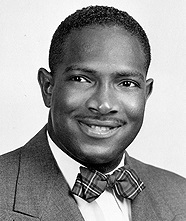
Andrew Foster
1925-1987 

“The time: Sunday morning. The place: Ibadan, Nigeria. Dozens of youths and young adults arrive at the Christian Center. They come by bus, taxi, bicycle and foot from different parts of this city of two million residents. Dressed modernly, they “chat” heartily among themselves …

“Anyabonouwe starts the Bible class with hymn singing. Oladipo leads in prayer. Adebayo conducts the sword-drill. Young people take turns singing solos, duets, trios, and quartets. Finally, Akeju delivers the message; the audience ably follows with open Bibles.

“What’s unusual about these young people or the meeting itself? At least two facts. All are deaf! And instead of normal sounds, everything is rendered eloquently in the sign language of the deaf, plus speech by some. Yes, here is a deaf young generation in West Africa learning and sharing the Word of God!”1 These are the words of deaf missionary to Africa, Andrew Jackson Foster.At the age of eleven, while living in the Ensley neighborhood of Birmingham, Alabama, Andrew contracted spinal meningitis and became permanently deaf. After attending the Alabama School for the Colored Deaf, he moved to Detroit to find better employment, and it was there that he decided to live his life for God. Foster earned two bachelor’s degrees and one master’s degree from three different universities, then God directed him to the African continent. Because no mission board would accept him, Foster started his own, the Christian Mission for Deaf Africans (later called Christian Mission for the Deaf).

When Andrew Foster arrived in West Africa, he noticed that the deaf he came in contact with were not literate in signing or reading, making it hard to witness abstract truths to them. He put all his effort into starting thirty-one schools for the deaf in fifteen West African countries. The goal of each school was to educate deaf Africans in sign language and reading so that they could “hear” and read God’s Word. Sadly, Foster’s life was cut short at age sixty-two by a plane crash in Rwanda, Africa.

Foster had been told there were no Deaf in Africa, but he rejected that ridiculous information. God used him to persevere and find the hidden treasure of deaf souls in Africa. It is said that his favorite verse was Isaiah 29:18: “In that day, shall the deaf hear the words of the book.” 

Andrew Foster is a great example of one who sees an important, unaccomplished  task, disregards personal limitations, and by the grace of God does great things. His example is being followed today by others who are going to foreign lands in search of the unreached Deaf. There is no country on earth where missionaries to the Deaf are not desperately needed. Pray ye therefore!

1Roots out of a Dry Ground by Dr. Andrew Foster

The Good News of Christ is by far the most important message that one human can give to another. Thank God for anyone who makes a great sacrifice and goes to a foreign country to preach the Gospel! Upon arrival, the missionary makes a critical choice: whether he will struggle to learn the language now and preach later, or whether he will begin preaching now through an interpreter and learn the language later—maybe. Surely a message is more clearly understood and better received if delivered directly in the heart language than one that is delivered through an interpreter. That should settle the issue. However, some may argue that quickness is better than clarity and expedience is preferable to effectiveness.  I will declare emphatically that time and effort invested first in language and culture acquisition is a minor sacrifice when compared to the value of a clear message. Also, the effectiveness of the words delivered from the mouth of the missionary to the ear of the recipient without the middleman trumps any reason the missionary may give for relying on an interpreter.

Does your pastor speak to you through an interpreter, or does he speak English? How long would you attend a church where the pastor could not teach, preach, and converse in your tongue? Is there anything that makes an American more deserving of this blessing than someone on the mission field? And suppose you and your wife were having marital problems and needed counseling. Would it be okay if an interpreter relayed your problems to the pastor, and then his advice came back to you through this middleman?

How many friends do you have that cannot speak your language? Shouldn’t the missionary be a friend to his people? Shouldn’t he build strong, personal relationships with them, gain their confidence as a friend, and then win them to Christ? The missionary who cannot speak the language will not be pestered by people coming to his house asking questions or just hanging out, but this avoidance is not good. Communication should occur in the parlor as well as in the pulpit. The missionary who uses an interpreter to say, “I love you,” may be implying an unwanted message. The people may think, “Then why don’t you learn our language?” We often hear it said about immigrants in our country, legal or otherwise, “If they are going to be here, they need to learn English!” Salsa for the goose is salsa for the gander!

If an interpreted message is acceptable, perhaps the missionary could simply email his sermons to the interpreter on the field each week. A missionary may not be required at all; a pastor could do this. Thousands of dollars could be saved by not sending an American to live on the foreign field. For a little extra, the interpreter might agree to go door to door in the place of the missionary and witness to the lost.

A missionary to Mexico felt that he was too old to learn Spanish, so he hired an interpreter. After some time, he discovered that the man in the middle was of the Church of Christ religion. He was turning the message of salvation by grace into one of works and water! The brother decided to learn Spanish! This is not an isolated case; many good messages are lost in the translation.

If the message goes out in our words, it is also going out in our American way of thinking. American thinking may not translate well. Even if much of the message is understood, the people are not as likely to relate to it because it is still a foreign message.

In the early 90s, when the Iron Curtain came down, an American missionary to Mexico decided to move to Poland. He spoke perfect Spanish, but that was of no help in Europe. Upon arrival, some fellow missionaries told him, “Peter, we have a guy here who knows English. He can interpret for you, and you can get right to work.” Peter said, “No way, José. I won’t preach until I can preach in Polish!” Within six or seven months of diligent language study, he began preaching in Polish without an interpreter.

Suppose it took longer, maybe a year or two, before a missionary could preach in a new language. Is that too big a sacrifice to make for Jesus and for the people he loves? It is predictable that if he begins with an interpreter, he will never wean himself away. Many have said, “I will just use an interpreter for a little while so I can start winning the lost, and then later I will learn the language.”  That is like a young person saying, “I won’t smoke cigarettes forever, just for a little while.” Once you start using cigarettes or interpreters, it is hard to stop.

Real communication involves not only a message going out, but also feedback to the speaker. When your children played church, you probably heard some bad doctrine. The little preacher may have said, “You need to be good so you can go to heaven when you die!” (I hope you know that is bad doctrine.) You got this feedback because you understood your children’s language! Children will have some error in their thinking, and hearing the error shows where more teaching is needed. So, during family devotions, you teach again the truth of salvation by grace. The missionary that does not learn the local language does not get feedback. People may be talking about his teaching, but the discussions are always in their language. Therefore, the missionary is unaware of any misunderstanding and cannot correct it.

Related to this lack of feedback is the very common problem of syncretism. This is a mixing of pagan beliefs with Christianity, resulting in a religion with a Christian façade but little change in core beliefs. A person may do Christian things like attend church services, carry a Bible, recite prayers, etc. without having a real conversion.

What is the advantage of a missionary leaning on an interpreter instead of learning a language? He does begin to preach more quickly, and he may avoid the embarrassment of bilingual bloopers. But there is always a middleman between the missionary and his people. Wouldn’t everyone be better off without him? Let’s cut out the middleman!

Deputation took the Huckabees to churches in Hawaii, Alaska, Michigan, Florida, and points between. While on a ferry in Alaska, they encountered a storm with 105 MPH winds and 25 foot waves. In remote northwest Canada, as they left the Rocky Mountains with its dangerous curves and precipices, a tire popped off their truck. Someone mistakenly put a 16-inch tire on a 15-inch rim. Miraculously they had traveled 3,000 miles on that tire! In a snow storm in Arizona, an 18-wheeler ran them off the road into a snow bank where they stayed several hours. The devil will try to stop missionaries, but he hasn’t stopped the Huckabees!

James had religion but no relationship until trusting Christ at age twelve. Anna was born into a pastor’s home and heard the Gospel from birth. She was saved shortly before her fourth birthday. Of her ministry experience, she says, “I have done it all.” James, before entering the ministry, was a website designer, paramedic, firefighter, and outdoor survivalist. He describes his musical talent as “suitable for the torture and interrogation of POWs.” Anna’s musical ability is more suitable for Christian ministry! James tells missionaries on deputation, “…don’t say that you can’t afford BBTI or spare the time; YOU CANNOT AFFORD NOT TO!” Shortly after arrival on the field, James wrote, “The training at BBTI is, as expected, proving to be invaluable. I don’t see how you could make it on the field without proper training in phonetics and linguistics.”

James and Anna were married in June 2000. By September 2005, God had given them James III and John (twins), Ethan, Elizabeth, and Gaelin. Brennah was added in 2011. Arriving in Uganda, the Huckabees were greeted with heavy rain, mud everywhere, a broken water main that flooded their house, and a dispute about property boundaries. Then someone stole the poles for their new fence.

Today the Huckabees oversee thriving churches in Ngarama, Sangano, Isanja, and Kabazana, and desire to start churches in several other places. Much of their work is at the large Nakivale refugee area that is home to about 70,000 souls from Rwanda, Congo, Burundi, and Sudan. These camps are plagued by famine, extremely poor sanitation, disease, and hunger. The Huckabees make many personal sacrifices to meet both spiritual and physical needs, and James is not shy about asking for extra aid from US churches. He strives to help without causing dependency, a difficult balance where such poverty abounds.

Training leaders is a vital part of ministry. God gave James and Anna the vision to establish a public library for the churches. The Sangano church made bricks and provided poles, James and another missionary purchased cement and roofing metal, and people in the US donated the books along with $11,000 to ship them. Using Romans, I Corinthians, and Galatians, James tenaciously confronts the false doctrines of Catholicism, Pentecostalism, the cults, and old pagan beliefs that have syncretized with Christianity. He proclaims Bible truth concerning marriage. Traditionally, Ugandans have practiced bride price marriages, but many fathers today demand unreasonably high prices. The young people often run off and live together.

Vacation Bible School is very popular in Uganda, and they conduct “VBS marathons” in four places each day. They may begin with 250 children the first day and end the week with over 600! Children come from many religions, including Islam.

The Huckabees love and serve the Ugandans and the refugees and might honestly tell them what Paul said, “So being affectionately desirous of you, we were [are] willing to have imparted unto you, not the gospel of God only, but also our own souls, because ye were [are] dear unto us.” (1 Thessalonians 2:8).

Winter 2018-19

by Reese Parfitt

In Situational Language Learning, we practice a careful, orderly method that can be used to obtain language from any speaker of any foreign language. The idea is to be able to take control of our learning so we won’t need to rely on an officially-trained teacher or a language school as we venture into learning a foreign language. Our class time involves a short time of instruction about the concepts and method, but the bulk of our time is spent practicing that method by using an actual language.

We have two language informants who are fluent speakers of French and Mandarin Chinese. I am in the Chinese group. We start by asking for object-like words, and write them down in the International Phonetic Alphabet (IPA). We methodically progress into longer utterances which we can handle better and better as we learn the sounds.

The class goal is to learn the method, not the particular language that we are practicing on. I am seeing just how helpful it is to record the speech with the exacting precision of the IPA. While a Chinese person could write down an approximation and know how to pronounce it just fine, I must listen very closely to all the subtleties of the language and record it all as accurately as possible.

Have you ever heard an Asian speak English in a manner that was very difficult to decipher? They obviously learned words and letters from our language, but they combine them with the speech patterns from their first language. In order to sound Chinese and not American, I have to reckon with the fact that their sound system is very different from that of my English. I read what I’ve written down back to the language helper to see if I got it right, or if it needs some adjustment.

I can take this learning method anywhere in the world and learn a language from any native speaker. The speaker does not have to be educated, and the only materials I need are paper and pencil. Oh yes, and a sharp set of ears, and a willing mind. With that, I am empowered to learn to my heart’s content!

by Hanna Schrock

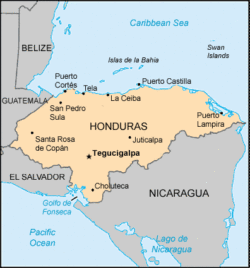
The Mosquito Coast of Honduras is along the coast of the Caribbean Sea
.

Doña Mariana kept track of each new baby born in her town so that she could guide the priest to their homes when he came to baptize. She thought this would secure them entrance into heaven. Once, when she sent for the priest, he sent a message back that he could not come because the last time he came they did not pay him enough. He did his job only for physical reward.

John Ruddock was a man willing to sacrifice himself for the cause of Christ. Born in Growell, Ireland, on December 17, 1897, and born again in September 1918, John Ruddock spent much time passing out tracts and joining in open-air meetings. Shortly after moving to Los Angeles, California, he saw the need for the Gospel among the Mexicans of that city. He began working with Mexican children in his spare time and hoped that one day he could serve the Lord in Mexico. Through his faithfulness to share the gospel with the Spanish-speaking people, he met his wife, who was also interested in Spanish-speaking people. John and Nettie Ruddock left Los Angeles for Guatemala in 1926. While there, they heard of a great need for the Gospel in Honduras.

Serving God in Los Angeles, Guatemala, and eventually Honduras was not without sacrifice. During their fifty-two years of trailblazing through Central America, sleeping conditions, bugs, housing, travel, and other encounters were not always ideal; but John and Nettie did not complain. They knew that reaching people for Christ would require sacrifice, and they did not go out expecting or seeking their own comfort. Though they encountered many difficulties, God always provided, and they chose to trust God to take care of their family. John chose to live like the people and to suffer what they suffer in order to reach them for Christ. He spent many days in Honduras traveling (by train, canoe, or on foot) to spread the good news of the Gospel. He spent hours with people sharing the Gospel of Christ, and his effort was not in vain. He did not suffer for his own profit, but to reach lost souls with the Gospel.

John speaks of one young man whose mission agency required him to baptize babies. When he could not agree and the mission could no longer provide his support, he decided to look for a job elsewhere rather than to stay in Honduras. He could not take the step of depending on the Lord for guidance and support.

What do you need to serve God? Do you need guarantees of how things will work out or that your needs will be provided? Do you need something to fall back on in case things don’t work, or do you trust God to provide and to lead? Are you willing to sacrifice for the cause of Christ to spread the gospel so souls can be saved? What if it’s not comfortable? What if there are uncertainties? Are you willing to follow God anywhere He leads you? To do anything He tells you? Oh, that more Christians were available and ready to suffer for the cause of Christ and to share the gospel with lost sinners!

Read the entire story in Lighting the Mosquito Coast by Barry Colman.

Sandy’s parents, Missionaries Dale and Nelda West, served in
Guadalajara, Saltillo, and San Luis Potosí, Mexico, from 1958 to 1998.
For thirteen years they had an orphanage. The orphans were part of the family and serving the Lord was a family affair.  Definitely a people
person, Sandy thrived in this atmosphere of work and fun. She still
plays her accordion, sings, and cooks for a crowd! 

Melvin was saved when he was in third grade. Melvin is serious about serving his Lord. And Melvin is a man of action who knows both what he needs and how to go about getting it. He was a forty-eight year-old widower when he decided he needed a wife to help him serve God on the mission field—and the most efficient way to find her was the internet. Theirs was a most unusual meeting! They simultaneously discovered each other’s bios and essays on a Christian website, and Sandy (also forty-eight and widowed), after a lot of prodding from her father, prayerfully responded. God has forged a strong marriage, filled with humor and mutual respect.     

Melvin had previously done short terms of missionary helps service in various countries, but now he wanted to serve full time. He knew he needed help in language learning and Melvin-like, researched his
options. He chose BBTI as the school best suiting his needs and
enrolled in 2003. Sandy studied alongside, encouraging him as he
determinedly forged ahead.

The focus of the Morris’ ministry in Venezuela is preparing men and
women for the spread of the Gospel and establishment of new churches.
It is an especially important strategy in view of the country’s political instability. Sandy builds lives on a day-by-day basis as she teaches kid’s clubs, prepares materials and trains teachers, helps cook for the men’s retreats and family camps, and contributes to the music program. Melvin excels in many skills and has been able to build Bible school facilities, develop their campgrounds, and procure the equipment for and set up a printing ministry. He teaches alongside Pastor José in the church and Bible institute.

Pray for Melvin’s and Sandy’s ongoing health needs; they are far from their doctors. Pray for their protection; they have been robbed at gunpoint and their home has been repeatedly burglarized. The one-year renewable visas they recently received are an answer to over seven years of prayer, proving the door is still open. The Morris’ choose to stay in spite of the risks involved, saying, “The future of the  Venezuelan church is at stake; as long as  the government allows us to come and go we should be able to continue preaching, teaching, and training the nationals; if we have to leave at some point in the future, they will be better prepared to lead the churches and establish new ones.”

Fall 2007

The status quo, or the state of affairs, concerning world evangelization may be acceptable to many, but is it acceptable to God? After all, it is His work; He allows us to share in it. We may be content for things to continue the way they are, but is God’s will being done on earth as it is in Heaven? Alexander Duff (1806-1878), missionary to India, said, “We are playing at missions.” He said that about his generation; what would he say about ours? He might say, “The status quo must go!” If the status quo is not working, then God help us to do things differently.

No honest observer could say that we are fully obeying the command of Christ to preach to the nations. There are thousands of ethnic groups that are still unreached; many of them are totally unengaged. Paul strove to preach where Christ had not been named (Romans 15:20). That was two millennia ago. Surely, there could not be people today who have not heard the name of Jesus! But there are. Jesus said that we are to preach His gospel to every creature, and still there are billions that have never heard it. The way things are is not the way things should be. God help us when the Coca Cola company has put their product in almost every community in the world, and we have not preached the Gospel in these places! Our status quo preaching needs to go!

The number one priority of a Christian should be the Great Commission of Christ which is, “Go ye therefore and teach all nations…” But is it? We have rhetoric such as, “Christ’s last command is our first concern.” But is it? Is the average church member reminded from the pulpit what his priority is supposed to be? Churches are busy with programs, and pastors have many topics to deal with. The squeaky wheel gets the grease, but the missionary wheel doesn’t usually get much grease. It needs to be a big wheel and it needs to squeak loudly! Our low-status quo missionary priority needs to go!

Low missionary priority is reflected in our lack of prayer. When was the last time you heard a prayer request for God to send out missionaries from your church? It’s not wrong to pray for the sick, but that gets most of the attention. Occasionally someone will request prayer for lost souls. That’s good, but what about praying for lost sheep without a shepherd in India, Siberia, Albania, or a few hundred other countries? Jesus did not suggest that we lift up our eyes on the fields; He commanded it (John 4:35). He did not suggest we pray for laborers, He commanded it (Matthew 9:38). A church prays for a pastor, and soon God sends one. It prays for a new van, and before long one is in the parking lot. The church might even go to the throne of grace for funds to build a multi-million-dollar family life center, and God provides! So, why isn’t God sending out missionaries from our congregation? We aren’t asking Him to! Our status quo praying needs to go!

God commands us to go. But the status quo says to wait for God’s call. God says to present your body a living sacrifice, and then you will know His perfect will (Romans 12:1-2). The status quo says little about surrender or presenting our bodies. It says, “Do what is in your heart to do, what you want to do.” (Our generation seems to be comfortable with this.) It also says, “Be very careful not to go to the mission field unless you are 100% sure you are called of God.” Ask any young person, even one at a Christian college, “Why don’t you go to the mission field?” The answer, almost without exception, is, “I’m not called.” The young person cannot give you a scripture verse, and he cannot tell you how he would know if he were called. He simply doesn’t feel called. He will probably add, “I’d be willing to go if God wanted me to.” Would we be out of place to ask, “Have you presented your body a living sacrifice? You say you are willing to go; have you told God? Have you asked God to let you go?” The status quo says to wait for a call and then surrender to it. God tells us to first surrender. Our status quo of presenting our bodies must go!

Jesus never told us that paying to take the Gospel to the regions beyond would be easy. Sending missionaries to the field and keeping them there is expensive. How much expense is too much? What did it cost to rescue those boys in that cave in Thailand last year? The cost was not a consideration. Nobody said, “They aren’t worth what it is costing us.” The status quo mission giving is very low. Status quo Christians have money for what they consider important. Many churches do not even teach or encourage personal missionary giving. The church may give a small percentage of its income to missions, but the people themselves give nothing directly to send missionaries. “For where your treasure is, there will your heart be also” (Luke 12:34). It may take a missionary three or more years to raise needed support. Some give up from discouragement and never reach their field. Many go to the field under supported. Our status quo paying needs to go!

Finally, the status quo missionary preparation needs to go. We are sending missionaries with little or no special training in language and culture learning. A missionary does not have to speak with a distracting foreign accent. He should never bypass language learning and resort to using an interpreter. Lack of specialized training limits the missionary to the few languages that have language schools and leaves thousands of languages untouched by Baptist missionaries. Our missionaries, with very few exceptions, do not translate Bibles because they have no training in linguistics and Bible translation principles. Archilochus wrote, “Men do not rise to the level of their expectations; they fall to the level of their preparation.” Advanced training is available; the problem is that the missionary and his pastor either do not know of its existence and importance, or they do not want to invest the time and effort to get it. Our shameful status quo missionary preparation needs to go, too!

Licensed under CC BY-SA 4.0
Imagine living your entire life committed to what you believe, dedicated to your people and traditions, following the teachings passed down to you from your parents and their parents, and then dying only to realize that everything you believed in was a lie and you must now spend eternity in torment, separated from God. How would it feel to know there were people in the world who had the truth, yet never told you? Approximately 364,000 Malinké people live in the Touba region of Ivory Coast waiting for someone to bring them the truth. They are predominately agriculturists and also form the most powerful group of native merchants in the country. While 99.5% hold to Islam, their religion is blended with native practices. They will often go first to the village mosque to pray, but then they may sacrifice a chicken to the spirits. The Malinké are held captive by animism, deeply believing in magic, healing, and divination. Even the educated remain mentally imprisoned by fear of the spirits, and there are few who do not possess a charm or amulet to protect them from evil spirits.

The Malinké are moral people and are dedicated to their people, to obedience, and to honesty. They possess a driving sense of human dignity; selfishness and lack of hospitality are the two deadly sins that defile their dignity. Yet morality is nothing apart from Christ. There are no known believers and there are no Scriptures in Malinké. These are a friendly and open people, just waiting for someone to bring them the truth.

Malinké influence permeates the country’s economics, politics, and religion. If they had the truth, imagine how influential they could be in reaching others. Will you help get the Gospel to them?

Fall 2018

by Brian Johnson

Brian & Lisa Johnson (1997 graduates) with Caden (8), Kaylee (5), and Chase (3), have served nine years in Lithuania

The Johnson family, like the men in Luke 5:18 who bore the sick of the palsy, have used great creativity in seeking to reach souls for Christ.

Sept. 2000 – Correspondence Course

Each week that passes, we find more responses in our mail box from people who want to enroll in our home Bible study courses. I believe that this will be an effective tool to reach people for Christ. We are placing an ad about these free courses in our largest circulating newspaper.

June 2001- Medical Outreach

We had a medical team here in Utena. The doctors saw a total of fifty-seven people who are now new contacts to follow up on. Several Lithuanian Christians witnessed to those waiting to see the doctors, and there were five professions of faith.

November 2002 – Music Festival

We hosted a “music festival” for the Independent Baptist Churches of Lithuania with seventeen church groups participating. We advertised in the local paper, we hung posters all over the city, we handed out invitations, and God blessed us with just over fifty visitors. We were able to preach a clear presentation of the Gospel and give each visitor a packet of literature.

May 2003 – Lithuanian World Music 

This is a seven-day festival filled with traditional musicians and singers. It is estimated that there will be an excess of 100,000 people attending. We designed a new high quality tract for this festival. It ties together the Lithuanian’s tradition with their need for the eternal Savior.

July 2003 – Baseball Clinics

I have recently found out that many young people in Lithuania have a desire to learn and play organized baseball. We recently held six baseball-training clinics, and they were a huge success! We were able to gather 135 kids and teach baseball basics as well as preach the Gospel.

June 2004 – Winning the Lost

A recently-saved young man is really excited about telling others about his Lord and Savior. He has led at least three other young people to the Lord and has had several visitors with him in church meetings. 

December 2005 – Canvassing

Since canvassing the city of Zarasai with literature in late August, we have had a new woman named Jolanta faithfully attending the services. She trusted Jesus as her Savior on November 6th and was baptized the following Sunday.

March 2006 – Giving to Missions

The members of Utena Baptist Church have been giving sacrificially to missions for just over four years. They currently support one Lithuanian missionary and also help finance the work in Zarasai. Last year they gave nearly $900 USD to missions, and this year they have made a commitment to give just over $1,500 USD. This is a large step of faith for these people; they are excited about mission work!

Summer 2007

Colin and Sandi Christensen are 1976 BBTI graduates.


Colin was nineteen years old when he met with his pastor in his study and realized he was trusting a false assurance instead of the Savior. Sandi, encouraged by an older sister, responded to the invitation at church when she was ten. Colin and Sandi have spent their lives taking the news of their Savior to other places.

        After Colin’s graduation from Midwestern Baptist College, the couple worked four years in Mexico with senior missionary Ralph McCoy. Returning for furlough, they recognized they needed specialized training in order to minister to tribal people and attended Baptist Bible Translators Institute.

        The Lord sent Colin, Sandi, and their four children to the Philippines where they contended with trials such as a serious auto accident, amoebas, cobras, and Marshall law under Pres. Marcos in 1981. When their home flooded, Sandi wrote of her discouragement, “I wanted to throw in the towel and head back to a normal life, but the Lord gave me the verse in Romans 8:18; and it really broke my heart, because I forgot it was worth the trouble.”

        And it was: they planted a church in Bayugan, teaching the people to work to buy land and build their building, and Colin put his BBTI training to work by translating the books of John and Romans into Cebuano. The church went on to establish several more churches, and the translation work was carried on  by Filipino pastors who completed the rest of the New Testament.

        The Christensens were in their forties when they arrived on their third field of service and began the study of Hungarian. It proved to be their toughest language yet; and Colin, a gifted linguist, wrote of it, “There are 14 written vowels and no allowance for ‘sluffing’ through on pronunciation. You must be right on the money or they won’t know what you’re talking about as you’ve probably said another word.”

        In Hungary, they’ve worked in two cities, pursuing church planting through many ministries: city-wide distribution of scripture, Friday night English/Bible study classes, revival and evangelistic campaigns, summer family camps, rest home services, and separate monthly meetings for men, women, teens, and children. In true BBTI spirit, the Christensens are always ready to help others. Colin drives an hour to teach in another missionary’s Bible college and has also filled in preaching when someone else needed a furlough.

         Fun-loving Sandi found it hard to adjust to the Hungarian people’s reserve.  Colin explains another obstacle, ecumenicalism. “Because most churches were persecuted under communism, they want to stick together in joint services, etc. Since 55% claim to be atheists, they feel that anyone who believes in God is a ‘Christian.’ Winning souls to Christ has been slow, but very rewarding as people see their need of becoming born again.” Is it worth the trouble? The Christensens say yes!

Spring 2007

An understanding of the problem of syncretism is vitally important to successful missionary work. Syncretism is the blending of two distinct beliefs,  thinking or pretending that they are the same.

In Acts 14, Paul and Barnabas found themselves up to their ears in syncretism. Paul had just healed a lame man that had never walked (vs. 8-10). When Peter and John did this in Acts 3, a great revival broke out; however, a revival of syncretism broke out after Paul’s miracle! Verses 11 to 13 go on to say, “And when the people saw what Paul had done, they lifted up their voices, saying in the speech of Lycaonia, The gods are come down to us in the likeness of men. And they called Barnabas, Jupiter; and Paul, Mercurius, because he was the chief speaker. Then the priest of Jupiter, which was before their city, brought oxen and garlands unto the gates, and would have done sacrifice with the people.” When the apostles realized what was happening, they put a stop to it. Nevertheless, the syncretism had escalated too far, and the religionists did not appreciate Paul revealing the truth. Paul was stoned shortly thereafter! Let’s notice some important facts in this account.

First, all this was being discussed “in the speech of Lycaonia” which Paul and Barnabas did not understand. The missionary must speak and understand the native language well. He must get feedback from the people. If he uses a translator, or if he only uses the trade language, as Paul and Barnabas did, he will not get this feedback. The missionary might say all the right things. The people seem to be responding. There is exciting news to write in the prayer letters! However, the missionary may be in the dark as to what the people are saying, and more importantly, what they are believing. Today’s missionaries must be at least bilingual, and in many cases, trilingual.

Secondly, notice that there was a religious system in place when the apostles arrived. Never think that people on the mission field have a big religious void and are waiting for the missionary to come with the Gospel and fill it. No, they have a religion! (The answers it provides are false, but they do not know that.) People are not usually “hungry for the Gospel.” When the true message of God arrives, the heathen may reject their false religion and receive the new message, or they may keep that which is false and mix the truth with it. The latter is the easiest and least painful. This is what happened in Acts 14, and it is still happening today. After all, who wants to admit  he is wrong?

Next, notice that the people were quick to accept the apostles and their message.   We should be suspicious if people are too anxious to accept the message of Christ. The pagan must understand that he cannot just add another god called Jesus to his set of deities. Christ does not want a place, or even first place in the heathen’s life. He demands every place!

Finally, notice that the heathen saw the advantage of incorporating the apostles into their religious system. After all, these men could heal! Who wouldn’t want them on the team? Why do modern-day heathen accept us foreign missionaries? They may truly see their need of our Saviour and trust Him in repentance and faith. We pray this is the case. However, they may see our riches (home, car, clothes, tools, etc.) and think that if they accept our God, He will bless them with this wealth. They may associate with us because it raises their status. They may outwardly accept our message because we are educated and speak with authority. They may just be nice people who want to please us, and accepting what we say does please us! However, they may be sincerely confused. When we present a Bible truth, they process this message according to their beliefs and experience, their worldview. They then put this information in the compartment of their mind where it seems to best fit, and it mixes with what is already there.  Nothing has really changed; their paganism has only taken on a Christian facade. This might not be so bad if all we wanted was outward conformity, but we want a true conversion and nothing less!

How can we prevent people from mixing the true message with  false concepts? We must know the likelihood of it happening. We need to understand what people believe before we present our message.  We must not only speak and understand the heart language of the people, but we must study and learn their culture, their thinking. May I suggest that before we step into the role of  preacher, we must first take the role of learner? If we understand the worldview of the people, we can probably predict what they are going to do with our message. We can head them off at the pass, so to speak, and present the truth to them in a better way. If syncretism begins to occur, we can recognize and deal with it before it gets out of hand—before we end up under a pile of stones!


Syncretism and Stoning

An understanding of the problem of syncretism is vitally important to successful missionary work. Syncretism is the blending of two distinct beliefs,  thinking or pretending that they are the same.

In Acts 14, Paul and Barnabas found themselves up to their ears in syncretism. Paul had just healed a lame man that had never walked (vs. 8-10). When Peter and John did this in Acts 3, a great revival broke out; however, a revival of syncretism broke out after Paul’s miracle! Verses 11 to 13 go on to say, “And when the people saw what Paul had done, they lifted up their voices, saying in the speech of Lycaonia, The gods are come down to us in the likeness of men. And they called Barnabas, Jupiter; and Paul, Mercurius, because he was the chief speaker. Then the priest of Jupiter, which was before their city, brought oxen and garlands unto the gates, and would have done sacrifice with the people.” When the apostles realized what was happening, they put a stop to it. Nevertheless, the syncretism had escalated too far, and the religionists did not appreciate Paul revealing the truth. Paul was stoned shortly thereafter! Let’s notice some important facts in this account.

First, all this was being discussed “in the speech of Lycaonia” which Paul and Barnabas did not understand. The missionary must speak and understand the native language well. He must get feedback from the people. If he uses a translator, or if he only uses the trade language, as Paul and Barnabas did, he will not get this feedback. The missionary might say all the right things. The people seem to be responding. There is exciting news to write in the prayer letters! However, the missionary may be in the dark as to what the people are saying, and more importantly, what they are believing. Today’s missionaries must be at least bilingual, and in many cases, trilingual.

Secondly, notice that there was a religious system in place when the apostles arrived. Never think that people on the mission field have a big religious void and are waiting for the missionary to come with the Gospel and fill it. No, they have a religion! (The answers it provides are false, but they do not know that.) People are not usually “hungry for the Gospel.” When the true message of God arrives, the heathen may reject their false religion and receive the new message, or they may keep that which is false and mix the truth with it. The latter is the easiest and least painful. This is what happened in Acts 14, and it is still happening today. After all, who wants to admit  he is wrong?

Next, notice that the people were quick to accept the apostles and their message.   We should be suspicious if people are too anxious to accept the message of Christ. The pagan must understand that he cannot just add another god called Jesus to his set of deities. Christ does not want a place, or even first place in the heathen’s life. He demands every place!

Finally, notice that the heathen saw the advantage of incorporating the apostles into their religious system. After all, these men could heal! Who wouldn’t want them on the team? Why do modern-day heathen accept us foreign missionaries? They may truly see their need of our Saviour and trust Him in repentance and faith. We pray this is the case. However, they may see our riches (home, car, clothes, tools, etc.) and think that if they accept our God, He will bless them with this wealth. They may associate with us because it raises their status. They may outwardly accept our message because we are educated and speak with authority. They may just be nice people who want to please us, and accepting what we say does please us! However, they may be sincerely confused. When we present a Bible truth, they process this message according to their beliefs and experience, their worldview. They then put this information in the compartment of their mind where it seems to best fit, and it mixes with what is already there.  Nothing has really changed; their paganism has only taken on a Christian facade. This might not be so bad if all we wanted was outward conformity, but we want a true conversion and nothing less!

How can we prevent people from mixing the true message with  false concepts? We must know the likelihood of it happening. We need to understand what people believe before we present our message.  We must not only speak and understand the heart language of the people, but we must study and learn their culture, their thinking. May I suggest that before we step into the role of  preacher, we must first take the role of learner? If we understand the worldview of the people, we can probably predict what they are going to do with our message. We can head them off at the pass, so to speak, and present the truth to them in a better way. If syncretism begins to occur, we can recognize and deal with it before it gets out of hand—before we end up under a pile of stones!


The Tribal Bible

Several years ago a friend, who is a Bible printer in Wisconsin, put together an unusual “Bible” that he called “The Tribal Bible.” It consists of  a cover and blank pages. The purpose of this wordless book is to illustrate the fact that no one has translated God’s Word into nearly 4,000 languages. In many churches I have set this Tribal Bible on my missionary display table. Almost always, when people look at it, their immediate reaction is to laugh.  Then I ask them, “What if that were your Bible?  It wouldn’t be so funny, would it?” At that point they usually get serious and say, “No, I guess I wouldn’t want a ‘Bible’ with no words.”

I recently had a new experience with my Tribal Bible. While at a missions conference at Ambassador Baptist College in North Carolina, a young female student picked up the wordless “Bible.” She looked it over for a few seconds, and then put her head on her brother’s shoulder and wept! I wasn’t ready for that!  Later, the missions teacher told the students that they needed to stop by my display and look at the Tribal Bible. He didn’t tell them any more; they didn’t know what to expect.  During the next couple of days, many other students picked up the Tribal Bible and stared at its blank pages. Although no one else wept openly, without exception, they were very sad and serious. I asked several of them, “Don’t you think someone should go and put some words on these pages?” Pray earnestly with me that some of these young people would make the great sacrifice to do just that. If the task of translating God’s Word into all the world’s languages were easy, someone would already have done it. Psalm 119:130 says, “The entrance of thy words giveth light;” and there’s an enemy who wants to keep people in darkness.

Have you ever thanked God that you have a Book with His words on its pages? Most language groups, if they have any Scripture, only have portions or the New Testament at best.  Relatively few languages actually have what we have, a complete, perfect Bible. How much do you love that Book? Could you go to one of these language groups and dedicate 15 or 20 years and put God’s words on the blank pages? You might as well know that these people don’t live in nice places. They are usually in the jungle, the desert, the mountains, or some other inhospitable place. They sometimes live under repressive Muslim or communist governments. If you can’t go, would you pray that someone would?  While you are praying, perhaps you could give to help support a ministry that is trying to reduce the number of language groups that are condemned to share this wordless, worthless Tribal Bible.

This article is respectfully dedicated to Jim who designed the Tribal Bible and to April who wept over it.


An Unfamiliar Solution

[fusion_builder_container hundred_percent=”no” equal_height_columns=”no” menu_anchor=”” hide_on_mobile=”small-visibility,medium-visibility,large-visibility” class=”” id=”” background_color=”” background_image=”” background_position=”center center” background_repeat=”no-repeat” fade=”no” background_parallax=”none” enable_mobile=”no” parallax_speed=”0.3″ video_mp4=”” video_webm=”” video_ogv=”” video_url=”” video_aspect_ratio=”16:9″ video_loop=”yes” video_mute=”yes” video_preview_image=”” border_size=”” border_color=”” border_style=”solid” margin_top=”” margin_bottom=”” padding_top=”” padding_right=”” padding_bottom=”” padding_left=””][fusion_builder_row][fusion_builder_column type=”1_1″ layout=”1_1″ spacing=”” center_content=”no” hover_type=”none” link=”” min_height=”” hide_on_mobile=”small-visibility,medium-visibility,large-visibility” class=”” id=”” background_color=”” background_image=”” background_position=”left top” background_repeat=”no-repeat” border_size=”0″ border_color=”” border_style=”solid” border_position=”all” padding=”” dimension_margin=”” animation_type=”” animation_direction=”left” animation_speed=”0.3″ animation_offset=”” last=”no”][fusion_text]

Most people would rather live with a problem they are familiar with than try an unfamiliar solution.  This mentality is akin to the saying that insanity is doing the same thing over and over, expecting different results.

Do we Fundamental Baptists have any problems when it comes to missions?  I would say we do.  However, let me be quick to say I think we do more for missions than many other groups. I don’t profess to know or have all the answers, but I would like to list a few problems and suggest a solution to them: a solution that, for the most part, has not been tried by our camp.

A Problem of Incomplete Obedience

Jesus told us to preach His gospel to every creature and to all nations. We understand that the Bible use of the word “nation” is not political boundaries but different ethnic groups. We are not reaching all these groups; in fact, we are reaching very few. Our missionary force is concentrated in a few countries, reaching those who speak trade languages.  Reaching the nations requires missionaries to learn ethnic languages also. The problem causing our disobedience is that our missionaries do not know how to learn these languages—they can learn only if there is a school or teacher. The sad fact is that there are probably 5,000 languages with no language schools. It certainly is not pleasing to Christ that we are overlooking a large portion of the world because we are students but not learners. The unfamiliar solution is a program that converts students into learners and trains missionaries to use linguistic and language learning tools to learn any language in the world.

A Language Learning Problem

Learning a new language as an adult is not easy. Many rule out missionary service because they have convinced themselves they are no good at languages: perhaps they failed high school Spanish or French. Some purposely choose English-speaking countries; but in some of these countries where the “official” language is English, there is very little English spoken, and outreach is limited to the “educated” class. According to Dr. Tom Brewster, author of Language Acquisition Made Practical, during the early 90’s almost all the missionaries in Hong Kong, with the exception of the Mormons, did not speak Cantonese but were preaching in English. He further stated that of about 300 missionaries to the Navajo Indians, only 6 of them made any attempt to learn the language. In many countries, missionaries preach through an interpreter.  I ask you,    “If the pastor of your church could not speak English, but preached to you each week through an interpreter, how long would you continue attending that church?” Another practice is trying to reach people in a trade language who have very limited understanding of that language. All the above-mentioned problems make for an incomplete, ineffective communication of the gospel. This familiar problem has an unfamiliar solution: a school that trains missionaries to learn languages and learn them very well.

A High Drop Out Problem

There are many factors that would cause a missionary to leave his field prematurely. Probably the most commonly given reason is sickness. Pray for your missionaries, for they do face serious health threats on many fields. However, very often an underlying problem is the inability to adapt to the new language and culture. Language and culture shock  can actually cause sickness! Often the missionary does not even realize what is happening, but he is frustrated, irritated, and discouraged. He may feel guilty because he almost hates the people he is there to love! He and his wife may conclude that it is pointless to stay. Defeated, they leave and live with regret and guilt all their years.  Culture maladjustment is a familiar problem; and again, there is an unfamiliar solution. The solution is a training program directed by experienced missionaries using proven techniques that train people to be culture learners. Instead of being overwhelmed by the strange new culture, the missionary develops understanding and appreciation for it. When culture shock appears—and it will—he accurately diagnoses it and applies the cure.

Can We Baptists Change?

The fact that we have problems related to missions is not debatable. Our biggest problem, however, may be that we are afraid to try an unfamiliar solution. Doesn’t it make sense for a  church and its missionaries to try this “new” approach (that some have been using successfully for 50 years)? If it works (and we know it does) the missionary learns languages correctly, he learns and adjusts to cultures, he communicates the message of God with little or no syncretism, and his training serves him well on the field for many years. What are we content with: the familiar problem or the unfamiliar solution?

[/fusion_text][/fusion_builder_column][/fusion_builder_row][/fusion_builder_container]

Dare to Dream

[fusion_builder_container hundred_percent=”no” equal_height_columns=”no” menu_anchor=”” hide_on_mobile=”small-visibility,medium-visibility,large-visibility” class=”” id=”” background_color=”” background_image=”” background_position=”center center” background_repeat=”no-repeat” fade=”no” background_parallax=”none” enable_mobile=”no” parallax_speed=”0.3″ video_mp4=”” video_webm=”” video_ogv=”” video_url=”” video_aspect_ratio=”16:9″ video_loop=”yes” video_mute=”yes” video_preview_image=”” border_size=”” border_color=”” border_style=”solid” margin_top=”” margin_bottom=”” padding_top=”” padding_right=”” padding_bottom=”” padding_left=””][fusion_builder_row][fusion_builder_column type=”1_1″ layout=”1_1″ spacing=”” center_content=”no” hover_type=”none” link=”” min_height=”” hide_on_mobile=”small-visibility,medium-visibility,large-visibility” class=”” id=”” background_color=”” background_image=”” background_position=”left top” background_repeat=”no-repeat” border_size=”0″ border_color=”” border_style=”solid” border_position=”all” padding=”” dimension_margin=”” animation_type=”” animation_direction=”left” animation_speed=”0.3″ animation_offset=”” last=”no”][fusion_text]

Faustino, an Indian from the Tlapaneco tribe located in the mountains of Guerrero, Mexico, had lived outside his village among the Spanish-speaking people for several years. God in His goodness saved this young man, and he attended a Bible institute. During this time, Brother Don Fraser, the founder of the Bearing Precious Seed ministry, challenged the Mexican students to reach those who have never heard the message of salvation in Christ. God gave Faustino a burden for his family and his people and a desire to take the Gospel to them. A young missionary, George Anderson, who was especially interested in reaching tribal people, was invited to go with him. Pastor Paul Henderson, an excellent photographer from Bowie, Texas, was asked to join the group to capture on film the entrance of the Gospel into this remote Indian village. Faustino and the Americans were very well received into the village, along with the message they brought.

George not only made this initial trip, but he also went back on a more permanent basis to minister to these people. He tried to teach them God’s Word in Spanish, but their understanding of this language was very limited. Their language and culture was Tlapaneco. Brother Anderson had graduated from a prominent Baptist college that taught him many helpful things.  None of his courses, however, included how to learn a language. He, like any other moderately intelligent person, could sit in a classroom and be taught Spanish; but he didn’t know how to learn a language.  Of course, these Indian people had no language school, no teachers, and no books. Two things became apparent to this missionary: 1) Spanish was not going to work, and 2) his Bible school and language school had not taught him how to learn a language, let alone a culture.

George thought that surely there must be other Baptist schools that teach missionaries the necessary language learning skills. He inquired and found there were none. Jesus commanded us to take His Gospel to “every creature” and preach “not where Christ was named,” but in practice we Baptists had only been taking the Gospel to the creatures that had language schools. Brother Anderson did learn that there are some non-Baptist groups that train their missionaries to learn languages and cultures.

A plan began to form in his mind, and George dared to dream. He dreamed of a school that could teach Baptist missionaries how to learn languages, especially those without language schools (probably 5,000 languages).  He stepped outside Baptist circles and went to the New Tribes Mission training for two years. With their blessing, he took what they taught him and began the Baptist Bible Translators Institute in September 1973, in the Sunday school classrooms of his home church in Fort Worth, Texas. That church no longer exists, but the missionary training program he began does.

My wife, Mary, and I were in that first class, along with two other families. In 1974, the school moved to Bowie, Texas, where it continues today. The invaluable preparation that we received at BBTI was a great help to us, as it has been to many graduates over these thirty-two years. It was a difficult decision in 1999 when we were requested to leave our work in Mexico and return to BBTI to lead the school into the next century. However, the same dream that George Anderson had lived in our hearts too; and we felt the call of God to return.

I’m sure George believed that pastors by the hundreds would send their missionaries to be trained at BBTI and that one day there would be a need for BBTI training camps around the United States and even in foreign countries. Surely everyone would get on board! That, unfortunately, has not happened to the extent that George envisioned. Nevertheless, over the years some pastors have sent their missionaries to BBTI; and the specialized preparation has been a great help to them. We continue to inform God’s servants of what is available to them. We declare without apology that no Baptist missionary should go to the foreign field and attempt to learn a new language and culture without the type of training that we offer. It makes absolutely no sense to us that anyone would attempt to do the most important work in the world without the best possible preparation.

Over the last thirty-two years this specialized training has undergone some changes. A few courses have been eliminated, and others have been added.  The program has been made shorter but more intensive. Still, the basic goal remains the same: train the missionary to learn any language and culture in the world—and learn it very well. We encourage you to visit our website and/or request a free catalog and CD presentation. You will understand better how each course helps the missionary in some definite way. We invite you to share our dream of well-trained missionaries, and to work with us to make this dream a reality.

[/fusion_text][/fusion_builder_column][/fusion_builder_row][/fusion_builder_container]

Save